China-to-U.S. Ocean Container Rates Triple Toward Record Highs as Iran Conflict Drives Fuel and Surcharge...
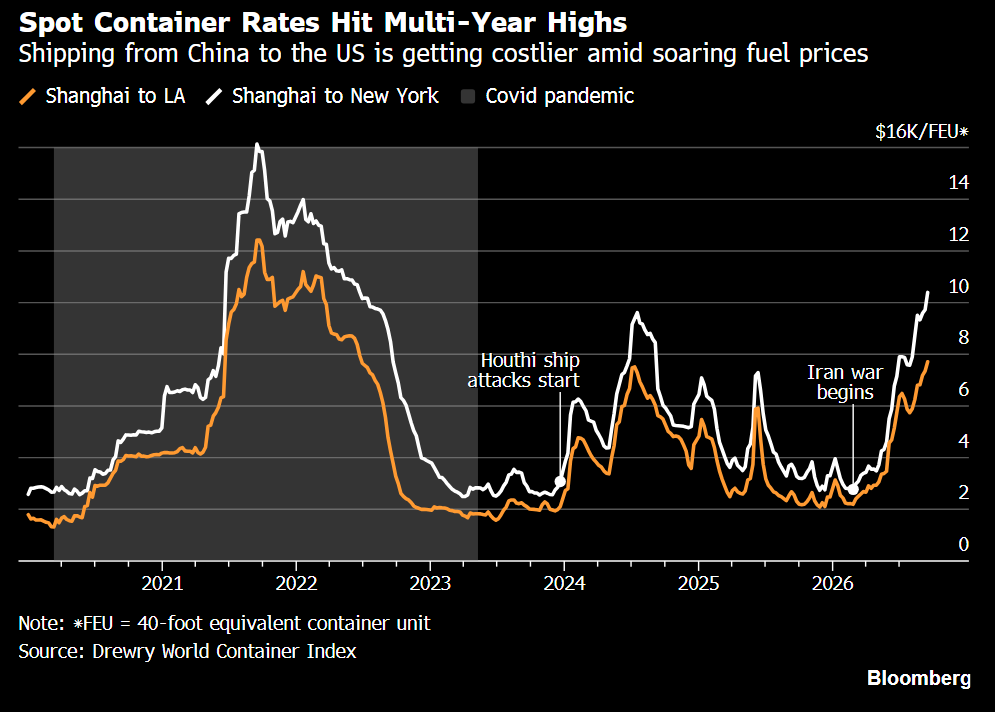
Spot container shipping rates on the trans-Pacific China-to-U.S. trade lane have surged dramatically—more than tripling across key benchmark routes since the escalation of the military conflict involving Iran, according to freight market indices from Xeneta and Drewry. Spot rates from China to the U.S. East Coast have climbed back above $10,000 per 40-foot container (FEU), hovering just shy of all-time records established during the peak of the pandemic supply-chain disruptions.
The acute price surge is driven by a combination of compounding geopolitical and seasonal pressures:
- Marine Fuel Inflation: Regional hostilities in the Persian Gulf and attacks on maritime energy routes have elevated global bunker fuel costs, with Very Low Sulphur Fuel Oil (VLSFO) climbing sharply from pre-conflict baselines. Ocean carriers (including Maersk, MSC, COSCO, and CMA CGM) are actively passing these cost spikes to shippers through steep emergency bunker adjustment factors (BAFs) and war-risk surcharges.
- Bottlenecks and Route Diversions: Ongoing commercial tanker and freighter security risks around the Middle East have constrained active global fleet utilization, prompting carriers to deploy blank sailings and reroute tonnage, tightening container availability in Asian manufacturing hubs.
- Golden Week Cargo Rush: The rate acceleration has been amplified by pre-holiday volume front-loading, as retail giants such as Walmart ($WMT) and Amazon ($AMZN) aggressively rush inventory out of Chinese coastal ports ahead of early October Golden Week factory shutdowns.
From a market perspective, sustained triple-digit increases in ocean freight introduce fresh cost-push margin headwinds for major import-heavy retailers and consumer discretionary firms, while bolstering spot revenue yields for container liners and maritime transport operators.