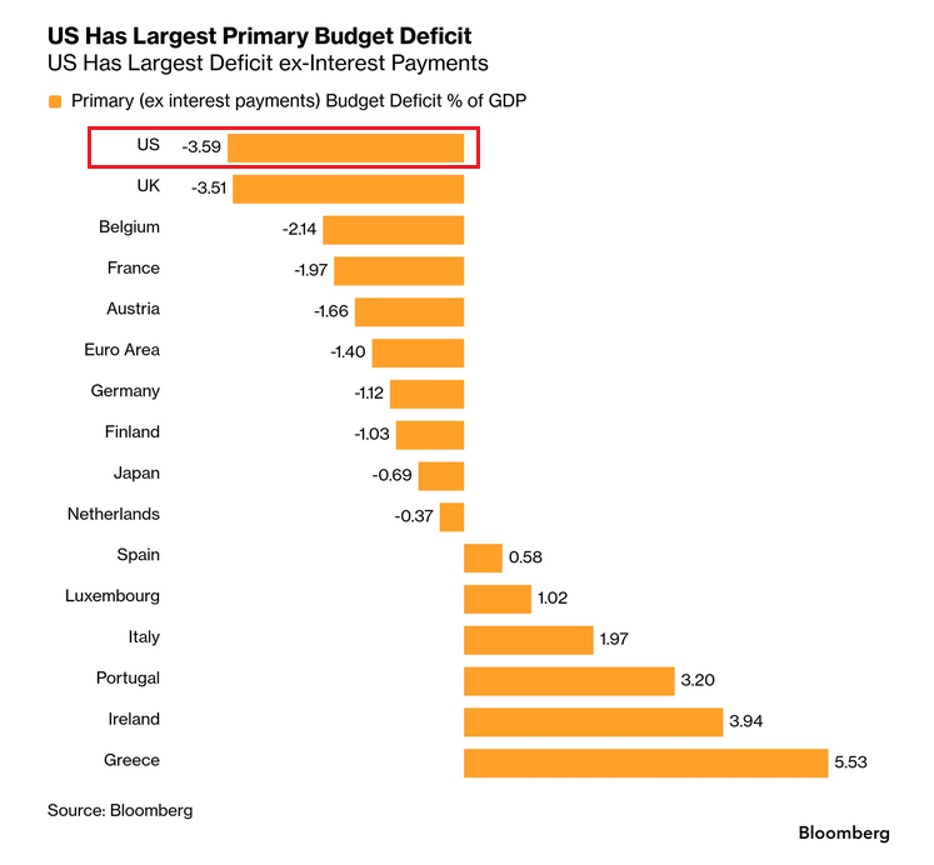
U.S. Primary Budget Deficit Is the Largest Among Major Advanced Economies
The U.S. government is now running a primary budget deficit equal to 3.59% of GDP, the largest among major advanced economies.
Importantly, the primary deficit excludes interest payments on existing government debt.
Those interest costs already exceed $1.1 trillion annually, meaning the underlying fiscal imbalance remains substantial even before debt servicing is included.
The UK follows with a primary deficit of 3.51% of GDP, while Belgium, France, Austria and the broader Euro Area are running deficits of roughly 2.14%, 1.97%, 1.66% and 1.40%, respectively.
The comparison highlights the scale of U.S. fiscal spending relative to other developed economies.
With interest expense now one of the largest federal spending categories, persistent primary deficits also mean the government continues adding new borrowing on top of an already large debt-servicing burden.
If the trend persists, it could keep upward pressure on Treasury issuance, borrowing costs and long-term concerns around U.S. fiscal sustainability.