Warsh Faces a Much Tougher Fiscal Backdrop Than Volcker Did
Kevin Warsh can talk tough on inflation, but today’s fiscal backdrop makes acting aggressively far more difficult.
The contrast with the Volcker era is significant.
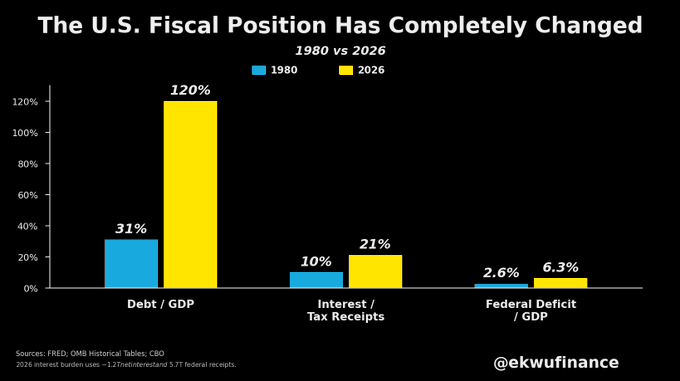
In 1980, U.S. debt-to-GDP stood near 31%. Today, it is around 120%.
Interest costs consumed roughly 10% of tax receipts then, versus about 21% today, while the federal deficit has widened from roughly 2.6% of GDP to around 6.3%.
That means higher interest rates now put far more pressure on government finances and the Treasury market than they did four decades ago.
The policy trade-off is becoming increasingly difficult.
One path is to keep monetary policy tight enough to crush inflation, risking severe stress across bonds and government financing.
The other is to tolerate easier financial conditions and greater currency debasement in order to protect the bond market.
The thesis here is that policymakers are ultimately more likely to choose the second path.
In other words, protecting the Treasury market may eventually take priority over defending the purchasing power of the dollar.