Michael Anderson (@michaelanderson)
Oil Shocks Used to Push U.S. Unemployment Higher, but Post-2010 Shocks Haven't
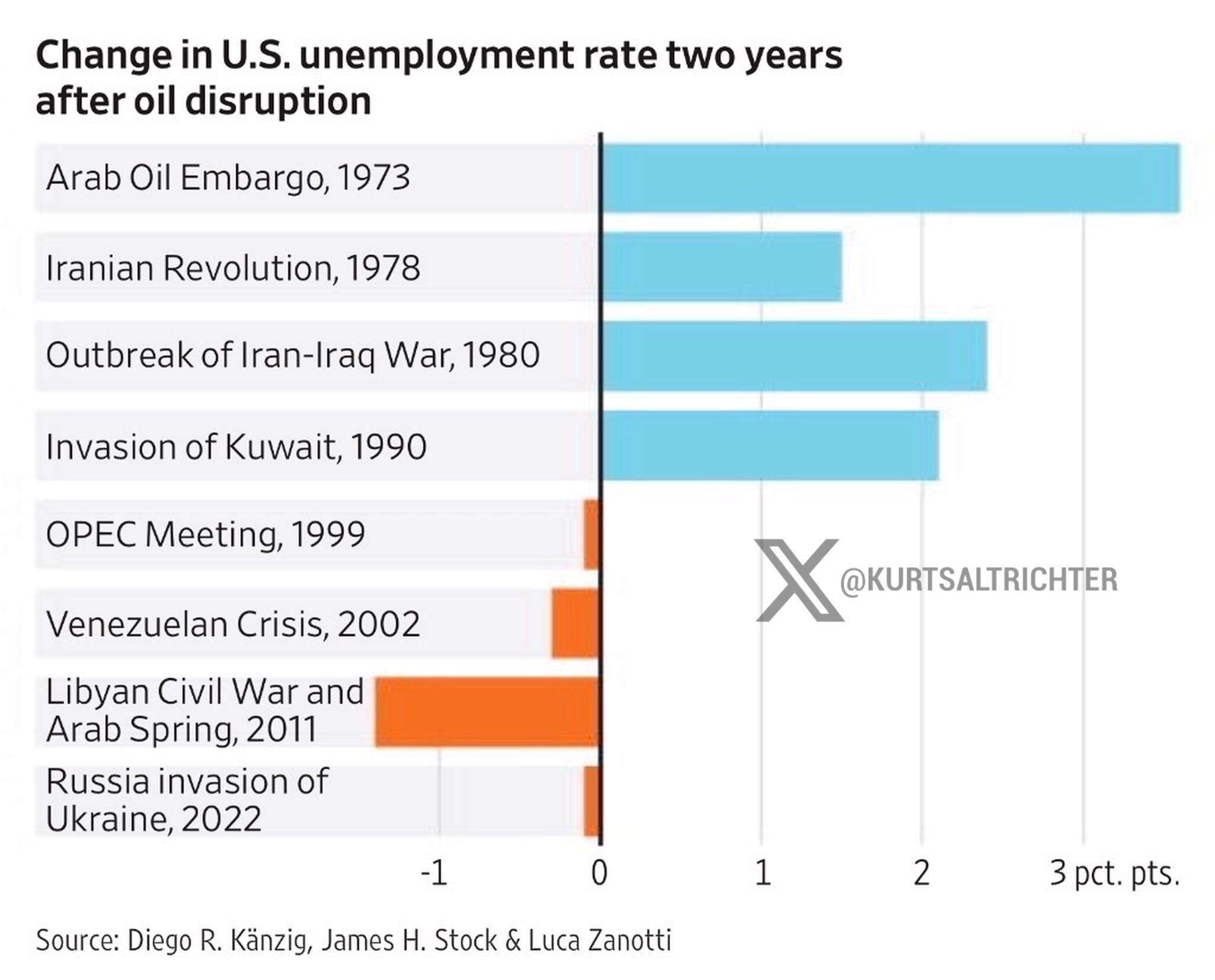
Every major oil shock before 2010 drove U.S. unemployment higher. The Arab embargo, the Iranian revolution, the Iran-Iraq war, and the invasion of Kuwait each added 1.5 to 3.5 points two years later.
Then look at the shocks after 2010: Libya, Venezuela, and Russia-Ukraine. Unemployment actually fell.
What changed is the U.S. went from importing 12 million barrels of oil a day to exporting more than 3 million. A shale-era America makes money when oil spikes through better terms of trade. The old playbook where an oil shock means a recession is broken, and that is why the Fed has not had to flinch while growth holds up.