Higher Rates Are Becoming a Fiscal Problem as Trillions in U.S. Debt Roll Over
The argument for why the U.S. cannot tolerate significantly higher rates for long increasingly comes down to refinancing math.
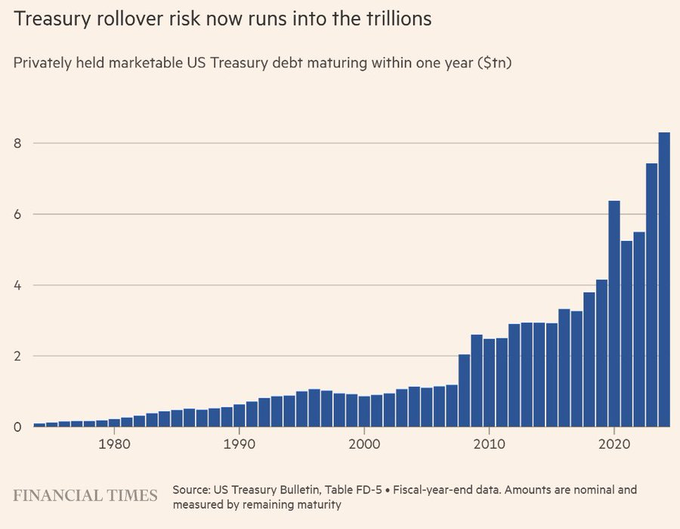
Roughly $8 trillion of U.S. Treasuries are expected to mature over the next 12 months.
With the average coupon around 3.3% and the 10-year Treasury yield near 5%, refinancing that amount at today's rates would add roughly $136 billion in annual interest expense.
And that does not include the additional borrowing required to finance an ongoing federal deficit of roughly $2 trillion per year.
This is very different from the Volcker era, when the U.S. entered the inflation fight with a much lower debt burden relative to the size of the economy.
Today, government debt is again near historically high levels relative to GDP, making aggressive monetary tightening much more expensive for the fiscal side of the system.
That creates a difficult dynamic.
Higher rates may be needed to control inflation, but those same rates rapidly increase the government's interest burden as old debt matures and gets refinanced.
The broader thesis is that heavily indebted governments have a stronger incentive to tolerate some inflation before sustaining extremely restrictive rates.
If that framework is right, the biggest long-term risk may not simply be higher rates, but a prolonged period where inflation remains structurally harder to eliminate.