US Equities Trade at Historic Global Valuation Premium as Shiller CAPE Approaches Dot-Com Extremes
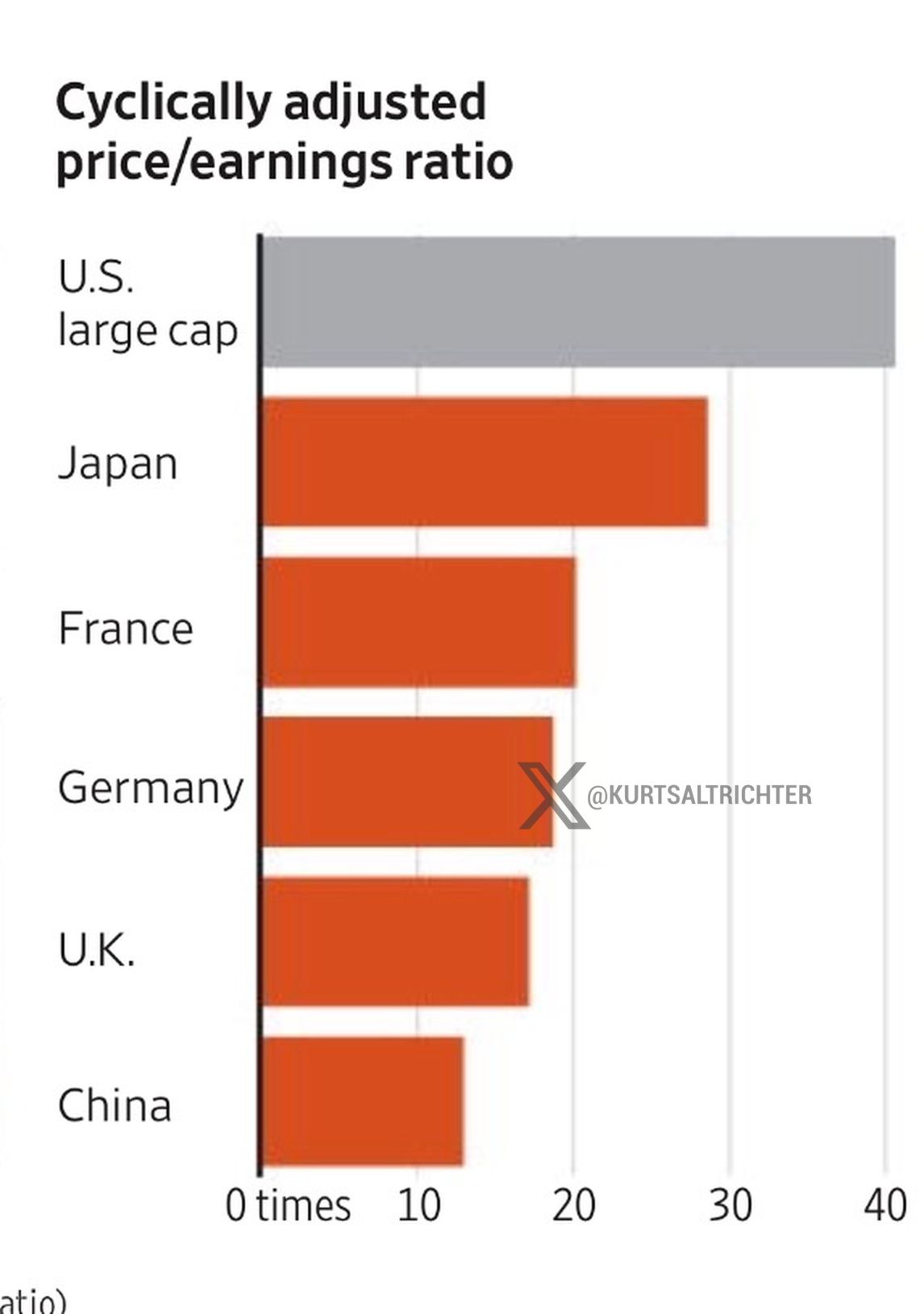
United States large-cap equities are trading at an unprecedented valuation premium over global peers, with the S&P 500 cyclically adjusted price-to-earnings (CAPE) ratio hovering near 40—a level exceeded only once in 150 years during the late-1999 dot-com bubble peak.
The structural valuation disparity highlights divergent macro drivers and capital concentration:
- Cross-Border Multiple Dispersion: US equities (CAPE ~40) trade at roughly double the multiples of major developed peers, including Japan (~28), Germany and France (~18–20), and the UK (~17), while emerging market benchmarks like China sit near 13.
- Index Composition vs. Quality Premium: The valuation gap partially reflects index architecture, with US benchmarks heavily concentrated in high-margin, asset-light mega-cap technology and platform monopolies compared to the bank- and industrial-heavy compositions of Europe and Asia.
- The Exorbitant Privilege Paradox: As the world's deepest capital market and reserve-currency anchor, US equities command a persistent liquidity and flight-to-safety bid during macro instability; however, starting at extreme starting multiples, institutional models project compressed long-term forward real returns (sub-2% annualized over 10 years) alongside severe drawdown vulnerability should corporate earnings growth or structural confidence falter.