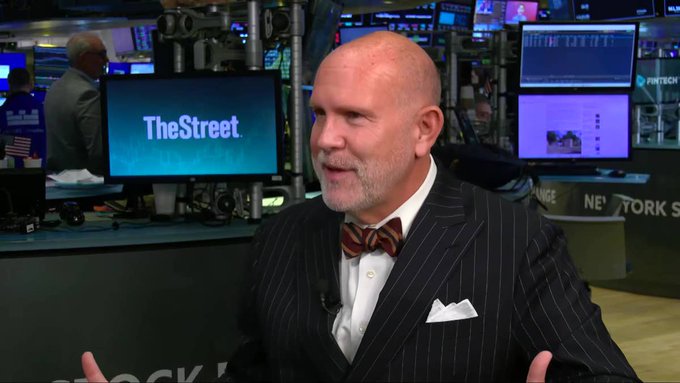
Siebert CIO Outlines Framework for Navigating AI Stocks Amid Rising Treasury Yields
With the 10-year U.S. Treasury yield surpassing 5.3%, Siebert Financial Chief Investment Officer Mark Malek outlined an investment framework to differentiate resilient mega-cap technology leaders from debt-dependent businesses vulnerable to higher discount rates.
While elevated benchmark yields have pressured equal-weighted indexes and smaller-cap equities, Malek argued that durable operational growth and balance sheet strength can offset rate headwinds across high-conviction artificial intelligence plays:
- Tiered Capital Resilience: First-tier leaders like Microsoft ($MSFT) and Amazon ($AMZN) possess diversified core revenues, robust free cash flow, and pristine balance sheets capable of self-funding AI infrastructure buildouts without relying on debt markets. In contrast, second-tier names such as Oracle ($ORCL) carry higher leverage and rate sensitivity.
- Nvidia vs. Micron Moats: While memory suppliers like Micron ($MU) benefit from cyclical supply shortages, Nvidia ($NVDA) commands a stronger structural moat driven by ongoing architecture innovation, insulating it more effectively from potential decelerations in hyperscaler capital expenditures.
- Infrastructure Bottleneck Plays: Value creation extends to industrial and electrical infrastructure suppliers possessing strong pricing power, exemplified by sharp year-to-date gains in power and cooling providers including Vertiv ($VRT), Eaton ($ETN), and Caterpillar ($CAT).
- Macro Consumer Read-Through: Investors should monitor major money-center banks including JPMorgan Chase ($JPM), Citigroup ($C), and Wells Fargo ($WFC) for early indicators of consumer credit strain and deposit health, maintaining caution toward interest-rate-sensitive consumer discretionary names.