ECB Spread Controls May Be Hiding a Different Form of Sovereign Stress
The ECB spent years building tools designed to prevent sovereign bond spreads from spiraling across the euro area.
Those tools appear to be working.
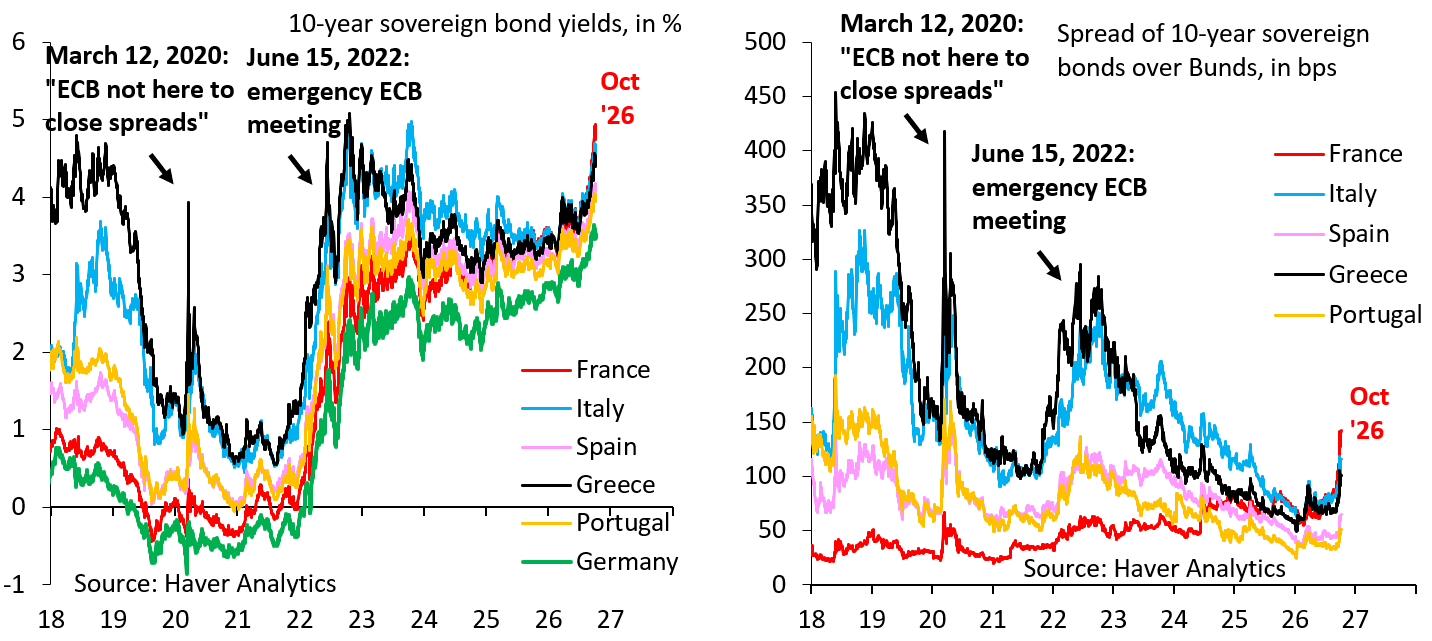
Spreads between heavily indebted countries and core European debt remain relatively contained even as absolute yields in countries such as France and Italy move sharply higher.
That creates an interesting version of Goodhart's law: once a metric becomes a policy target, it can lose some of its usefulness as a measure of underlying stress.
If investors believe the ECB will intervene when spreads widen too far, sovereign risk may no longer show up primarily through relative spreads.
Instead, the adjustment can occur through higher yields across the entire curve.
That means a stable Italy-Germany or France-Germany spread does not necessarily imply that financing conditions are benign.
Both sides of the spread can rise together while governments still face substantially higher refinancing costs.
The key risk is that policymakers successfully suppress the indicator they are watching while the underlying fiscal pressure reappears somewhere else in the bond market.