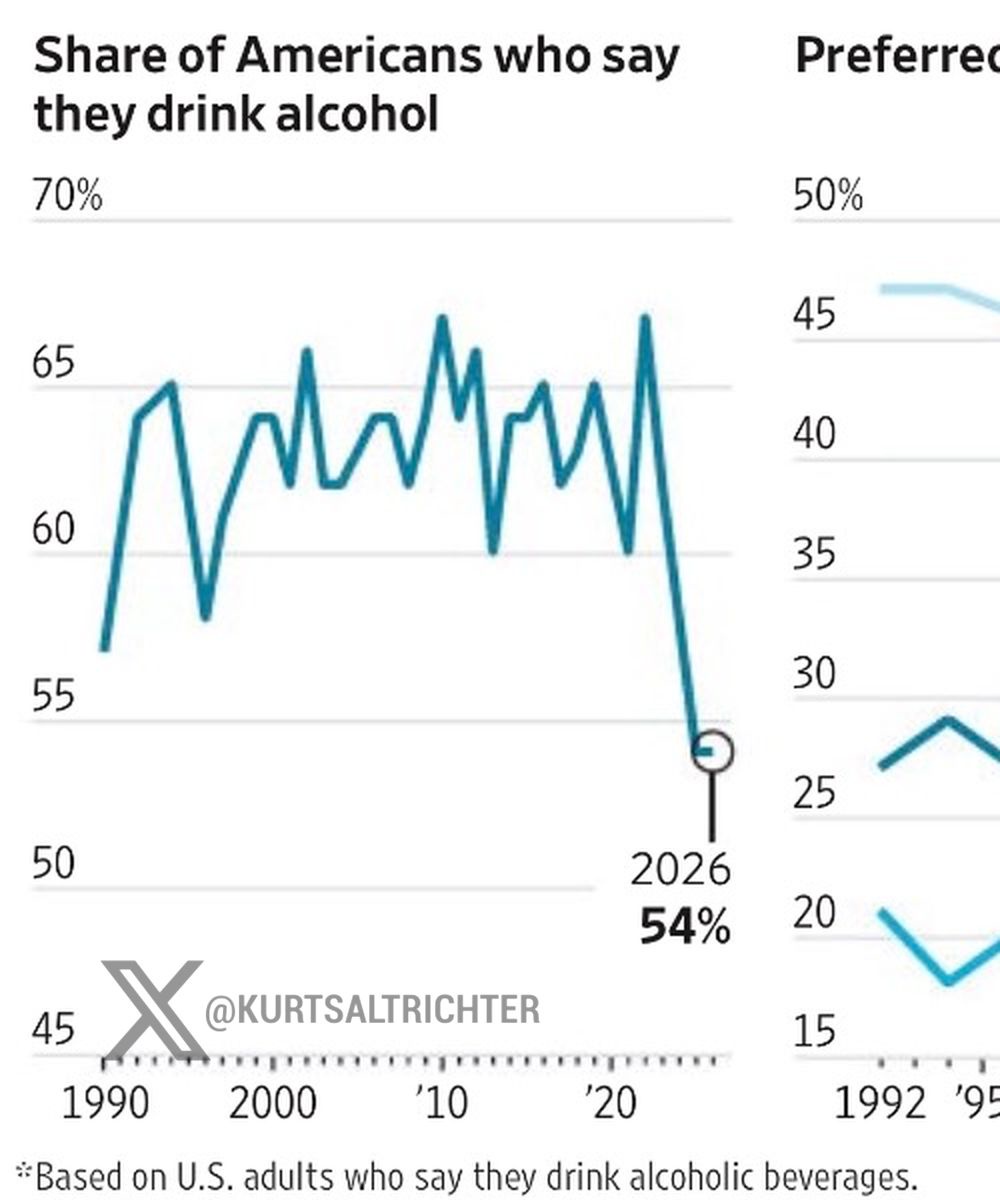
U.S. Alcohol Consumption Drops to Historic Low of 54% as Structural Shifts Hit Beverage Sector
The proportion of U.S. adults reporting alcohol consumption has dropped to 54%, marking the lowest level recorded since Gallup began tracking the metric in 1939. The multi-year drawdown—falling from historical norms in the mid-to-high 60s—reflects a broad-based structural retreat affecting beer, wine, and distilled spirits simultaneously.
The shift in consumer behavior is creating tangible supply-side disruptions across agricultural and beverage production chains:
- Upstream Contraction: California grape growers and wineries are leaving fruit unharvested and actively pulling up established vines amid persistent oversupply and softening distributor demand.
- Margin & Pricing Erosion: As volumes across major alcoholic beverage categories contract, producers face diminished pricing power, elevating margin risk across traditional brewers, vintners, and spirits conglomerates.
- Demographic Pivot: Health awareness, generational abstinence, and alternative functional beverages continue to reallocate disposable spending away from legacy alcoholic categories.