Fixed Income Paradigm Shifts as Risk-Free Yields Reshape Income Portfolio Strategy
A structural shift in global fixed-income markets has restored substantive yields to the lowest-risk tiers of credit for the first time in over a decade, fundamentally rewriting the asset allocation playbook for balanced and conservative income portfolios.
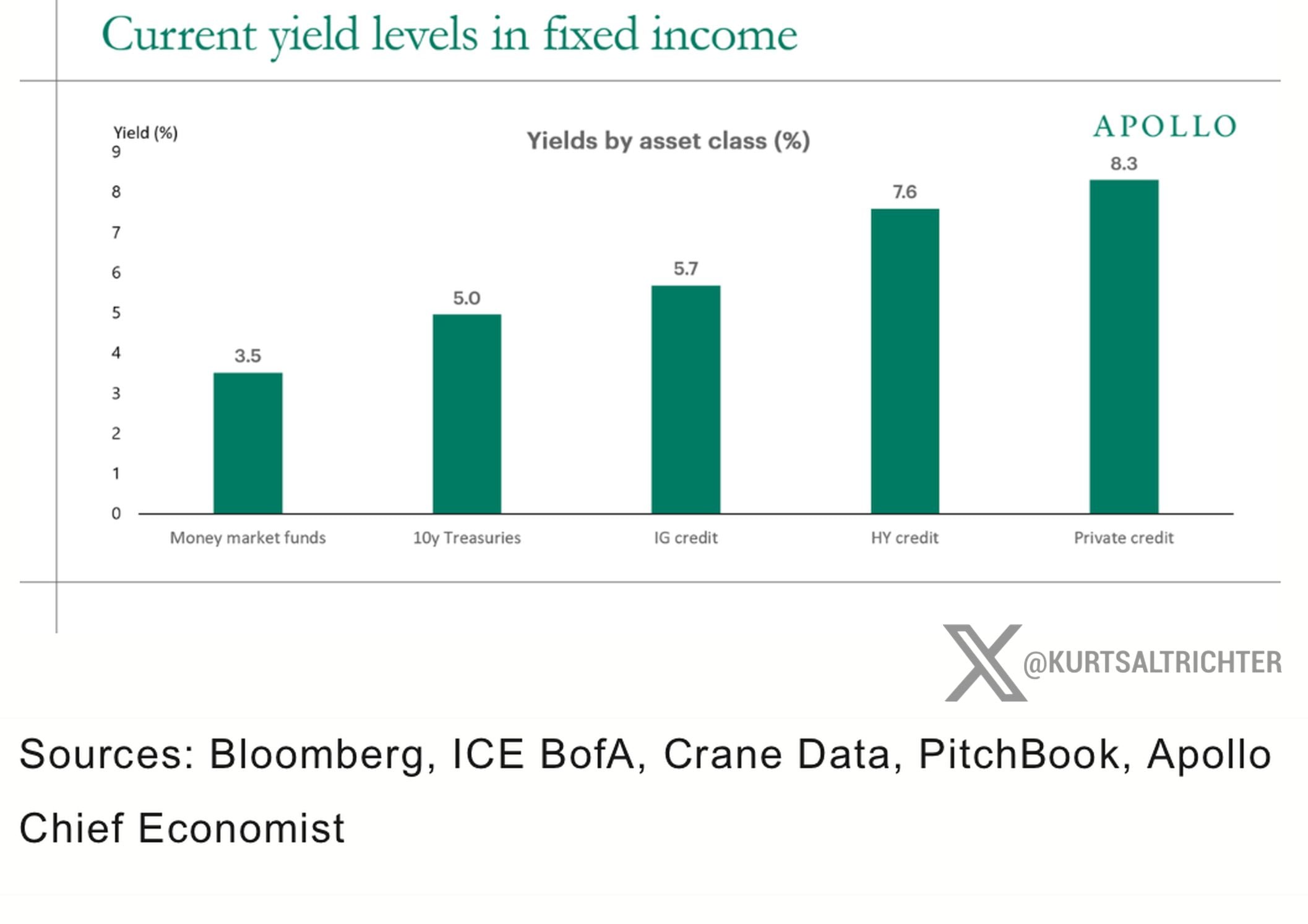
Investors previously forced out on the risk curve during the Zero Interest Rate Policy (ZIRP) era no longer need to accept equity-like volatility or illiquidity premiums to generate durable real cash flow:
- U.S. 10-Year Treasuries: ~5.00%
- Investment-Grade Corporate Credit: ~5.70%
- Money Market Funds & T-Bills: ~3.50%
- High Yield (Junk) Credit: ~7.60%
- Private Credit: ~8.30%
The narrowing risk spread between core high-grade debt and riskier alternatives reduces the incentive to hold speculative debt or locked private credit vehicles. With high-grade paper offering real inflation-adjusted coupons alongside principal liquidity, portfolio managers are reallocating back into duration and traditional sovereign/investment-grade paper, altering the hurdle rate across asset classes and dampening the structural need to stretch into leveraged credit.