Treasury Buybacks Are Sending a Warning About Yield Suppression
This week offered a warning about trying to artificially suppress long-term interest rates.
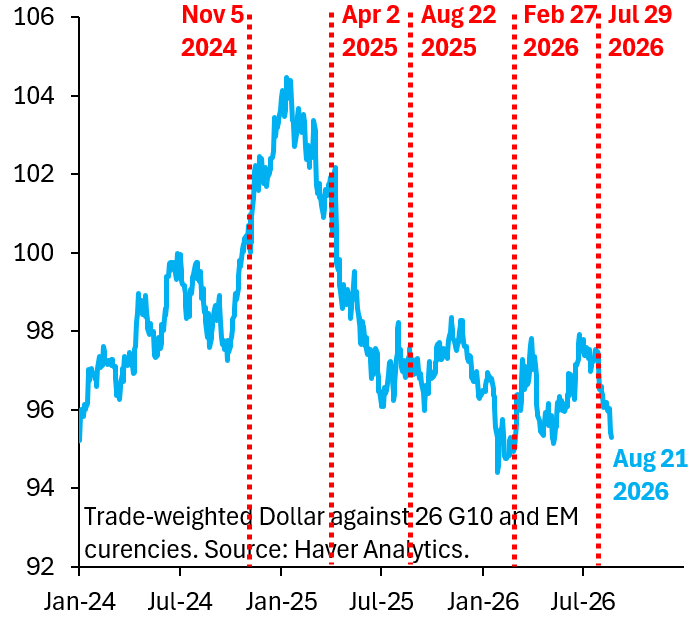
The U.S. Treasury expanded buybacks of longer-dated bonds in an effort to improve liquidity and relieve pressure in the Treasury market.
Bond yields initially fell.
But the dollar weakened sharply at the same time.
That trade-off matters.
If policymakers repeatedly intervene to hold long-term yields below where the market wants to price them, investors can respond somewhere else — by selling the currency.
Japan has faced a similar problem for years.
The Bank of Japan could suppress government bond yields through massive purchases, but doing so increased pressure on the yen whenever the policy gap with the rest of the world widened.
The U.S. is not yet running formal yield-curve control.
Treasury buybacks are primarily a market-liquidity tool, not an explicit yield cap.
But the market reaction highlights the potential constraint.
You can intervene in the bond market.
You cannot control the bond market, the currency and inflation expectations independently forever.