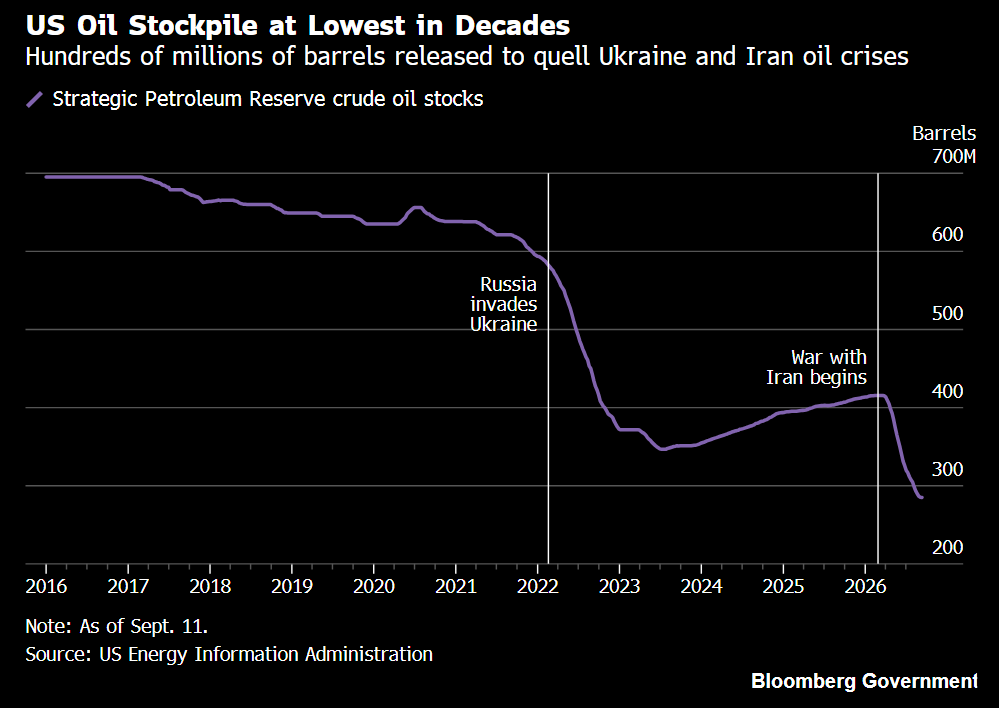
U.S. Strategic Petroleum Reserve Falls to 284.6 Million Barrels, Lowest Level Since 1982
Crude oil inventories in the U.S. Strategic Petroleum Reserve (SPR) fell to 284.6 million barrels, marking the lowest reserve level since October 1982, as emergency releases to counter Middle East supply shocks and high pump prices steadily deplete federal stockpiles.
Key inventory metrics and energy market implications include:
• Magnitude of Drawdown: Total SPR crude stocks dropped by roughly 120 million barrels (or ~30%) over the past 12 months, falling from 405.2 million barrels a year ago to 284.6 million barrels.
• Depletion Driver: The decline stems from a U.S. commitment to release 172 million barrels—coordinated alongside an International Energy Agency (IEA) agreement totaling 400 million barrels of emergency stock sales—to mitigate crude spikes caused by the Iran conflict and Strait of Hormuz transit disruptions.
• Import & Consumption Cover: At current inventory levels, the SPR represents roughly 14 days of total domestic consumption (~20.1 million bpd) or approximately 42 days of net crude import protection (~6.8 million bpd).
• Structural Buffer Risk: While commercial crude inventories remain close to five-year averages at 424 million barrels, a multi-decade low in the SPR significantly reduces Washington's emergency cushion should further regional pipeline outages or geopolitical disruptions hit global supply.