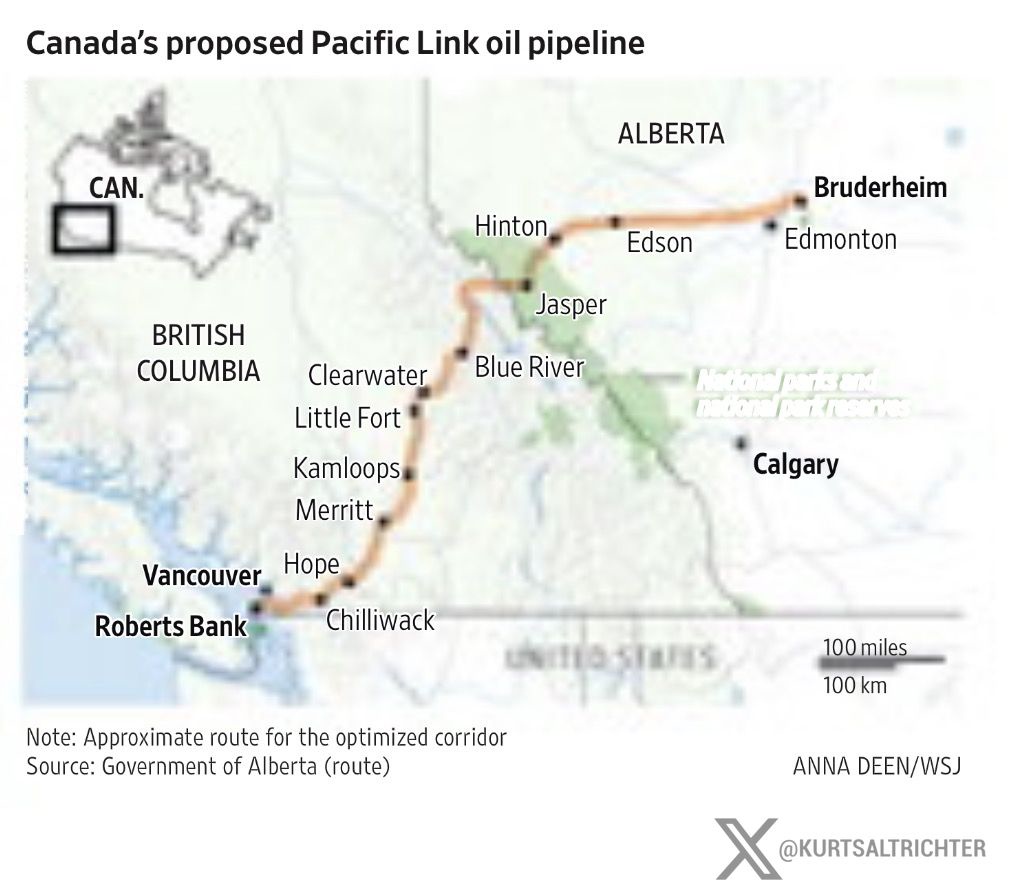
Canada Fast-Tracks 1M b/d Pacific Link Pipeline to Break U.S. Heavy Crude Monopoly
Canada has designated the proposed Pacific Link pipeline as a "project of national interest," fast-tracking a major infrastructure project designed to transport roughly 1 million barrels per day (b/d) of Alberta crude to the British Columbia coast for export to Asian and European markets.
The move poses a direct structural challenge to U.S. refining economics and decades of geographic leverage:
• Monopsony Pricing Power Erroded: Historically sending ~4 million b/d to the U.S. due to landlocked pipeline bottlenecks, Canadian Western Canadian Select (WCS) has traded at a persistent discount to WTI. A dedicated Pacific conduit introduces alternative global bid support, narrowing that spread.
• Margin Squeeze on U.S. Refiners: Midwest (PADD 2) and U.S. Gulf Coast (PADD 3) heavy-coking refiners have long relied on discounted Canadian barrels to generate outsized crack spreads. Direct access to tidewater removes captive supply, forcing U.S. processors to bid up prices against international buyers.
• Geopolitical Realignment: Beyond expanding export capacity, the pipeline shifts pricing leverage back to Canadian producers by establishing diversified sovereign off-take routes outside North America.