market
A Stock Trader’s Guide to Navigating a Rare ‘Super El Niño’
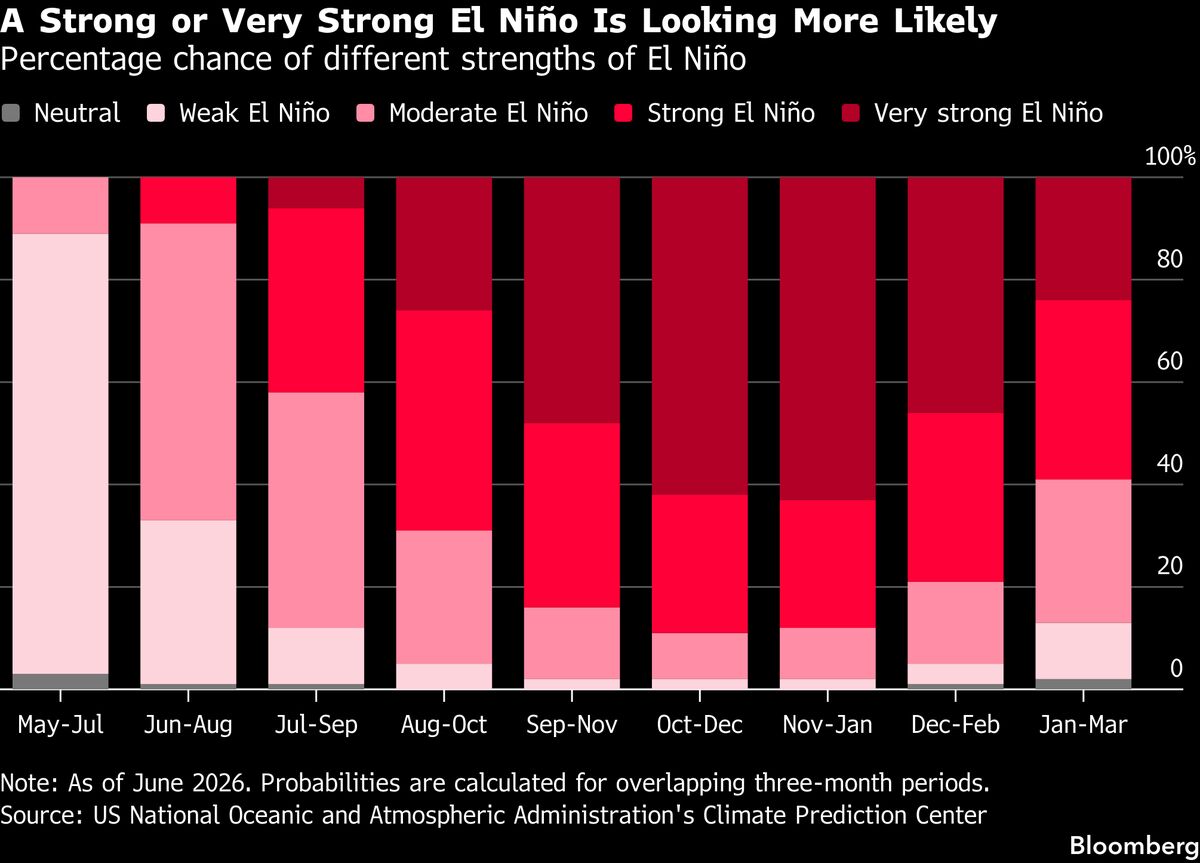
Climate risk from a rare 'Super El Niño' is prompting stock traders to reassess positions across agriculture, insurance, and other vulnerable sectors.
<p>Stock market participants are shifting their attention from geopolitical tensions to a new challenge that could reshape investment strategies across multiple sectors. As concerns surrounding the Iran conflict diminish, traders are now grappling with the implications of a rare 'Super El Niño' weather pattern, which is forcing a comprehensive reassessment of climate-related risks in equity portfolios. The phenomenon is particularly impacting sectors with direct exposure to weather variability, including agriculture, insurance, and related industries.</p><p>According to a recent <a href="https://www.bloomberg.com/news/articles/2026-06-21/a-stock-trader-s-guide-to-navigating-a-rare-super-el-nino" target="_blank" rel="noopener">Bloomberg Markets report</a>, the heightened climate risk is prompting investors to recalibrate their positions as the severity of this El Niño event becomes clearer. This weather pattern, characterized by unusually warm ocean temperatures in the Pacific, can trigger widespread disruptions to global weather systems, creating both risks and opportunities for equity investors.</p><h2>Table of Contents</h2><ul><li>Understanding the Super El Niño Threat</li><li>Sector-Specific Investment Implications</li><li>Portfolio Repositioning Strategies</li><li>Conclusion</li></ul><h2>Understanding the Super El Niño Threat</h2><p>The emergence of a 'Super El Niño' represents a significant climate event that occurs infrequently but carries substantial economic consequences when it does materialize. This intensified version of the El Niño Southern Oscillation can produce extreme weather conditions across vast geographic regions, affecting everything from crop yields to infrastructure stability. For equity investors, the challenge lies in anticipating which companies and sectors will face headwinds and which might benefit from the altered conditions.</p><p>The timing of this climate event is particularly noteworthy as it arrives at a moment when geopolitical concerns related to Iran have begun to ease. This transition in market focus underscores how quickly investor priorities can shift when new risk factors emerge. Climate risk, once considered a longer-term consideration, is now demanding immediate attention from portfolio managers and traders who must account for near-term earnings impacts and operational disruptions.</p><h2>Sector-Specific Investment Implications</h2><p>The agricultural sector stands at the forefront of Super El Niño concerns, as extreme weather patterns can dramatically affect planting seasons, crop development, and harvest yields. Companies involved in agricultural production, commodity trading, and farm equipment may experience heightened volatility as weather forecasts evolve. Investors are scrutinizing which geographic regions and crop types face the greatest exposure to drought, flooding, or temperature extremes associated with this weather phenomenon.</p><p>Insurance companies represent another critical area of focus for traders navigating this climate event. Insurers with significant exposure to property and casualty lines may face elevated claims related to weather-related damage, potentially pressuring profitability and reserve adequacy. The reassessment of climate risk is prompting analysts to review underwriting practices, geographic concentrations, and reinsurance arrangements across the insurance sector. Companies with robust risk management frameworks and diversified exposure profiles may be better positioned to weather the storm.</p><p>Beyond these primary sectors, the ripple effects of a Super El Niño extend to numerous other industries. Energy companies may see demand patterns shift due to temperature anomalies, while utilities could face operational challenges from extreme weather events. Retailers and consumer goods companies might experience supply chain disruptions or changes in consumer behavior related to weather conditions. This broad-based impact requires investors to conduct thorough due diligence across their entire portfolio holdings.</p><h2>Portfolio Repositioning Strategies</h2><p>As market participants digest the implications of this rare climate event, strategic portfolio adjustments are becoming increasingly common. Traders are evaluating defensive positioning in sectors most vulnerable to weather disruptions while simultaneously identifying potential beneficiaries. Companies providing climate adaptation solutions, water management technologies, or drought-resistant agricultural products may attract increased investor interest during this period.</p><p>Risk management takes on heightened importance in the current environment, with investors reassessing position sizes and diversification strategies. The uncertainty inherent in predicting the precise impacts of a Super El Niño suggests that maintaining flexibility and avoiding concentrated bets in highly exposed sectors may be prudent. Some market participants are employing options strategies or other hedging techniques to protect against downside scenarios while maintaining upside participation.</p><p>The shift from geopolitical risk to climate risk also highlights the importance of maintaining a dynamic investment framework capable of adapting to evolving market conditions. Successful navigation of this environment requires continuous monitoring of weather forecasts, sector-specific data, and company-level disclosures regarding climate exposure. Investors who can quickly synthesize this information and adjust their positions accordingly may find opportunities amid the volatility.</p><h2>Conclusion</h2><p>The emergence of a rare 'Super El Niño' as a primary market concern demonstrates how quickly the investment landscape can transform. As Iran-related geopolitical tensions recede into the background, climate risk has moved to center stage, forcing traders to reassess positions across agriculture, insurance, and numerous other sectors. This transition underscores the multifaceted nature of modern portfolio management, where diverse risk factors demand constant attention and adaptation. Investors who approach this challenge with rigorous analysis, sector-specific expertise, and flexible positioning strategies will be best equipped to navigate the uncertainties ahead while identifying opportunities that emerge from this significant weather event.</p> <p><a href="https://www.bloomberg.com/news/articles/2026-06-21/a-stock-trader-s-guide-to-navigating-a-rare-super-el-nino" rel="nofollow noopener noreferrer" target="_blank">Read original source</a></p>