market
Adnoc LNG Tanker Signals Return to Persian Gulf Transparency
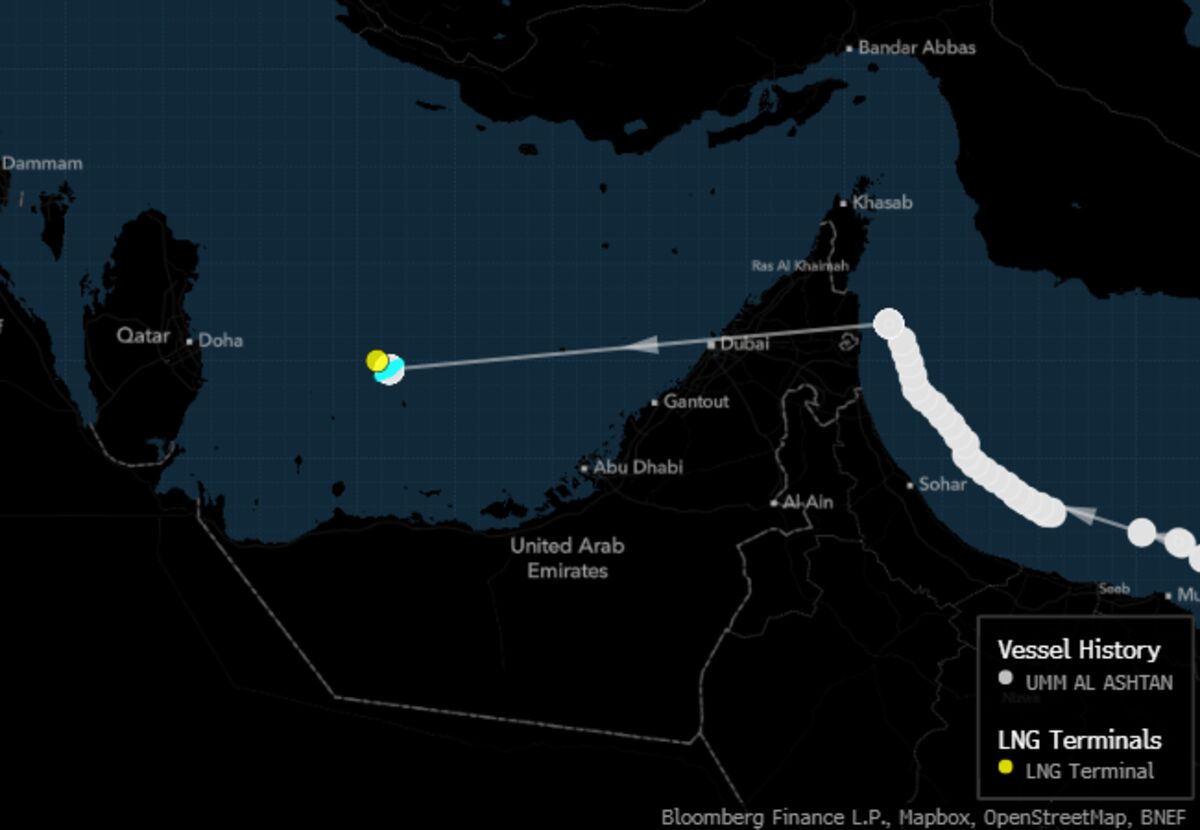
An Adnoc LNG tanker began broadcasting its signal in the Persian Gulf following an interim US-Iran peace deal, marking improved vessel transparency.
A liquefied natural gas tanker owned by Abu Dhabi National Oil Co. began sending a signal from within the Persian Gulf, according to Bloomberg Markets, as more vessels broadcast their journeys and intentions in recent days following an interim peace deal between the United States and Iran. The development marks a shift toward improved maritime transparency in one of the world's most critical energy shipping corridors, where vessel tracking visibility has significant implications for global energy markets and supply chain monitoring.
Key takeaways
An Abu Dhabi National Oil Co. LNG tanker began broadcasting its signal from within the Persian Gulf on June 25, 2026
The vessel's signal return follows an interim peace deal between the United States and Iran
Multiple vessels have resumed broadcasting their journeys and intentions in recent days
Maritime transparency in the Persian Gulf affects global energy market visibility and shipping risk assessment
Table of Contents
What happened
Why it matters
What to watch next
What happened
According to Bloomberg Markets, a liquefied natural gas tanker owned by Abu Dhabi National Oil Co. began transmitting a signal from within the Persian Gulf. The vessel's signal broadcast represents part of a broader pattern, as more ships have begun broadcasting their journeys and intentions in recent days. This change in vessel behavior follows an interim peace deal between the United States and Iran, though the source does not specify the exact terms or timing of that agreement beyond its recent occurrence.
The Abu Dhabi National Oil Co. tanker's signal return provides a concrete example of changing maritime practices in the region. Vessel tracking systems rely on Automatic Identification System (AIS) broadcasts, which ships use to transmit their position, course, speed, and other navigation data. When vessels operate with AIS signals active, port authorities, shipping companies, energy traders, and market analysts can monitor vessel movements and estimate cargo flows. The source confirms that multiple vessels, not just the Adnoc tanker, have resumed broadcasting in recent days, suggesting a coordinated or widespread shift in regional maritime transparency practices.
Why it matters
The Persian Gulf serves as a critical chokepoint for global energy flows, with substantial volumes of crude oil and liquefied natural gas transiting through the Strait of Hormuz and surrounding waters. Maritime transparency in this region directly affects energy market participants' ability to track supply movements, assess shipping risks, and anticipate delivery schedules. When vessels broadcast their positions and intentions, energy traders gain visibility into cargo movements, refiners can better plan feedstock arrivals, and analysts can estimate regional production and export volumes with greater accuracy.
Vessel tracking transparency also carries implications for shipping insurance, freight rates, and geopolitical risk assessment. Periods of reduced AIS broadcasting often coincide with heightened regional tensions, sanctions enforcement concerns, or security incidents. The return of vessel signals following a peace deal suggests an easing of conditions that previously led ship operators to limit their broadcast visibility. For market participants, improved transparency reduces information asymmetry and can lower risk premiums embedded in freight contracts and energy derivatives. However, the durability of this transparency depends on the stability of the underlying political arrangements and the willingness of vessel operators to maintain open broadcasting practices.
What to watch next
Market participants should monitor whether the increase in vessel broadcasting continues and expands across the Persian Gulf shipping fleet. The source indicates that multiple vessels have resumed broadcasting in recent days, but the scope and consistency of this trend remain to be seen. Observers will track whether tankers carrying crude oil, condensate, and other petroleum products follow the pattern established by the Adnoc LNG tanker, and whether vessels operated by other national oil companies and commercial shipping firms maintain open AIS signals in the coming weeks.
The sustainability of improved maritime transparency will depend on the durability of the interim peace deal between the United States and Iran, as well as broader regional security conditions. Energy market analysts typically correlate vessel tracking visibility with geopolitical stability indicators, sanctions enforcement activity, and regional maritime security incidents. If vessel broadcasting remains consistent, energy traders may adjust their risk assessments for Persian Gulf supply routes, potentially affecting freight rate expectations and the premiums embedded in regional crude oil and LNG pricing. Conversely, any return to reduced transparency could signal renewed tensions or operational concerns that warrant closer monitoring by supply chain managers and risk officers.
Read original source