market
Africa CDC Calls for More Ebola Funding as Cases Rise
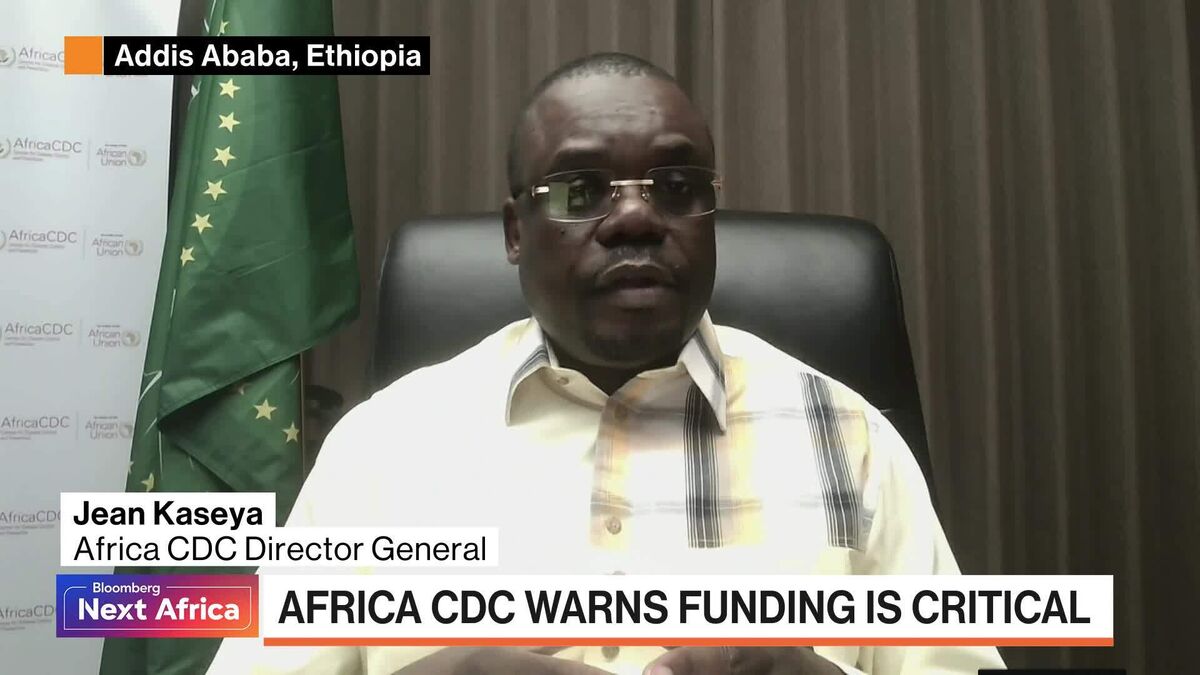
Africa CDC Director General Jean Kaseya calls for increased Ebola funding from Western governments as cases rise in the Democratic Republic of Congo and Uganda.
Africa CDC Director General Jean Kaseya has called for increased Ebola funding from Western governments as cases rise in the Democratic Republic of Congo and Uganda, according to Bloomberg Markets. Kaseya warned that closing borders will not stop the virus from spreading, emphasizing the need for coordinated international support to contain the outbreak. The call highlights ongoing challenges in securing adequate resources for public health emergencies in Africa.
Key takeaways
Africa CDC Director General Jean Kaseya is calling for more Ebola funding from Western governments
Ebola cases are rising in the Democratic Republic of Congo and Uganda, according to the source
Kaseya warned that closing borders will not stop the virus from spreading
The call underscores the need for international coordination in addressing public health emergencies
Table of Contents
What happened
Why it matters
What to watch next
What happened
Africa CDC Director General Jean Kaseya issued a public call for increased Ebola funding from Western governments, according to Bloomberg Markets. The request comes as Ebola cases are rising in the Democratic Republic of Congo and Uganda. Kaseya specifically warned that closing borders would not be an effective strategy to stop the virus from spreading, indicating that containment requires coordinated international support rather than unilateral border measures.
The source context does not specify the current number of cases, the rate of increase, the specific regions affected within the Democratic Republic of Congo and Uganda, or the total funding amount being requested. The source context also does not identify which Western governments have been approached, what existing funding commitments are in place, or what specific containment measures Africa CDC is prioritizing beyond the general call for more resources.
Why it matters
Public health emergencies in Africa often require international coordination and funding to support surveillance, treatment capacity, and containment infrastructure. Ebola outbreaks can strain local health systems, disrupt regional trade and movement, and create broader economic uncertainty when containment measures are delayed or underfunded. For readers following broader market updates , public health developments can influence investor attention to regional stability, healthcare sector priorities, and international aid flows.
Border closures, while politically visible, may not address the underlying transmission dynamics of infectious diseases without complementary measures such as contact tracing, treatment centers, and community engagement. Kaseya's warning that borders alone will not stop the virus underscores the importance of coordinated regional and international response strategies. The call for Western government funding reflects ongoing challenges in securing timely resources for outbreak response in lower-income regions, where health infrastructure may be limited and external support is often critical for rapid containment.
What to watch next
Readers should monitor future updates from Africa CDC, the World Health Organization, and Western government health agencies regarding funding commitments, case trends, and containment measures. The source context does not specify whether formal funding requests have been submitted, what timelines are being proposed, or which specific Western governments are being prioritized. Future disclosures may clarify the scale of the outbreak, the geographic spread, and the specific resources needed for effective containment.
Market readers may also watch for any broader regional economic impact assessments, trade disruption reports, or updates on healthcare sector activity in affected countries. The source context does not identify any direct market reaction, stock impact, or sector-specific financial consequences. Without additional details, the development should be treated as a confirmed public health headline with limited operational detail available at this time. Readers interested in public health funding, regional stability, and international aid coordination may find future source updates useful for understanding the broader context and response trajectory.
Read original source