general
AI Financial Market Intelligence: The 2026 Guide to Intelligence-Driven Trading
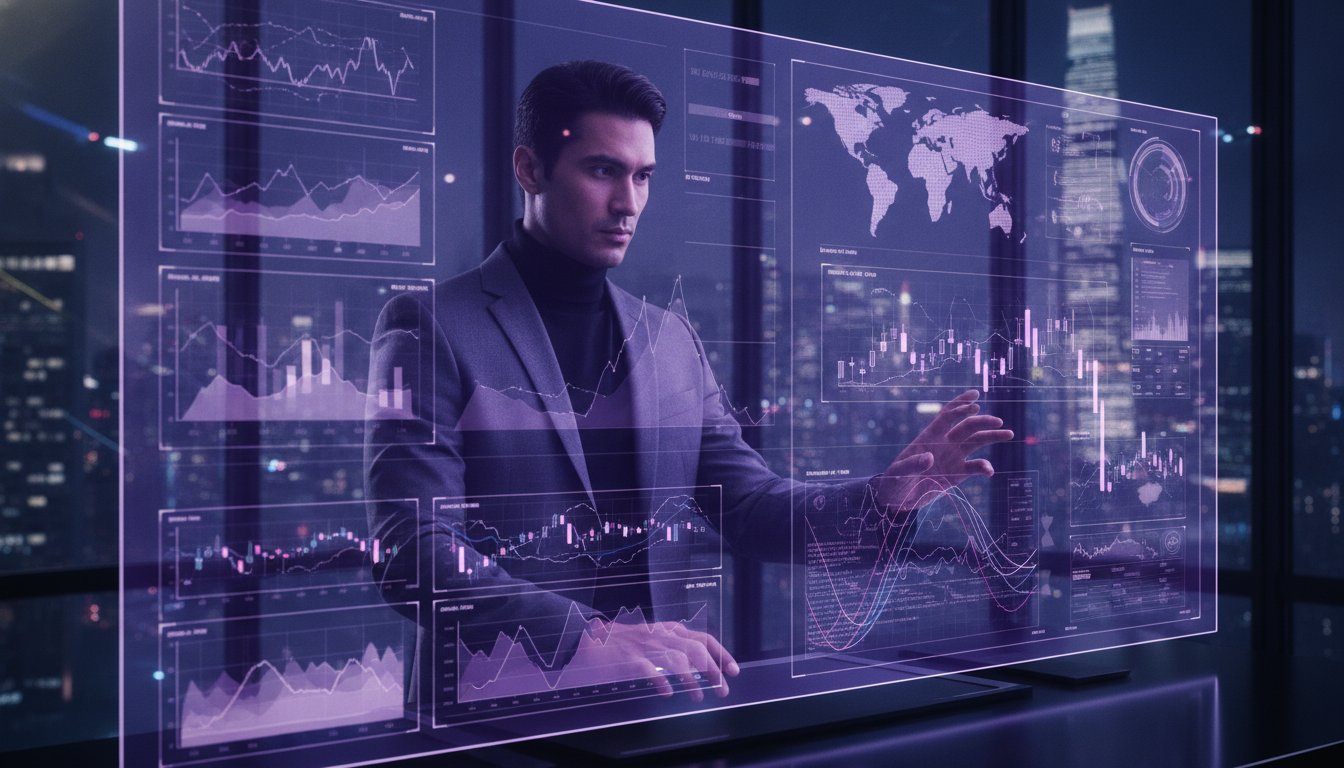
Unlock the power of AI financial market intelligence. Our 2026 guide shows you how to transform raw data into actionable alpha and trade with a verified edge.
Did you know that as of 2026, AI-driven algorithms execute roughly 70% of all trades in US markets? It's a staggering figure that highlights a new reality: the speed of information has outpaced the human ability to process it. You've likely felt the weight of this data overload, scrolling through endless feeds and wondering which social media "gurus" actually have the track record to back up their claims. It's exhausting to have the tools but lack the verified intelligence to make them move effectively.
This guide is designed to bridge that gap. We'll show you how ai financial market intelligence transforms chaotic raw data into actionable Alpha by blending artificial precision with collective human insight. You'll discover a clear framework for using these advanced tools, gaining access to verified social data and a professional-grade terminal that finally integrates AI with your workflow. We’re moving beyond blind copying into a new era of intelligence-driven trading where you lead the machine, not the other way around.
Key Takeaways
Master the shift from static technical analysis to dynamic synthesis using NLP and predictive modeling to gain a data-driven edge.
Decode the global "market mood" through sentiment analysis to anticipate movements across crypto, stocks, and forex before they happen.
Eliminate the risk of "blind copying" by utilizing ai financial market intelligence to verify the real-world track records of social participants.
Build a professional execution strategy by integrating real-time insights directly into an AI-powered suite like Terminal 4.0.
Table of Contents
What is AI Financial Market Intelligence in 2026?
The Core Pillars of AI-Driven Financial Analysis
AI Intelligence vs. Traditional Social Trading
How to Implement AI Market Intelligence in Your Strategy
The Tyrian Trade Ecosystem: Where Intelligence Meets Action
What is AI Financial Market Intelligence in 2026?
Market intelligence used to mean reading a candle chart or catching a headline on a news ticker. In 2026, ai financial market intelligence is the high-velocity synthesis of Big Data, Natural Language Processing (NLP), and predictive modeling. It’s the engine that powers modern decision-making. Instead of looking at what happened, we’re now looking at what’s about to happen. This isn't just about automation; it's about building a "Trust Layer" that filters out the noise and identifies the signals that actually matter for your portfolio.
The Evolution from Data to Intelligence
We've moved from reactive data to proactive discovery. In the past, you waited for the news to break. Now, ai financial market intelligence identifies shifts in sentiment before they manifest as price action. It’s the difference between seeing the smoke and predicting the fire.
Why Traditional Analysis is No Longer Enough
Technical analysis isn't dead, but it's no longer the primary driver of success. Relying solely on moving averages or RSI in a world dominated by Algorithmic trading is like bringing a knife to a railgun fight. The markets of 2026 move at sub-second speeds. By the time a human identifies a breakout on a 15-minute chart, the AI has already executed the trade and moved on. We’ve entered an era where sentiment analysis and real-time social synthesis are the new standard.
Human-only chart reading simply can't keep up with high-frequency environments. You need tools that don't just react to price, but anticipate it. If you want to dive deeper into how this applies to specific asset classes, check out AI Stock Trading in 2026 for a definitive guide to this transition. The goal is simple: stop being a passenger in the market and start using intelligence to drive your own outcomes. You don't need more data; you need better synthesis.
The Core Pillars of AI-Driven Financial Analysis
True ai financial market intelligence stands on four foundational legs. It isn't enough to just see a signal; you have to understand its context, predict its trajectory, and execute with precision. By 2026, the gap between institutional powerhouses and retail participants has narrowed because these pillars are now accessible to anyone with a professional-grade terminal. This shift isn't just about faster charts. It’s about a complete overhaul of how we interpret market behavior.
First, we have sentiment analysis, which decodes the collective mood across every major asset class. Next is predictive modeling, where machines look at centuries of historical patterns to forecast what’s next. Then comes algorithmic execution, ensuring your intelligence isn't wasted on slow manual entries. Finally, portfolio analytics use AI to stress-test your risk in real-time, moving beyond simple diversification into active protection.
NLP and Sentiment: Listening to the Market Pulse
Markets are driven by people, and people are vocal. AI now listens to the market pulse by scanning social media, breaking news, and even live creator streams. It’s not just about counting mentions. It’s about using sentiment analysis tools to filter out bot-driven noise and find authentic conviction. In the volatile world of crypto, this ability to distinguish between "hype" and "heavy accumulation" is the difference between profit and a rug-pull. AI agents can now detect subtle shifts in tone during CEO interviews or identify "fear" in a Discord channel before the sell-off begins.
Quantitative Intelligence for Retail Traders
The walls are coming down. Quantitative strategies that used to require a PhD are now baked into algorithmic trading software designed for modern portfolios. These models identify structural anomalies that human eyes simply can't catch in a 24/7 global market. This democratization of ai financial market intelligence allows you to run complex simulations on your own terms, identifying hidden correlations across stocks and forex that were previously invisible.
This shift hasn't gone unnoticed by regulators. In a recent speech, the Federal Reserve on AI in the financial system highlighted how these technologies are reshaping market stability and efficiency. While the Fed watches the macro risks, individual traders use these tools to manage their own downside. AI-assisted risk management ensures your portfolio is a calculated defense against volatility. You can explore the Social Trading Network to see how verified participants are leveraging these pillars to find an edge right now.
AI Intelligence vs. Traditional Social Trading
Social trading used to be a game of follow-the-leader. You found an influencer with a flashy lifestyle, clicked "copy", and hoped for the best. That era is over. The "Blind Copying" problem led to massive losses because followers lacked the data to see what was actually happening behind the curtain. In 2026, ai financial market intelligence has replaced blind faith with radical transparency. We’ve moved from chasing signals to demanding context.
The difference lies in verification. Traditional platforms relied on self-reported gains and curated screenshots. Modern ecosystems use blockchain and AI to create a "Trust Layer," where every trade is audited and every reputation is earned. It’s no longer about who has the loudest voice, but who has the most consistent data. This shift ensures that when you engage with a community, you're interacting with proven performers, not just charismatic personalities.
The Death of the Unverified Guru
The days of the anonymous "trading god" are numbered. In 2026, reputation infrastructure is the backbone of any serious social network. AI acts as the ultimate auditor, analyzing a trader's performance across different market conditions to ensure their success isn't just a lucky streak in a bull market. This is why building a trading track record has become the only way to command professional respect.
Traders now use AI-driven portfolio analytics to prove their edge. They don't just show a profit graph; they show their Sharpe ratio, their maximum drawdown, and their performance relative to AI-generated benchmarks. This level of scrutiny protects the community and elevates the standard of discourse for everyone involved.
Collaborative Intelligence in Action
We’ve moved beyond "Black Box" bots. The real magic happens at the intersection of AI and trading , where machine precision meets human intuition. This is collaborative intelligence. An AI might flag a high-probability setup based on ai financial market intelligence , but the community adds the nuance.
- Validation: Expert traders discuss the AI signal to identify potential macro risks the model might have missed.
- Nuance: Social commentary provides the "Why" behind a trade, helping you learn the strategy rather than just mimicking a move.
- Speed: Community-driven discovery highlights emerging trends before they hit the mainstream news cycle.
This synergy creates a feedback loop that makes the entire network smarter. When an AI-generated "Buy" rating is backed by a group of verified traders who explain the underlying catalysts, your confidence in the execution skyrockets. You aren't just trading; you're participating in a high-IQ environment designed for collective success.
How to Implement AI Market Intelligence in Your Strategy
Implementing a modern strategy isn't about replacing your brain with a bot. It's about building a workflow where ai financial market intelligence acts as your primary filter. Start by defining your market focus. Whether you're chasing volatility in crypto or seeking stability in blue-chip stocks, your AI needs a clear sandbox to play in. Spreading your focus too thin dilutes the effectiveness of the machine learning models you're relying on.
Next, select an AI-integrated terminal that provides real-time synthesis. You can't rely on delayed data in a 2026 environment. Once your feed is live, layer social sentiment directly over your technical patterns. If an AI chart pattern signals a breakout but social sentiment is plummeting, that's a red flag you'd miss with traditional tools. Finally, always verify the reputation of any community contributors you're tracking. Use the platform's reputation infrastructure to ensure they aren't just one-hit wonders. Execute your trades, then iterate by using AI-powered portfolio analytics to review your performance objectively.
Mastering the AI Chart Reader
The next level of execution involves moving beyond basic support and resistance lines. Learning how to use a stock AI chart reader allows you to identify market Alpha that remains hidden to manual traders. These tools are specifically designed to distinguish between trend exhaustion and simple consolidation.
Exhaustion often looks like a strong trend to the untrained eye, but AI identifies the thinning liquidity and divergence in volume that signals an impending reversal. By setting AI-driven alerts based on volatility clusters, you can step away from the screen without missing a beat. The machine watches the micro-movements, notifying you only when a high-probability event is actually unfolding.
Risk Management with AI Analytics
Your defense is just as important as your offense. AI-powered portfolio analytics allow you to calculate real-time Value at Risk (VaR) across all your holdings. This isn't a static number you check once a week. It's a dynamic assessment that changes as global ai financial market intelligence shifts in real-time.
You can now automate stop-loss adjustments based on sentiment shifts. If the system detects a sudden surge in negative news or a shift in whale behavior for a specific asset, your terminal can tighten your stops automatically. This protects your capital before the price action even reflects the news. It also ensures your portfolio isn't "locked" into correlated risks where one bad move cascades into others. To start implementing these steps with professional tools, check out the professional trading terminal and take control of your execution.
The Tyrian Trade Ecosystem: Where Intelligence Meets Action
Discovery is only half the battle. To turn insights into Alpha, you need a high-performance environment that bridges the gap between raw data and rapid execution. The Tyrian Trade ecosystem is built to be that bridge. It’s a space where ai financial market intelligence isn't just consumed; it's socialized, verified, and acted upon in real-time. Whether you’re a solo trader or a tool developer, this is where the pulse of the market becomes a tangible strategy.
At the center of this ecosystem is the Financial Tools Marketplace. It’s a hub for discovering custom AI bots and advanced analytics tools that go beyond standard platform features. By utilizing reputation infrastructure for market participants, the ecosystem ensures that every tool and every trade is backed by a verified track record. You aren't just using software; you're leveraging the collective brainpower of a global community that values transparency over hype.
Terminal 4.0: Your Global Market Command Center
Execution requires a professional-grade interface. Terminal 4.0 is the professional suite designed for AI-driven execution, providing a seamless experience for those accessing the professional terminal online to navigate global markets. This isn't a static dashboard. It’s a fully customizable workspace where you can pin AI widgets, real-time sentiment trackers, and volatility alerts that matter to your specific strategy.
Empowering the Next Generation of Financial Creators
Mastering the Intelligence Age
The markets of 2026 don't wait for anyone. We've moved past the era of simple charts and entered a phase where ai financial market intelligence is the baseline for any serious participant. You've seen how the synthesis of sentiment analysis and predictive modeling turns chaotic noise into actionable Alpha. It's about more than just fast data; it's about the trust layer that verifies who is actually performing and who is just making noise. By bridging the gap between artificial precision and collective human discovery, you're no longer just a passenger in the market.
Join the Tyrian Trade Social Network and Access AI Market Intelligence to start your journey today. The future of trading is collaborative, intelligent, and verified. We're excited to see what you discover in this new era of finance.
Frequently Asked Questions
What exactly is AI financial market intelligence?
AI financial market intelligence is the automated process of turning massive, unstructured datasets into predictive trading signals. While traditional analysis looks at price history, this intelligence uses Natural Language Processing to "read" news and social sentiment in real-time. It’s a high-velocity synthesis that provides a deeper understanding of market drivers than simple charts ever could. By 2026, this technology has become the standard for anyone looking to find a genuine edge.
How is AI market intelligence different from a trading bot?
A trading bot is an execution tool, while AI market intelligence is the decision-making engine behind it. Bots follow pre-set rules to buy or sell, but intelligence-driven systems analyze context to determine if those rules still apply. Think of it as the difference between a car's cruise control and its self-driving brain. One performs the action, while the other understands the environment to ensure the action is actually profitable.
Can retail traders access the same AI tools as hedge funds in 2026?
Yes, the gap between institutional and retail tools has effectively closed by 2026. Professional terminals now offer retail participants the same predictive modeling and sentiment analysis once reserved for elite hedge funds. Through decentralized marketplaces, individual traders can access sophisticated algorithms and custom AI bots. This democratization means your success depends more on how you apply the intelligence than on the size of your bank account.
Is AI market intelligence accurate for volatile crypto markets?
Ai financial market intelligence is arguably most effective in crypto because it can process the massive volume of social noise that drives price action. Traditional technical analysis often fails during volatile swings, but AI models excel at detecting shifts in whale behavior and community sentiment before they hit the tape. It filters out bot-driven hype to find authentic market conviction, giving you a clearer picture during extreme volatility.
How does social trading benefit from AI integration?
AI integration turns social trading from a guessing game into a data-driven science. Instead of blindly following influencers, you use AI to verify their historical performance and risk metrics. It also synthesizes thousands of community discussions into a single sentiment score, helping you understand the "why" behind a trade. This collaborative approach ensures that the collective intelligence of the network is backed by hard, audited data rather than just charisma.
Do I need programming skills to use AI financial intelligence?
No, you don't need to be a coder to leverage these tools in the current market. Modern ecosystems use intuitive dashboards and AI financial assistants that allow you to interact with complex data using natural language. You can set up sophisticated alerts and analysis widgets through simple drag-and-drop interfaces. The focus has shifted from writing code to interpreting the high-level insights that the machine provides, making professional-grade analysis accessible to everyone.
What are the risks of relying solely on AI for market analysis?
The primary risk is over-reliance on a "black box" without understanding the underlying logic. AI can suffer from model drift or fail to account for unprecedented "black swan" events that aren't in its training data. That’s why we emphasize collaborative intelligence. Using AI as a force multiplier for your own judgment, rather than a total replacement, ensures you stay grounded in macro reality while the machine handles the heavy lifting.
How do I verify the reputation of an AI tool or creator?
You should always look for a verified reputation infrastructure within your trading platform. In 2026, serious ecosystems use blockchain-backed audits to confirm a creator's track record and a tool's historical accuracy. Avoid any "guru" or bot that doesn't provide transparent, real-time performance data. By checking these verified metrics, you can ensure that the tools and creators you trust have earned their authority through consistent, documented market performance.