general
AI Traders in 2026: The Ultimate Guide to Intelligence-Driven Market Participation
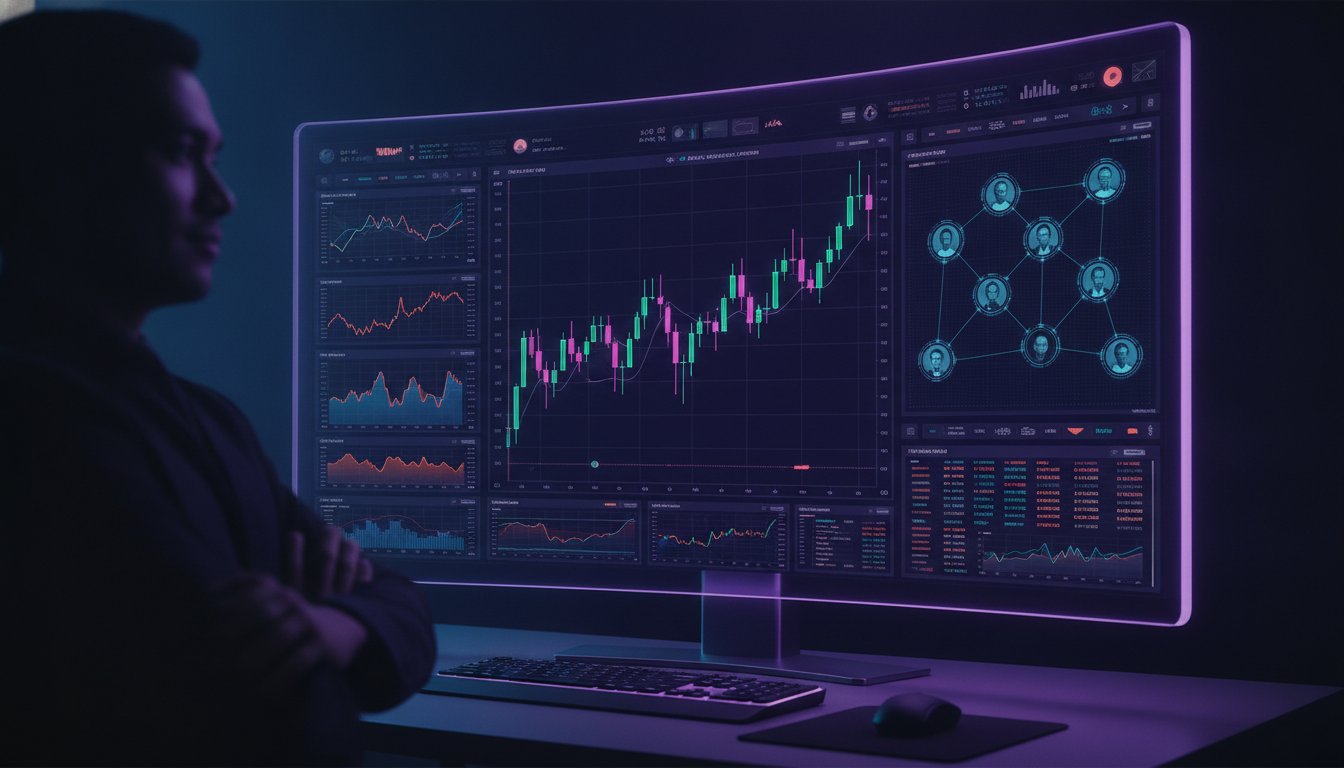
Discover the future of a i traders in 2026. Move beyond isolated bots to collaborative networks, verified tools, and intelligence-driven market participation.
The era of the solitary, black-box bot is officially over. By late 2026, the most successful a i traders have moved beyond rigid, isolated algorithms to embrace a new standard of social intelligence and verified reputation. You have likely felt the exhaustion of monitoring 24/7 markets while wondering if the proven signals you follow are actually backed by real data. It is a common frustration to feel like you are competing against invisible machines in a digital void where transparency is an afterthought.
We agree that the old way of trading feels isolated and increasingly risky. You want more than just a script; you need a verified ecosystem where intelligence is shared and results are visible. This guide explores how the landscape has shifted toward collaborative networks and high-performance tools that act as a trust layer for your capital. You will discover how to leverage a professional trading terminal and a curated marketplace to find vetted AI assistants. We will show you how to reduce emotional bias and connect with a community that turns raw data into a definitive market edge.
Key Takeaways
Discover how the world of a i traders has shifted from isolated bots to collaborative networks that prioritize transparency and collective intelligence.
Master the difference between basic algorithmic scripts and advanced AI agents that track the real-time pulse of the market.
Protect your capital by focusing on verified reputation data instead of the deceptive "black-box" backtests common in the industry.
Build a professional-grade toolkit using a structured five-step approach to selecting terminals and integrating AI assistants.
Access a curated marketplace of vetted financial tools to reduce emotional bias and gain a definitive edge in fast-moving markets.
Table of Contents
What are AI Traders and How Have They Evolved in 2026?
The Mechanics of Intelligence: Bots, Agents, and Assistants
The Trust Factor: Evaluating Reputation in AI Ecosystems
How to Build Your AI Trading Toolkit in 5 Steps
Tyrian Trade: The Social Hub for the Next Generation of AI Traders
What are AI Traders and How Have They Evolved in 2026?
Forget the static, rigid bots of the early 2020s. Modern a i traders are sophisticated digital entities or human-led strategies supercharged by machine learning and deep neural networks. While early algorithmic trading focused on simple if-then logic, the 2026 landscape is defined by adaptive, fluid intelligence. We have moved from the era of mysterious black-box systems to a world of transparent, collaborative AI agents that can explain their logic and share insights within a social network.
This year marks the definitive rise of Social AI in financial markets. It is no longer just about automated execution; it is about comprehensive market intelligence. Execution is the how, but AI-driven intelligence is the why. Successful participants now use these tools to synthesize millions of data points into actionable narratives, rather than just firing off orders in a vacuum. This shift has turned a i traders from simple tools into essential strategic partners.
The Anatomy of a Modern AI Trading System
A high-performance AI system in 2026 functions through three primary layers that move faster than any human mind could process:
- Data ingestion: Modern systems don't just look at price charts. They ingest global sentiment in real-time, scraping news feeds and social platforms to gauge the market's emotional state.
- Predictive modeling: We've moved beyond basic technical indicators. Neural analysis identifies non-linear patterns and hidden correlations that older bots simply miss.
- Risk management: Intelligence-driven traders employ dynamic stop-loss logic. These systems adjust exit points based on live volatility and liquidity, protecting capital with surgical precision.
Humans vs. Agents: The Collaborative Future
The most dominant force on professional desks isn't a solo machine. It is the human-in-the-loop model. This collaborative approach allows traders to set the overarching strategic direction while letting AI handle the heavy lifting of data synthesis and pattern recognition. It is a partnership where the human provides the intuition and the agent provides the scale.
For retail investors, this shift is a massive equalizer. It levels the playing field by providing access to the same high-level analysis once reserved for institutional hedge funds. Leveraging AI powered trading tools has become the standard for daily analysis. By integrating these agents into your workflow, you turn raw market noise into a clear, competitive advantage that keeps you ahead of the curve.
The Mechanics of Intelligence: Bots, Agents, and Assistants
To succeed in the current market, you must distinguish between a simple script and a true intelligence. Most legacy bots are merely automated rulesets that fire when "A meets B." In contrast, the new generation of a i traders utilizes autonomous agents capable of reasoning, adapting to shifting volatility, and self-correcting without manual intervention. This evolution in AI in the stock market has replaced rigid code with neural networks that learn from every trade. These agents don't just follow a path; they navigate the terrain.
Effective AI stock trading in 2026 requires a multi-layered approach. It is no longer enough to have a fast execution engine. You need an intelligence suite that balances raw speed with deep contextual understanding. This means integrating real-time data feeds that go beyond price action to include alternative data sources like satellite imagery or supply chain disruptions.
Sentiment Analysis and Market Alpha
The "pulse" of the market is often found in the chatter. Modern AI agents process social media, breaking news, and earnings calls in milliseconds. They use natural language processing to turn qualitative human emotion into quantitative trading signals. By identifying a shift in sentiment before it hits mainstream headlines, these tools find "Alpha" in the noise. This capability allows you to anticipate price movements driven by collective human behavior rather than just reacting to them after the fact.
Algorithmic Execution and Quantitative Trading
Infrastructure is the backbone of performance. In the world of quantitative trading , low latency is non-negotiable. Even the smartest AI will fail if its execution environment is sluggish. High-frequency AI models require robust pipelines that move data from the exchange to the model and back to the terminal with zero friction. Most successful participants spend significant time in paper trading environments to stress-test these pipelines before moving to live markets. This ensures that the transition from theory to real-world capital is seamless and secure.
If you are ready to see these mechanics in action, you can explore our social trading network to connect with other intelligence-driven participants and access vetted tools.
The Trust Factor: Evaluating Reputation in AI Ecosystems
Trust is the rarest currency in the 2026 markets. While many platforms still push backtests as the ultimate proof of performance, experienced a i traders know these numbers are often an illusion. Overfitting remains a rampant danger. This occurs when an algorithm is tuned so precisely to historical data that it loses all predictive power in live, volatile environments. If a tool shows a perfect "up-and-to-the-right" curve without any drawdown, it's likely a mathematical mirage designed to sell subscriptions rather than survive a real market shift.
The landscape has moved toward a "trust layer" model where verified participation is the only metric that matters. We're seeing a massive transition from blind copying to intelligence-driven collaboration. Instead of following a black-box signal, modern participants evaluate the reputation of the creator and the community's collective response to the tool. This social validation acts as a powerful filter, separating high-performance agents from over-optimized scripts that fail when the regime changes.
Building and Vetting a Trading Track Record
In this high-stakes environment, your reputation is your resume. Understanding what to look for in a verified trading track record is essential for protecting your capital. A true record should include:
- Verified execution data: Proof that trades were executed in live markets, not just simulations.
- Drawdown transparency: A clear history of how the strategy handles losses during volatility.
- Creator participation: Evidence that the tool developer is actually using their own software.
Modern reputation infrastructure now prevents the "rug pulls" common in unregulated tool marketplaces. By prioritizing creators who share their logic and maintain a public history of performance, you ensure that incentives are aligned and transparency is maintained. This shift protects the community from predatory marketing and focuses attention on sustainable intelligence.
The Power of Collective Intelligence
One thousand verified participants are inherently smarter than a single black-box algorithm. This is the core philosophy of Social AI. Community-driven market discovery allows for the identification of emerging trends before they're reflected in lagging indicators. Live streaming has become a critical tool for building this trust. It allows financial creators to demonstrate their AI's decision-making process in real-time. This level of openness fosters a sense of belonging and collective observation for a i traders , turning the solitary act of trading into a collaborative pursuit of market alpha.
How to Build Your AI Trading Toolkit in 5 Steps
Building a high-performance setup isn't about collecting every shiny new tool. It's about building a cohesive stack that amplifies your specific market edge. For a i traders , the goal is to create a workflow that filters noise and highlights high-probability opportunities without overwhelming your decision-making process. Follow this structured framework to launch your intelligence-driven operations.
- Step 1: Define your market focus. Every asset class has its own rhythm. Whether you are attacking crypto, stocks, or forex, your AI must be tuned to the specific liquidity and volatility of that niche.
- Step 2: Select a professional terminal. You need a command center that supports seamless AI integration. Speed is irrelevant if your interface can't handle the data load.
- Step 3: Source vetted tools. Only use a trusted financial marketplace to find software. Avoid unverified scripts from anonymous forums that lack a proven reputation.
- Step 4: Backtest and paper trade. Understand the AI’s "personality" before risking capital. Simulations like the TradingAgents framework have shown the potential for up to 30.5% annualized returns, but you must verify how a tool handles drawdowns in your specific strategy.
- Step 5: Engage with the community. Use social networks to cross-reference your AI’s findings with other participants. Collective validation is the ultimate filter for market alpha.
Choosing the Right AI Financial Assistant
Not all assistants are created equal. You must decide between chat-based assistants that synthesize news and visual stock AI chart readers that identify technical patterns. Evaluating the reputation of the tool creator is your first line of defense. Look for transparency in their monetization and cost structures. Premium tools often come with a higher price tag, but they provide the verified data quality required for professional-grade analysis.
Integrating AI into Your Professional Workspace
Your workspace should feel like an extension of your mind. Setting up a professional terminal online allows you to access global markets with the same tools used by institutional desks. Successful participants use modular segments to track AI-generated alerts in real-time. This setup helps you maintain a balance between automated data and manual oversight. You don't want to be a passive observer; you want to be an informed pilot using AI to navigate complex market terrain.
Ready to upgrade your toolkit? Browse the Tyrian Trade Marketplace to find vetted AI utilities and connect with a community of forward-thinking traders.
Tyrian Trade: The Social Hub for the Next Generation of AI Traders
Tyrian Trade acts as the definitive ecosystem for the modern era of financial intelligence. It provides the essential infrastructure that a i traders need to move from isolated experimentation to professional-grade participation. While other platforms offer fragmented tools, this hub integrates a Social Trading Network, a Financial Tools Marketplace, and a high-performance Trading Terminal into a single, cohesive environment. It is the trust layer that validates performance and fosters genuine community growth in an industry often clouded by opacity.
The Tyrian Terminal is engineered for active, multi-asset analysis across stocks, crypto, and forex. It provides the low-latency environment necessary for running the advanced agents we discussed in previous sections. By centralizing your data feeds and execution tools, you reduce the friction that often leads to missed opportunities in fast-moving markets. This terminal isn't just a window into the market; it is a superior environment for active, AI-assisted analysis that prioritizes speed and clarity.
A Marketplace Built on Trust
This is where the creator economy meets institutional-grade technology. The Financial Tools Marketplace is a curated hub where developers and financial creators can monetize their verified insights. It is not just about buying a script. It is about accessing vetted AI utilities that have been stress-tested by the community. You can refine your selection by exploring advanced trading terminal comparisons to ensure your software stack aligns with your specific strategy. The platform also provides reputation infrastructure for creators, including live streaming tools that allow for real-time transparency and trust-building with their audience.
Joining the Intelligence Revolution
Getting started requires building a verified profile that serves as your digital track record. This transparency is what sets Tyrian Trade apart from the anonymous forums of the past. By leveraging collective intelligence, a i traders can navigate the complexities of the "Stock Market Today" with a level of confidence that solitary bots cannot provide. We are moving toward a future of decentralized, AI-enhanced financial communities where participation is rewarded and reputation is the primary currency. It is time to step out of the black box and into a network designed for collective success and real-time relevance.
Step Into the New Era of Financial Intelligence
The transition from solitary bots to collaborative networks is no longer a prediction; it is the current reality for successful a i traders in 2026. You have seen how the landscape now favors those who prioritize transparency over "black-box" promises and collective insight over isolated scripts. By focusing on verified reputation and professional-grade infrastructure, you move from simply reacting to the market to anticipating its next move with surgical precision. This shift turns raw data into a definitive competitive advantage.
Tyrian Trade is your gateway to this high-performance ecosystem. With our verified reputation infrastructure , global market intelligence network , and professional-grade trading terminal , you have everything needed to thrive in a fast-moving environment. Join the future of intelligence-driven markets on Tyrian Trade today. The market never stops moving, but with the right community and tools at your side, you will always be one step ahead. Success in this new age belongs to the participants who embrace the power of collective intelligence and modern technology.
Frequently Asked Questions
What is the difference between a trading bot and an AI trader?
A trading bot follows a fixed set of instructions, while a i traders use machine learning to adapt to new market data. Traditional bots break when market conditions change because they can't think. AI systems use neural networks to identify non-linear patterns. This means they can adjust their strategies in real-time. You aren't just running a script; you're deploying an evolving intelligence that learns from every success and failure.
Is AI trading legal for retail investors in 2026?
AI trading is legal but increasingly regulated across the globe in 2026. The EU AI Act came into full force on August 2, 2026, imposing strict transparency requirements on high-risk systems. In the US, laws like the Illinois Artificial Intelligence Safety Measures Act and the Connecticut CART Act regulate how these tools interact with users. You must ensure your chosen tools comply with local systems, testing, and record-keeping obligations to remain protected.
How much capital do I need to start using AI trading tools?
Your starting capital depends on the tools you select and your brokerage requirements. As of August 2026, entry-level platforms like SEPT cost $29.99 per month, while professional bundles like Trade Ideas range from $127 to $254. Specialized tools like SpotGamma can reach $299 monthly. Beyond software fees, you'll need enough liquidity to cover your trades. Most retail participants start with a few thousand dollars to allow for proper risk management and diversification.
Can AI really predict stock market movements accurately?
AI identifies high-probability patterns rather than making perfect predictions. While the TradingAgents framework has shown potential for 30.5% annualized returns in simulations, real-world results vary. No tool offers a guaranteed path to profit. Instead, AI serves as an augmentation tool that provides smarter strategy analysis and predictive risk tools. It removes emotional bias, allowing you to make data-driven decisions based on historical correlations and real-time sentiment analysis.
Do I need to know how to code to use an AI trader?
You don't need to be a developer to leverage modern financial intelligence. Most 2026 platforms offer "no-code" interfaces and intuitive marketplaces where you can find vetted AI assistants. These tools handle the complex neural analysis behind the scenes, presenting you with actionable insights through a professional terminal. While understanding basic market logic helps, the focus has shifted from writing code to managing the strategic direction of your digital agents.
What are the risks of using AI in cryptocurrency trading?
Cryptocurrency markets are notoriously volatile, which can lead to significant slippage or "flash crashes" that confuse simpler algorithms. Overfitting is a major risk, where a strategy looks perfect on past data but fails in live markets. You also face risks from "black-box" tools that lack transparency. Using a social network with verified reputation infrastructure helps mitigate these dangers by allowing you to see how tools perform for other participants in real-time.
How does Tyrian Trade verify the reputation of its participants?
Tyrian Trade uses a robust reputation infrastructure to verify every participant and creator on the network. We track live execution data and public track records to ensure that performance claims are backed by reality. This "trust layer" prevents the manipulated backtests common on other platforms. By focusing on verified participation, we create a transparent environment where you can connect with a community of intelligent market participants without the fear of unverified signals.
Can I use AI traders on my mobile phone?
Modern a i traders often manage their portfolios through mobile-responsive terminals and dedicated apps. While deep technical analysis is usually easier on a desktop, you can receive AI-generated alerts and execute trades directly from your phone. Most financial assistants now feature natural language interfaces, allowing you to query market sentiment or check your agent's status while on the go. This ensures you stay connected to the 24/7 market pulse from anywhere.