market
Argentine Economy Grew More Than Expected in First Quarter
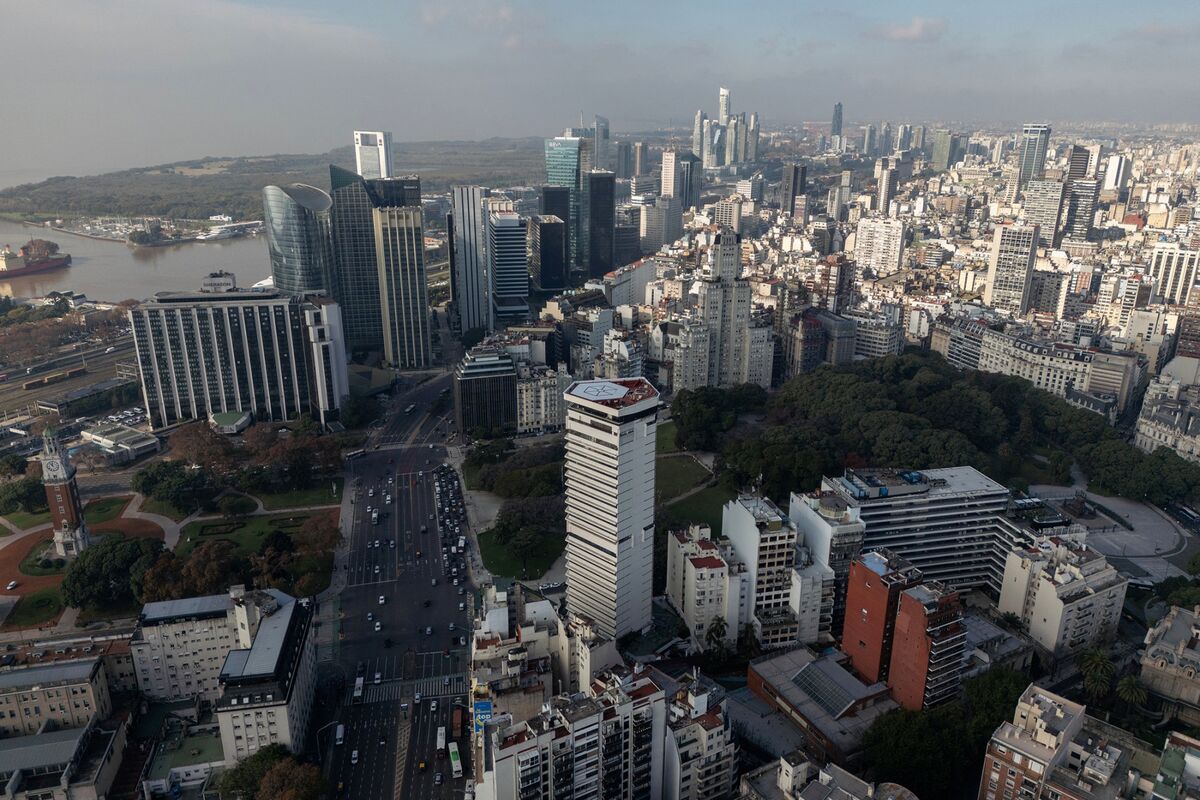
Argentina's economy surpassed growth expectations in Q1 2026 despite rising unemployment and wages trailing inflation, Bloomberg Markets reports.
According to Bloomberg Markets, Argentine economy growth proved resilient in the first quarter, surpassing expectations even as unemployment rose and wages trailed inflation. The report, published on June 23, 2026, highlights the complex economic dynamics facing Argentina as growth metrics diverge from labor market and purchasing power indicators. For investors and traders monitoring emerging markets, Argentina's performance offers insight into how economies can expand while households face continued pressure from inflation and employment challenges.
Key takeaways
Argentina's economy grew more than expected in the first quarter of 2026, according to Bloomberg Markets
Unemployment rose during the same period, creating a divergence between growth and labor market health
Wages trailed inflation, indicating continued pressure on household purchasing power despite economic expansion
General context: Emerging market economies often experience uneven recoveries where aggregate growth precedes improvements in employment and real wages
Table of Contents
What happened
Why it matters
What to watch next
What happened
Bloomberg Markets reported that Argentina's economic growth in the first quarter exceeded analyst expectations. The data reveals a resilient expansion despite challenging conditions in the labor market and household finances. The report specifically notes that unemployment increased during this period, creating a disconnect between overall economic performance and job market health. This pattern suggests that growth may be concentrated in sectors or activities that are not yet translating into broad-based employment gains.
Simultaneously, wages failed to keep pace with inflation, meaning that even employed workers experienced declining real purchasing power. This combination of above-forecast growth, rising unemployment, and negative real wage growth presents a mixed economic picture. The data point to an economy expanding in aggregate terms while many households continue to face financial pressure. Bloomberg Markets published these findings on June 23, 2026, providing the most recent quarterly assessment of Argentina's economic trajectory.
Why it matters
Emerging market economies frequently experience uneven recovery patterns where headline growth metrics improve before labor markets stabilize and household incomes recover. Argentina's first-quarter performance illustrates this dynamic, which matters for several reasons. First, sustained economic expansion typically requires broad-based improvement across employment, wages, and consumption. When growth occurs alongside rising unemployment and falling real wages, questions arise about the sustainability and composition of that growth. Investors monitoring Argentine assets need to assess whether current expansion can continue without improvement in household finances.
Second, the divergence between growth and labor market conditions affects monetary and fiscal policy decisions. Central banks and finance ministries must balance supporting continued expansion against addressing inflation and employment challenges. For currency traders, equity investors, and fixed-income participants, understanding these policy trade-offs is essential for positioning in Argentine markets. Third, wage growth trailing inflation directly impacts consumer spending power, which typically represents a significant portion of economic activity in emerging markets. If households cannot maintain purchasing power, consumption-driven growth may weaken in subsequent quarters, even if investment or export activity remains strong.
What to watch next
Investors and analysts should monitor several indicators to assess whether Argentina's growth trajectory proves sustainable. Employment data in the second quarter will reveal whether job creation begins to accompany economic expansion or if the labor market continues to weaken. Wage growth relative to inflation remains critical; if real wages continue declining, consumer spending may eventually constrain overall growth. Inflation trends themselves warrant close attention, as persistent price pressures could force policy responses that affect growth momentum. Sector-specific data will help identify which parts of the economy are driving expansion and whether growth is broadening or remains concentrated.
Policy responses from Argentina's central bank and government will also shape the outlook. Monetary policy adjustments, fiscal measures targeting employment or household support, and structural reforms could all influence whether the economy sustains its expansion while addressing labor market and wage challenges. For traders, currency volatility, sovereign bond spreads, and equity market performance will reflect evolving assessments of Argentina's economic trajectory. Comparative data from other emerging markets facing similar dynamics may provide context for evaluating Argentina's performance. Finally, second-quarter GDP data, expected in the coming months, will confirm whether first-quarter resilience represents a turning point or a temporary divergence in an ongoing adjustment process.
Read original source