tech-ai
BlackRock Downgrades Emerging-Market Equities Over AI Risks
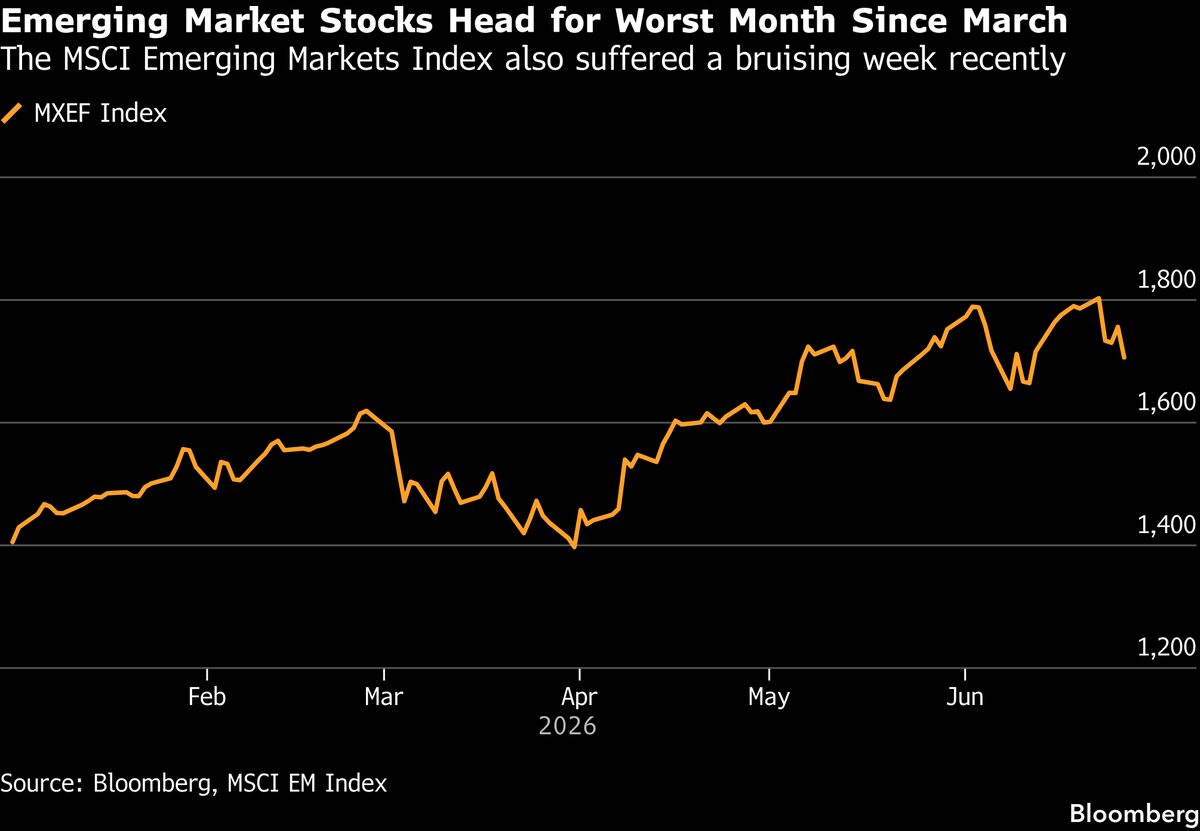
BlackRock downgrades emerging-market equities and favors euro-area bonds in its 2026 mid-year outlook, citing AI risks and shifting market dynamics.
BlackRock Inc.'s research arm has downgraded emerging-market equities to a cautious stance while expressing a bullish view on short- and medium-term euro-area government bonds, according to its 2026 mid-year global investment outlook released June 30, 2026, Bloomberg Markets reported. The shift reflects concerns about AI-related risks affecting emerging-market equity performance and a reassessment of regional bond opportunities in the euro area.
Key takeaways
BlackRock's research arm downgraded emerging-market equities in its 2026 mid-year global investment outlook, citing AI risks.
The firm expressed a bullish view on short- and medium-term euro-area government bonds.
The outlook reflects shifting regional risk assessments and sector allocation priorities for global investors.
Market readers may watch for additional details on AI risk factors and regional equity performance in future BlackRock disclosures.
Table of Contents
Market move
Key drivers
What comes next
Market move
According to Bloomberg Markets, BlackRock Inc.'s research arm has downgraded emerging-market equities in its 2026 mid-year global investment outlook, citing AI risks as a key concern. The firm simultaneously adopted a bullish stance on short- and medium-term euro-area government bonds, signaling a shift in regional allocation preferences. The outlook was released on June 30, 2026, and reflects the firm's reassessment of risk and opportunity across global equity and fixed-income markets.
For readers following broader market updates , this development can help frame the wider news context. Emerging-market equities have historically been sensitive to technology adoption cycles, capital flows, and regional growth expectations. The reference to AI risks suggests that BlackRock's research team is evaluating how artificial intelligence deployment, infrastructure investment, and competitive dynamics may affect emerging-market corporate earnings, valuations, or investor sentiment. However, the source context does not provide specific details on which AI risks were identified, which emerging markets were downgraded, or how the firm quantified the impact.
Key drivers
The source context confirms that AI risks were cited as a reason for the downgrade of emerging-market equities, but does not specify the nature of those risks. In general market context, AI risks affecting equity markets can include concerns about uneven technology adoption, capital allocation shifts toward AI infrastructure in developed markets, competitive pressure on traditional sectors, or uncertainty about how AI productivity gains will be distributed across regions. Emerging-market equities may face additional challenges if AI-driven automation reduces demand for labor-intensive exports, or if capital flows favor developed-market technology leaders.
BlackRock's bullish view on short- and medium-term euro-area government bonds suggests the firm sees value in European fixed-income markets, possibly reflecting expectations for stable yields, lower inflation risk, or favorable relative valuations compared to other developed-market bonds. The source context does not provide details on yield levels, duration targets, or specific euro-area countries favored by the firm. For investors, regional bond allocation decisions often reflect views on central bank policy, fiscal stability, inflation expectations, and currency risk. The combination of a cautious equity stance and a bullish bond view may indicate a more defensive or risk-managed portfolio posture in BlackRock's mid-year outlook.
What comes next
Market readers may watch for additional details from BlackRock on the specific AI risks cited in the downgrade, including whether the concerns relate to technology adoption, capital flows, sector disruption, or regional growth expectations. Future disclosures may clarify which emerging markets or sectors were downgraded, and whether the firm's view applies broadly or to specific countries or industries. Investors may also monitor how other global asset managers assess AI risks in emerging-market equities, and whether similar downgrades or allocation shifts appear in other mid-year outlooks.
For euro-area government bonds, readers may watch for further details on duration preferences, yield expectations, and country-specific allocations within BlackRock's bullish stance. The firm's mid-year outlook may be updated or supplemented with additional research reports, client communications, or public commentary that provides more granular guidance on regional equity and fixed-income positioning. Market participants may also track emerging-market equity performance, euro-area bond yields, and AI-related capital flows in the second half of 2026 to assess whether the trends cited by BlackRock's research arm continue to influence global asset allocation decisions.
Read original source