market
Cboe Revives Binary Options to Compete with Kalshi, Polymarket
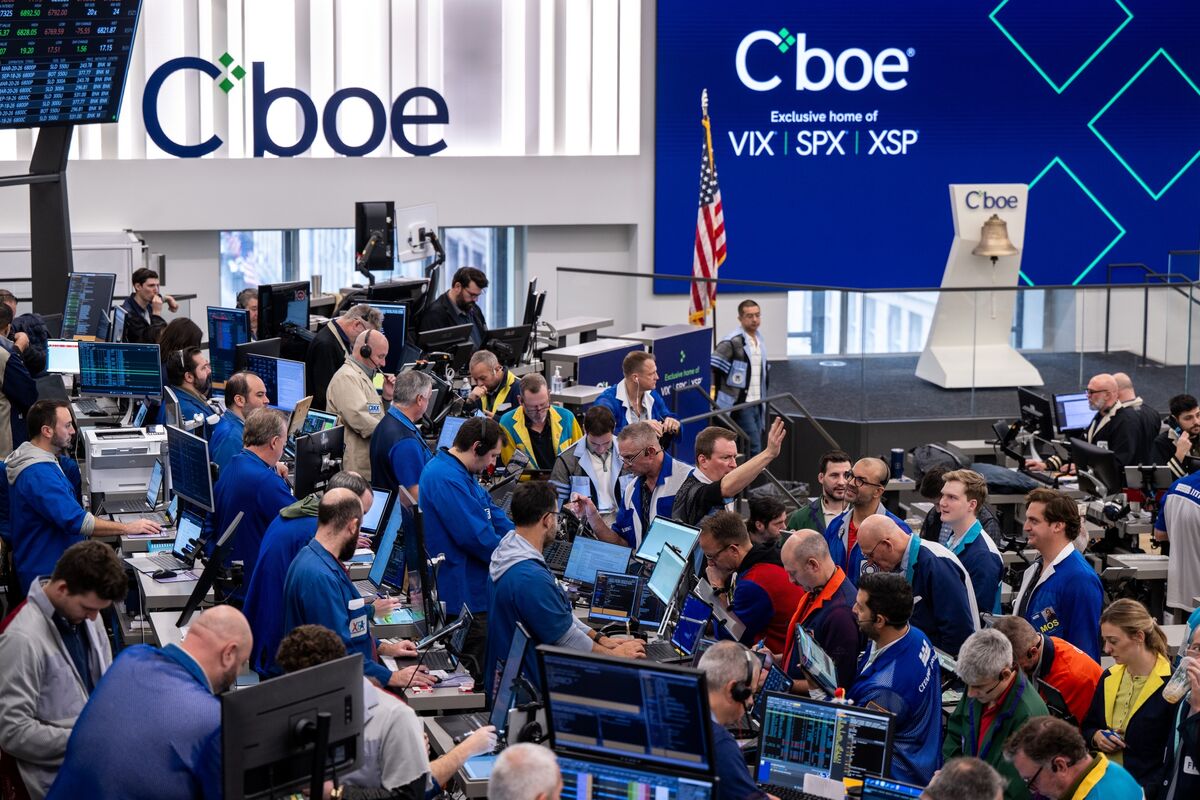
Cboe Global Markets announced it has brought back S&P 500 binary options after more than a decade, competing with prediction markets Kalshi and Polymarket.
Cboe Global Markets, Inc. announced on June 23, 2026, that it has brought back a type of S&P 500 contract after a hiatus of more than a decade, according to Bloomberg Markets. The reintroduction of Cboe binary options positions the exchange operator to compete directly with prediction market platforms Kalshi and Polymarket, which have popularized similar contract structures during Cboe's absence from this market segment.
Key takeaways
Cboe Global Markets announced the return of S&P 500 binary options contracts on June 23, 2026, after more than a decade-long hiatus
The contract type has become a popular mainstay of prediction market platforms Kalshi and Polymarket during Cboe's absence
Binary options are derivative contracts that pay a fixed amount if a specified condition is met at expiration, or nothing if the condition is not met, offering simplified yes-or-no market exposure
The move signals traditional exchange operators are responding to the growth of prediction market platforms that have attracted retail and institutional interest in event-driven contracts
Table of Contents
What happened
Why it matters
What to watch next
What happened
Cboe Global Markets, Inc. made the announcement on Tuesday, June 23, 2026, that it has reintroduced a type of S&P 500 contract that the exchange had not offered for more than a decade. According to Bloomberg Markets, this contract type is a binary option, a derivative instrument that has gained significant traction on prediction market platforms during the period when Cboe was not offering these products. The timing of the relaunch positions Cboe to compete directly with Kalshi and Polymarket, two platforms that have made binary-style contracts a core part of their offerings.
The announcement represents a strategic re-entry into a market segment that Cboe previously exited but that has since demonstrated sustained demand. Binary options on the S&P 500 allow market participants to take positions on whether the index will finish above or below a specified level at expiration, creating a simplified trading structure compared to traditional options. Cboe's decision to revive these contracts reflects the exchange's assessment that there is sufficient market interest to support a regulated exchange-traded version of instruments that have thrived on newer prediction market platforms.
Why it matters
Binary options are derivative contracts that settle at a fixed value if a specified condition is met at expiration, or expire worthless if the condition is not met. This creates a straightforward yes-or-no payoff structure that differs from traditional options, where the payout varies based on how far the underlying asset moves. For traders, binary options offer defined risk and reward, making position sizing and risk management more transparent. The contracts have proven particularly popular for event-driven trading and for participants who prefer simplified exposure to directional market views without the complexity of delta, gamma, and other Greeks associated with standard options.
The growth of Kalshi and Polymarket during Cboe's absence from this market illustrates broader shifts in how retail and institutional participants access event-driven contracts. Prediction markets have expanded beyond traditional financial indices to cover economic data releases, political events, and other binary outcomes, attracting users who value the simplicity and transparency of fixed-payout structures. Cboe's re-entry signals that established exchange operators recognize the competitive threat posed by these platforms and are willing to reintroduce products that may have been discontinued for regulatory, liquidity, or strategic reasons. For market participants, the return of exchange-traded binary options on the S&P 500 offers an alternative to prediction market platforms, with the regulatory oversight, clearing infrastructure, and institutional access that traditional exchanges provide.
What to watch next
Market participants should monitor whether Cboe's reintroduced S&P 500 binary options attract sufficient trading volume and open interest to establish liquid markets. Liquidity is critical for binary options, as tight bid-ask spreads and depth enable traders to enter and exit positions efficiently. The success of the relaunch will depend on whether Cboe can attract market makers, institutional participants, and retail traders who have become accustomed to the user experience and contract variety offered by Kalshi and Polymarket. Observers should also watch for any regulatory developments that could affect the competitive landscape between traditional exchanges and prediction market platforms, as differences in oversight and market structure may influence where participants choose to trade.
Additionally, it will be important to track whether Cboe expands its binary options offering beyond the S&P 500 to other indices, commodities, or event-driven contracts. The exchange's ability to innovate and respond to demand for new contract types will determine whether it can reclaim market share from prediction platforms or whether the two market structures will coexist serving different participant bases. Traders should also consider how the availability of exchange-traded binary options affects pricing and liquidity on prediction market platforms, as increased competition could lead to tighter spreads and more efficient price discovery across both venues. The interplay between traditional exchange infrastructure and newer prediction market models represents an evolving area of market structure that warrants close attention from participants, regulators, and industry observers.
Read original source