market
Chinese Copper Supplier Bets US Demand Can Bear Trump Tariffs
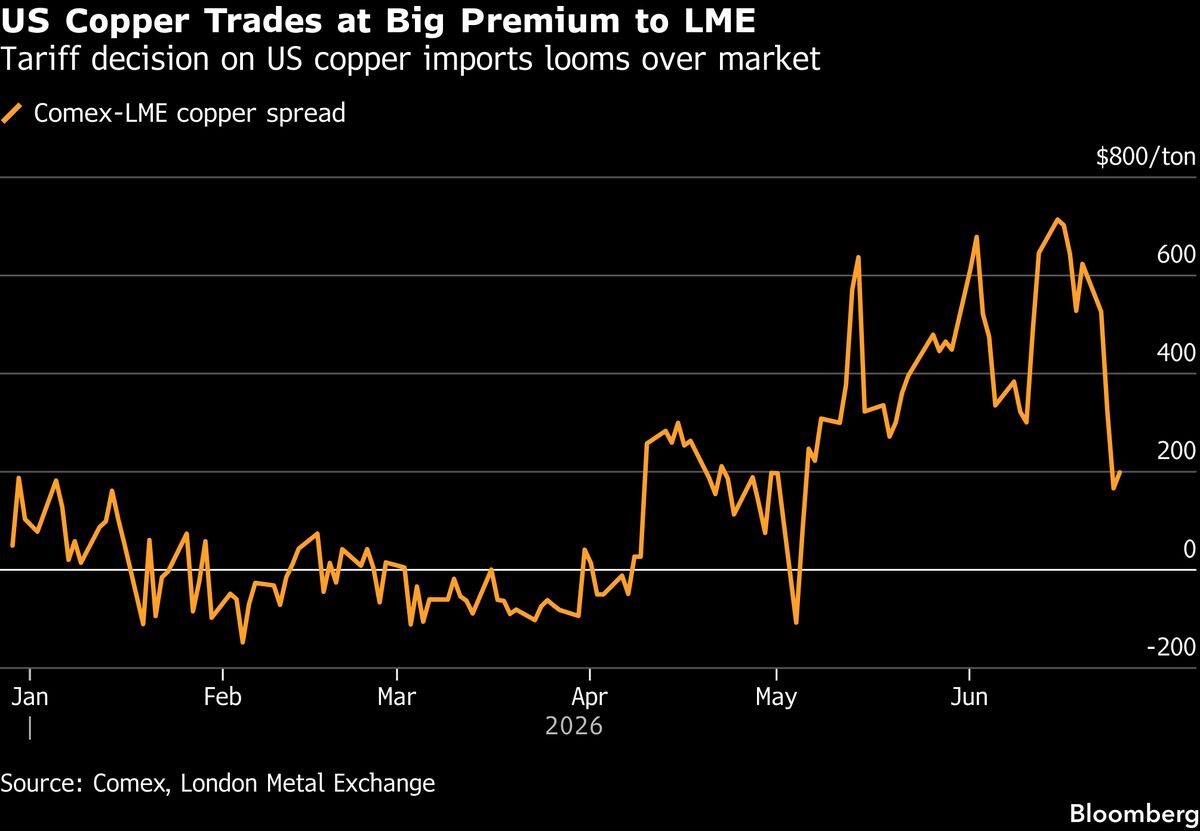
Zhejiang Hailiang Co. expects US customers to absorb higher copper prices if Trump tariffs on refined metal proceed, according to Bloomberg Markets.
According to Bloomberg Markets, Chinese copper manufacturer Zhejiang Hailiang Co. is betting its American customers won't balk at higher prices if the US follows through on placing tariffs on the refined metal. The statement reflects confidence that copper tariffs US demand remains resilient enough to absorb potential cost increases tied to trade policy changes under consideration. The company's position offers insight into how major suppliers are preparing for potential shifts in cross-border metal trade dynamics.
Key Takeaways
Zhejiang Hailiang Co., a Chinese copper manufacturer, expects US customers to accept higher prices if tariffs on refined copper are implemented
The statement reflects supplier confidence in the strength of US industrial demand for refined copper despite potential price increases
Copper is a critical industrial metal used in construction, electrical equipment, and manufacturing, making demand relatively inelastic in the short term
Trade policy uncertainty around metal tariffs continues to shape supplier and buyer expectations in global commodity markets
Table of Contents
What Happened
Why It Matters
What to Watch Next
What Happened
Zhejiang Hailiang Co., a Chinese manufacturer of refined copper products, has publicly stated its belief that American customers will accept higher prices if the United States implements tariffs on refined copper imports. The company's assessment, reported by Bloomberg Markets, suggests that the supplier views US demand as sufficiently robust to withstand the cost pressures that would result from tariff-driven price increases. This positioning indicates how major copper suppliers are evaluating the potential impact of trade policy changes on their customer relationships and pricing power.
The statement comes amid ongoing discussions about potential tariffs on refined metals under consideration by US policymakers. While the source does not specify the tariff rate, timing, or implementation details, Zhejiang Hailiang's public confidence signals that the company has assessed its US customer base and concluded that demand fundamentals are strong enough to support higher price points. The manufacturer's willingness to make this assessment public suggests it is preparing its market positioning ahead of potential policy changes.
Why It Matters
Copper is one of the most critical industrial metals in the global economy, with applications spanning electrical wiring, construction materials, electronics manufacturing, and renewable energy infrastructure. Unlike consumer discretionary goods, copper demand is often relatively inelastic in the short term because it is embedded in essential industrial processes and infrastructure projects that cannot easily substitute alternative materials. When suppliers like Zhejiang Hailiang express confidence that customers will absorb higher prices, they are effectively signaling that underlying demand drivers—such as construction activity, manufacturing output, and infrastructure investment—remain strong enough to support price increases without triggering significant demand destruction.
The broader context for this statement includes ongoing debates about trade policy, supply chain resilience, and the role of tariffs in reshaping global commodity flows. Tariffs on refined metals can have complex effects: they may protect domestic producers by raising the cost of imports, but they also increase input costs for downstream manufacturers who rely on those metals. For traders and investors, supplier confidence in demand resilience can be an important signal about the health of industrial activity and the pricing power dynamics in commodity markets. However, it is important to note that supplier assessments reflect their own business interests and market positioning, and actual customer behavior will depend on a range of factors including contract terms, alternative sourcing options, inventory levels, and the magnitude of any tariff-driven price increases.
What to Watch Next
Market participants should monitor several key developments to assess whether Zhejiang Hailiang's confidence in US demand proves accurate. First, any official announcements regarding tariff rates, implementation timelines, and the scope of covered copper products will provide clarity on the magnitude of potential price increases. Second, data on US copper imports, domestic production, and inventory levels will help gauge whether buyers are adjusting their sourcing strategies or building buffer stocks ahead of policy changes. Third, pricing trends in copper futures markets and physical spot markets will reflect how traders are pricing in tariff risk and demand expectations.
Additionally, statements from US-based copper consumers—including construction firms, electrical equipment manufacturers, and industrial buyers—will reveal whether they share the supplier's assessment of demand resilience or whether they are exploring cost mitigation strategies such as alternative materials, domestic sourcing, or contract renegotiations. Broader economic indicators, including US manufacturing activity, construction spending, and infrastructure investment, will provide context for the underlying demand fundamentals that Zhejiang Hailiang is betting on. Finally, responses from other major copper suppliers and competitors will indicate whether this confidence is widely shared across the industry or represents a more isolated view. Investors and traders should approach supplier statements as one input among many when assessing commodity market dynamics and trade policy impacts.
Read original source