markets
Comcast, Verizon Announce Telecom Restructuring Deals
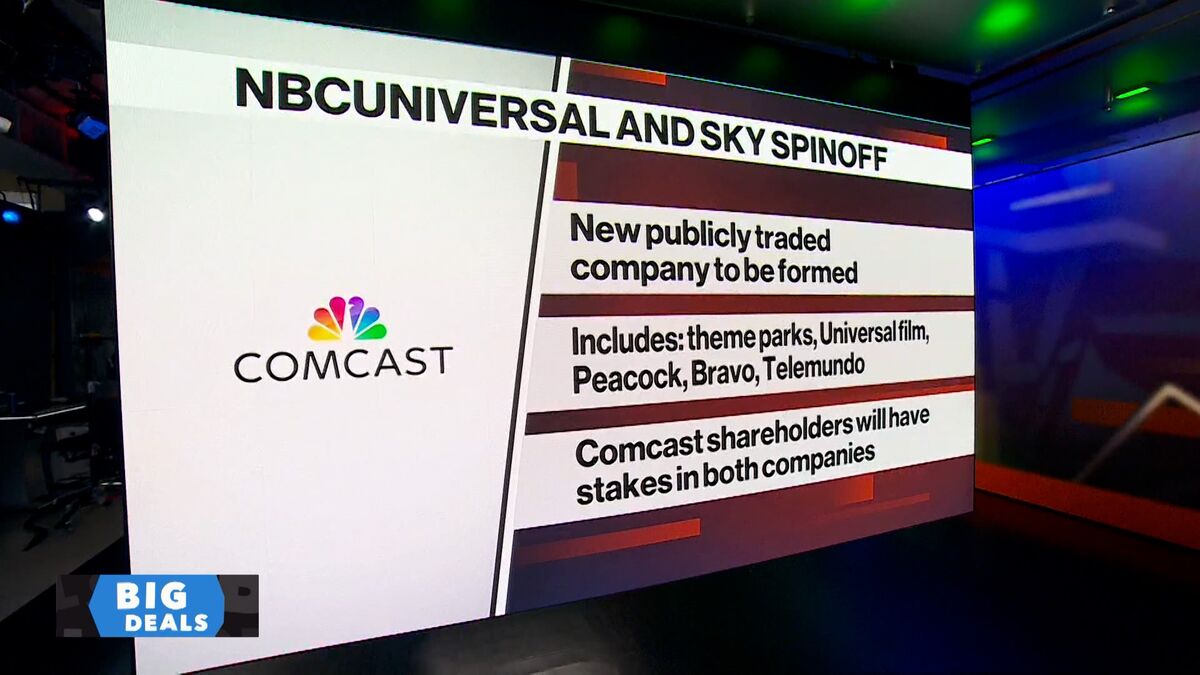
Comcast plans to spin off NBCUniversal and Sky, while Verizon and BT Group form a joint venture for international businesses, according to Bloomberg Markets.
Comcast Corporation and Verizon Communications announced separate restructuring deals on July 1, 2026, according to Bloomberg Markets. Comcast disclosed plans to spin off NBCUniversal and its European media unit, Sky, into a separate, independently traded company, while retaining its cable-TV, broadband, and wireless businesses. Verizon and the UK's BT Group agreed to create a joint venture for their international businesses, allowing both carriers to focus on their home markets.
Key Takeaways
Comcast announced plans to spin off NBCUniversal and Sky into a separate, independently traded company, according to Bloomberg Markets.
Verizon and BT Group agreed to form a joint venture for their international businesses, taking low-margin units off their books.
Both deals reflect a strategic focus on home markets and core operations, according to the source context.
Investors may watch for future disclosures on transaction terms, regulatory approvals, and operational details.
Table of Contents
Comcast Spin-Off Details
Verizon and BT Group Joint Venture
Why Telecom Restructuring Matters
What Investors Should Watch Next
Comcast Spin-Off Details
Comcast announced on Monday, July 1, 2026, that it will spin off NBCUniversal and its European media unit, Sky, into a separate, independently traded company, according to Bloomberg Markets. The source context states that Comcast will retain its cable-TV, broadband, and wireless businesses.
The spin-off represents a significant restructuring of Comcast's business portfolio, separating its media assets from its core connectivity operations. The source context does not provide details on the transaction timeline, regulatory approvals, tax treatment, shareholder distribution mechanics, or the name of the new entity. Investors and market readers may need to wait for future company disclosures to understand the operational and financial implications of the spin-off.
Verizon and BT Group Joint Venture
Verizon and the UK's BT Group agreed to create a joint venture for their international businesses in a merger that will take the low-margin units off their books, according to Bloomberg Markets. The source context states that the deal will allow both carriers to focus on their home markets.
For readers following broader market updates , this development can help frame the wider news context.
Why Telecom Restructuring Matters
For investors, telecom restructuring deals can matter because they often signal a shift in strategic priorities, capital allocation, and operational focus. Comcast's decision to separate its media assets from its connectivity businesses may allow each entity to pursue distinct growth strategies, optimize cost structures, and attract investors with different risk and return profiles. The spin-off could also provide greater transparency into the performance of each business segment, which may help investors assess valuation and execution risk.
Verizon's joint venture with BT Group reflects a similar strategic logic. By taking low-margin international units off their books, both carriers can focus on their home markets, where they may have stronger competitive positions, better regulatory relationships, and more predictable cash flows. For market readers, these deals highlight the ongoing challenges in the telecom industry, including margin pressure, competitive intensity, and the need to balance growth investments with cost discipline.
The source context does not provide specific financial projections, margin targets, or market share data, so investors should treat these deals as strategic headlines pending further disclosure.
What Investors Should Watch Next
Investors and market readers may watch for several follow-up disclosures and developments. For Comcast, key items include the transaction structure, the name and ticker of the new entity, the expected spin-off date, regulatory approvals, tax treatment, and any debt allocation between the two companies. Investors may also watch for management commentary on the strategic rationale, the expected benefits for shareholders, and the operational plans for both the retained and spun-off businesses.
For Verizon and BT Group, investors may watch for details on the joint venture's ownership structure, governance, financial terms, geographic scope, and expected timeline for completion. Regulatory approvals in the United States, the United Kingdom, and other jurisdictions may also be important. Market readers may also monitor how both companies allocate capital after the deals close, including any changes to dividend policies, share buyback programs, or growth investments. The source context does not provide guidance on these items, so investors should rely on future company disclosures, regulatory filings, and management presentations for additional information.
Read original source