market
ECB Rate-Hike Forecasts Scaled Back as Oil Prices Drop Sharply
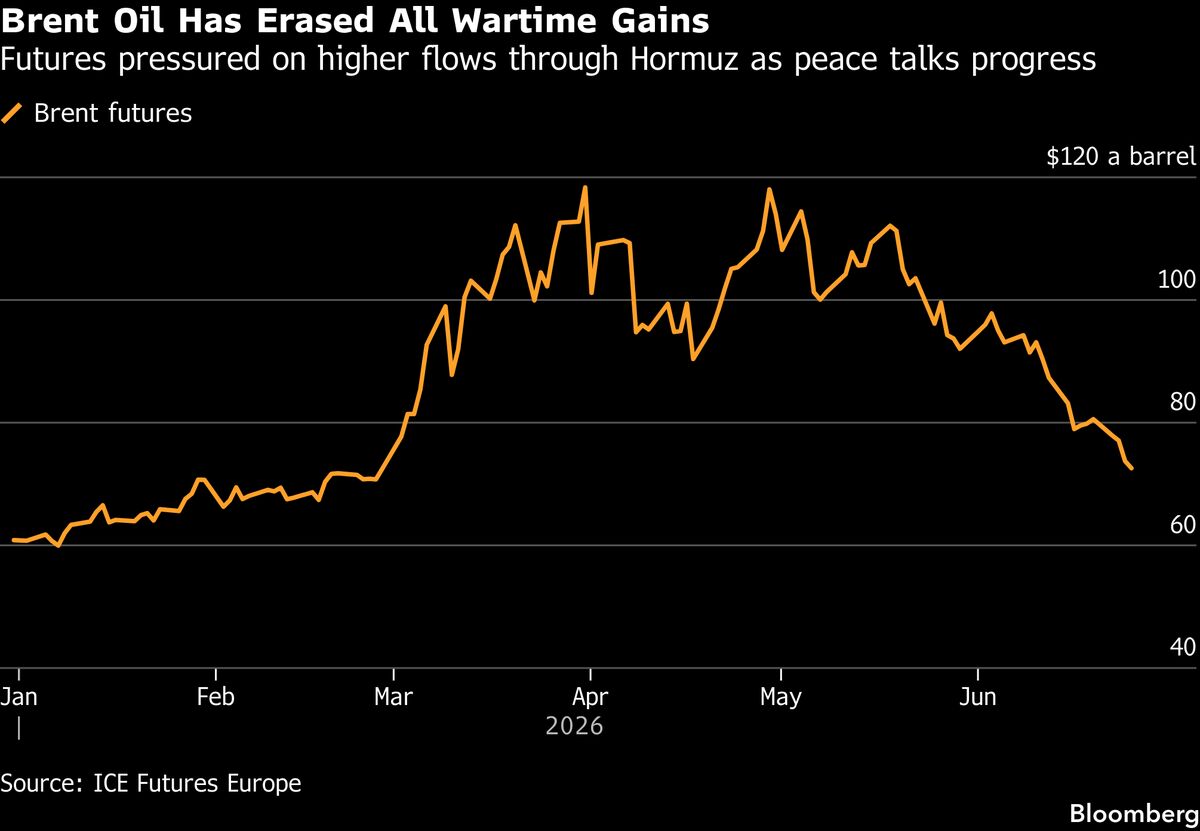
Economists pare back ECB rate-hike expectations as oil prices drop sharply amid Middle-East peace progress, potentially easing eurozone inflation pressures.
Bloomberg Markets reported on June 25, 2026, that some economists have scaled back expectations for European Central Bank interest-rate increases following a sharp drop in oil prices. The oil price decline occurred amid progress in Middle-East peace talks, with prices regaining pre-war levels according to the report.
Key takeaways
Economists have pared back ECB rate-hike forecasts following a sharp oil price decline
Oil prices have regained pre-war levels amid progress in Middle-East peace talks
Lower energy costs may reduce inflation pressures that have shaped ECB policy decisions
Investors should monitor upcoming ECB communications and inflation data for policy guidance
Table of Contents
Oil Price Drop Prompts Forecast Revisions
Implications for Monetary Policy
Market Outlook and Next Steps
Oil Price Drop Prompts Forecast Revisions
Bloomberg Markets reported that a sharp drop in oil prices has prompted some economists to scale back expectations for European Central Bank interest-rate increases. The oil price decline occurred amid progress in Middle-East peace talks, with prices regaining pre-war levels. The development represents a shift in the economic backdrop that has informed ECB policy forecasts, as energy costs have been a key driver of inflation pressures across the eurozone.
The source confirms that economists have adjusted their rate-hike forecasts in response to the oil price move. The timing of the oil price drop and peace progress suggests a potential easing of one inflation input that has shaped central bank policy decisions in recent quarters. For readers following broader market updates , this development can help frame the wider news context around central bank policy and inflation dynamics.
Implications for Monetary Policy
In general market context, central bank interest-rate expectations influence asset pricing across equities, bonds, currencies, and commodities. When economists revise rate-hike forecasts, it can signal a shift in the inflation outlook, growth expectations, or the balance of risks that central banks weigh when setting monetary policy. Lower oil prices can reduce headline inflation, ease cost pressures for businesses and consumers, and alter the urgency of further monetary tightening.
European Central Bank policy decisions matter because they affect borrowing costs, currency valuations, and financial conditions across the eurozone. Energy prices have been a significant inflation driver in general economic context, and a sustained decline in oil costs could reduce the need for additional rate increases if inflation pressures moderate. The interplay between energy markets and monetary policy remains a key focus for investors tracking eurozone economic conditions.
Market Outlook and Next Steps
Investors should monitor upcoming European Central Bank communications, including policy statements, press conferences, and economic projections, for guidance on how officials assess the inflation outlook and the path of interest rates. Future inflation data releases, particularly energy and headline inflation figures, will provide evidence of whether the oil price decline translates into lower consumer price growth.
The sustainability of Middle-East peace progress and oil price stability will also matter, as renewed geopolitical tensions could reverse recent energy market moves. Readers should watch for further economist forecast revisions, market pricing of ECB policy expectations, and any official ECB commentary on the inflation outlook in the coming weeks.
Read original source