policy
Emerging Asia Bonds Draw Global Funds Despite Fed Hike Fears
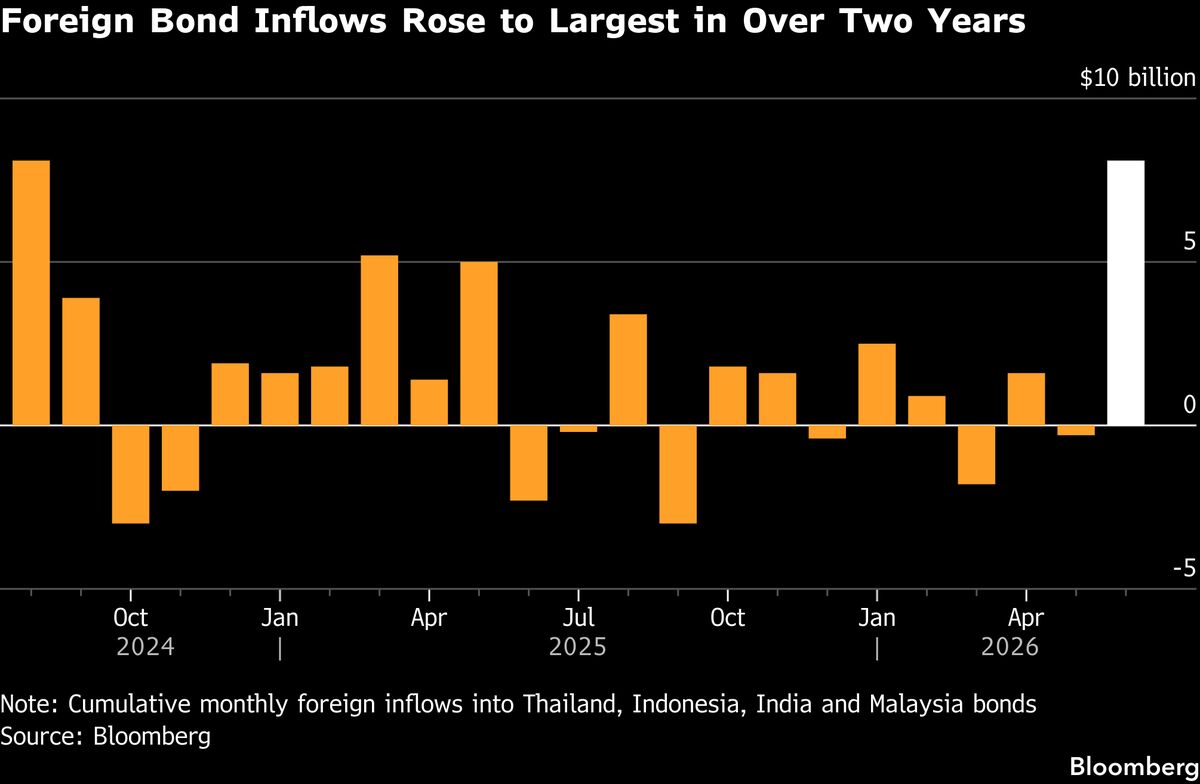
Foreign investors are returning to Asian emerging-market bonds despite Federal Reserve hawkishness, as regional rate stability supports yield appeal.
Foreign investors are returning to emerging Asia bonds despite renewed Federal Reserve hawkishness, according to Bloomberg Markets. The source reported that expectations of elevated regional central bank interest rates are supporting the debt's yield appeal, drawing global capital back into the asset class even as U.S. monetary policy uncertainty persists.
Key takeaways
Foreign investors are increasing allocations to Asian emerging-market bonds, according to Bloomberg Markets.
The source attributes the inflows to expectations that regional central banks will maintain elevated interest rates, supporting yield appeal.
The capital flows are occurring despite renewed Federal Reserve hawkishness and U.S. rate uncertainty.
For bond investors, regional rate stability and yield differentials can influence cross-border capital allocation decisions.
Table of Contents
Market move
Key drivers
What comes next
Market move
Bloomberg Markets reported that foreign investors are piling back into Asian emerging-market bonds, marking a notable shift in cross-border capital flows. The source confirmed that the inflows are occurring despite renewed Federal Reserve hawkishness, a development that typically raises concerns about U.S. rate policy and its impact on emerging-market debt. The report did not specify the size of the inflows, the countries receiving the largest allocations, or the investor groups driving the demand, but it framed the development as a meaningful reversal in sentiment toward the asset class.
For readers following broader market updates , this development can help frame the wider news context. Emerging-market bond flows are often sensitive to U.S. rate expectations, currency volatility, and regional economic stability. When global investors increase allocations to emerging Asia bonds, it can signal confidence in regional yield levels, central bank credibility, or relative value compared to developed-market debt. The source context did not provide specific yield levels, currency movements, or bond index performance, so readers should treat the report as a confirmed headline about capital flow direction rather than a detailed market analysis.
Key drivers
The source attributed the inflows to expectations that regional central banks will keep interest rates elevated, supporting the debt's yield appeal. Higher regional rates can make emerging Asia bonds more attractive to global investors seeking income, particularly when developed-market yields are perceived as less competitive or when currency risk is manageable. The report did not specify which central banks are expected to maintain elevated rates, the duration of the expected rate stability, or the yield differentials driving the allocation decisions, so readers should view the explanation as a general market driver rather than a detailed policy forecast.
For bond investors, regional rate stability can matter because it influences yield expectations, currency risk, and the relative attractiveness of emerging-market debt compared to developed-market alternatives. When regional central banks signal a commitment to maintaining elevated rates, it can reduce uncertainty about future income streams and support demand for local-currency bonds. However, the source context did not confirm whether the inflows are concentrated in local-currency debt, hard-currency debt, or a mix of both, so readers should watch for future market data to assess the composition and sustainability of the capital flows.
What comes next
Market readers may watch for future updates on emerging Asia bond flows, regional central bank policy statements, and U.S. Federal Reserve guidance. The source confirmed that the inflows are occurring despite renewed Fed hawkishness, but it did not provide details on the timing, magnitude, or expected duration of the U.S. rate uncertainty. Future disclosures from regional central banks, bond index providers, and fund flow data services could help clarify whether the capital flows represent a sustained shift in global allocation or a shorter-term positioning adjustment.
For investors, the development raises questions about yield sustainability, currency risk, and the balance between regional rate stability and U.S. monetary policy uncertainty. Without additional details on the countries receiving the largest inflows, the investor groups driving the demand, or the specific bond segments attracting capital, readers should treat the report as a confirmed market signal with limited operational detail. Future source updates may provide additional context on the drivers, risks, and potential market implications of the emerging Asia bond inflows.
Read original source