market
Fed Chairman Warsh's Policy Pivot Risks Market Confusion
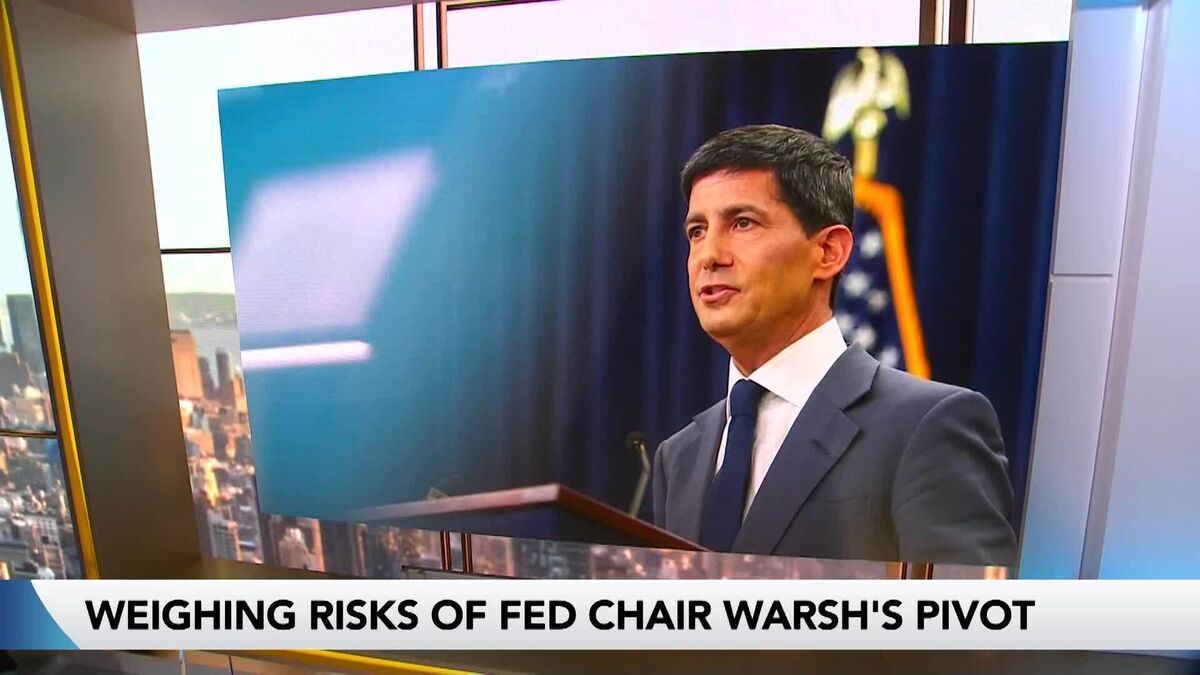
Former New York Fed President Bill Dudley warns Fed Chairman Warsh's policy statement changes risk confusing markets and the central bank itself.
Former New York Fed President Bill Dudley warned that Fed Chairman Warsh's approach to streamlining Federal Open Market Committee policy statements may risk confusing markets and the central bank itself, according to Bloomberg Markets. Dudley, now a Bloomberg Opinion columnist, stated that while simplifying the FOMC's policy statement is appropriate, Warsh needs to make changes with greater care than he has shown to date. The opinions expressed are Dudley's own, Bloomberg Markets reported on June 25, 2026.
Key Takeaways
Former New York Fed President Bill Dudley criticized Fed Chairman Warsh's approach to policy statement changes, according to Bloomberg Markets.
Dudley stated that streamlining the FOMC policy statement is appropriate, but Warsh needs to exercise greater care in implementation.
The former Fed official warned that Warsh's pivot may risk confusing both financial markets and the central bank itself.
For market readers, central bank communication clarity matters because policy statement changes can influence how investors interpret future rate decisions and economic guidance.
Table of Contents
What the Source Confirmed
Why Central Bank Communication Matters
Policy Statement Changes and Market Interpretation
What Remains Unclear
What to Watch Next
What the Source Confirmed
Bloomberg Markets reported that Bill Dudley, who served as President of the Federal Reserve Bank of New York and now writes as a Bloomberg Opinion columnist, expressed concern about Fed Chairman Kevin Warsh's approach to changing Federal Open Market Committee policy statements. Dudley stated that streamlining the FOMC's policy statement is an appropriate goal, but he emphasized that Warsh needs to implement changes with greater care than he has demonstrated so far. The source context attributes these opinions to Dudley himself, not to Bloomberg Markets as an institution.
The source context confirmed that Dudley warned Warsh's pivot may risk confusing markets and the central bank itself. The available source context does not specify which particular policy statement changes Warsh has made or proposed, what specific language is being streamlined, when these changes were announced, how markets have reacted to date, or what alternative approach Dudley recommends. The source context also does not identify whether Dudley's concerns relate to forward guidance language, inflation target framing, employment mandate wording, or other elements of FOMC communication.
Why Central Bank Communication Matters
For market readers, Federal Reserve communication clarity matters because policy statements serve as the primary tool through which the central bank signals its economic outlook, policy intentions, and reaction function to changing conditions. Investors, traders, and analysts parse FOMC statements for shifts in language that may indicate future rate decisions, balance sheet policy, or the committee's assessment of inflation, employment, and financial stability risks.
When policy statement language changes without clear explanation, market participants may struggle to distinguish between substantive policy shifts and stylistic adjustments. Central bank communication also matters because unclear or inconsistent messaging can increase market volatility, widen bid-ask spreads, and complicate risk management for institutional investors. For readers following broader market updates , this development can help frame the wider news context.
When market participants cannot confidently interpret central bank intentions, they may demand higher risk premiums, reduce position sizes, or delay investment decisions. The Federal Reserve's credibility depends in part on its ability to communicate policy clearly and consistently over time, which is why former Fed officials often comment publicly when they perceive communication risks.
Policy Statement Changes and Market Interpretation
In general market context, Federal Reserve policy statement changes can influence how investors interpret future rate decisions and economic guidance. The FOMC statement typically includes assessments of economic activity, labor market conditions, inflation trends, and the committee's policy stance. Changes to this language can signal shifts in the committee's reaction function, such as greater tolerance for inflation overshoots, increased concern about employment risks, or adjustments to the balance between competing mandates.
Market participants often compare current statements to prior versions word-by-word to identify meaningful changes. When a Fed chairman introduces changes to policy statement structure or language, market participants must assess whether the changes reflect substantive policy shifts or merely stylistic preferences. If the rationale for changes is not clearly communicated, investors may misinterpret the central bank's intentions, leading to unintended market moves.
For example, removing language about forward guidance could be interpreted as a hawkish signal if markets believe the Fed is reducing its commitment to accommodation, or as a dovish signal if markets believe the Fed is gaining flexibility to respond to data. Without clear communication, the same change can generate conflicting interpretations.
What Remains Unclear
The available source context does not specify which particular policy statement changes Fed Chairman Warsh has made or proposed. The source context does not identify what specific language is being streamlined, when these changes were announced, or how markets have reacted to the changes so far. The source context also does not clarify whether Dudley's concerns relate to forward guidance language, inflation target framing, employment mandate wording, balance sheet policy communication, or other elements of FOMC statements.
The source context does not provide details on what alternative approach Dudley recommends, whether other current or former Fed officials share Dudley's concerns, or whether Warsh has responded to the criticism. The source context does not specify whether the policy statement changes have already been implemented or are still under consideration. Further Federal Reserve disclosures, FOMC meeting minutes, or public remarks by Fed officials would be needed to clarify the nature of the policy statement changes and the rationale behind them.
What to Watch Next
Market readers may watch for future Federal Reserve policy statements to assess whether language changes continue and how the FOMC explains any adjustments. Upcoming FOMC meeting minutes may provide additional context on internal committee discussions about communication strategy. Public remarks by Fed Chairman Warsh or other FOMC participants may clarify the rationale for policy statement changes and address concerns raised by former officials.
Investors may also monitor market reaction to future FOMC statements to assess whether communication clarity improves or whether confusion persists. If market volatility increases following policy statements, or if Fed officials provide conflicting interpretations of the same statement, that could signal ongoing communication challenges. Readers should also watch for additional commentary from former Fed officials, market strategists, or academic economists on the effectiveness of the Fed's communication approach under Warsh's leadership. Any formal Fed review of communication practices or changes to the FOMC's statement release process would also be relevant for market participants tracking central bank transparency.
Read original source