market
German M&A Deals Surpass $120 Billion in Busy Year
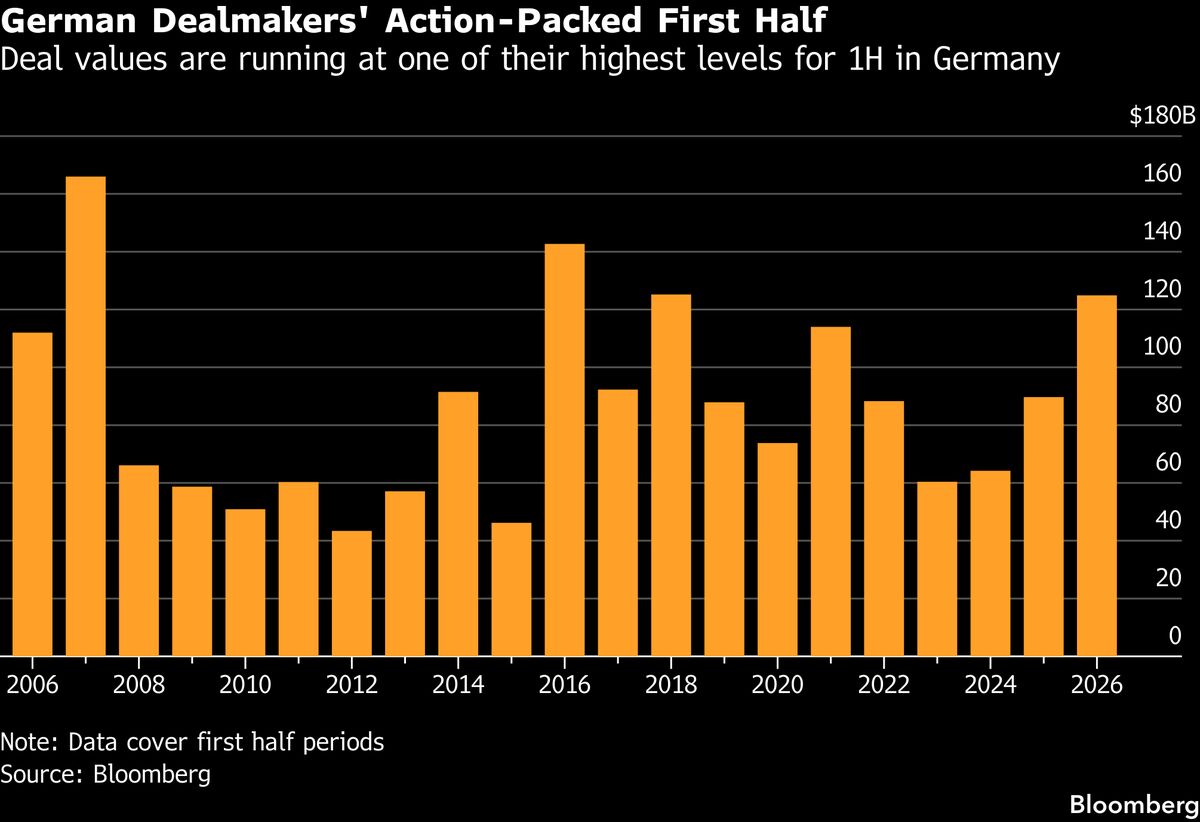
Germany's M&A activity has exceeded $120 billion, marking one of the busiest years for dealmaking in decades, according to Bloomberg Markets.
Germany's mergers and acquisitions activity has surpassed $120 billion, marking one of the busiest years for dealmaking in decades, according to Bloomberg Markets. The country's dealmakers are seeing long-anticipated transactions come to fruition, with activity in the engines and elevators sectors contributing to the elevated deal volume. The milestone underscores a resurgence in corporate transaction activity within Europe's largest economy.
Key takeaways
German M&A deal value has exceeded $120 billion, according to Bloomberg Markets reporting on June 25, 2026
The country is experiencing one of its busiest years for mergers and acquisitions in decades
Transactions in the engines and elevators sectors are among those driving the elevated activity
M&A activity serves as a key indicator of corporate confidence, capital availability, and strategic repositioning in major economies
Table of Contents
What happened
Why it matters
What to watch next
What happened
Germany's mergers and acquisitions market has crossed the $120 billion threshold, according to Bloomberg Markets. The activity represents one of the busiest periods for German dealmaking in decades, with transactions that dealmakers had long anticipated now reaching completion. The engines and elevators sectors are among the industries contributing to the elevated transaction volume, though the source does not specify individual deal names, companies involved, or exact transaction values within these sectors.
The $120 billion figure reflects aggregate deal value and positions Germany as a significant contributor to European M&A activity. The source attributes the surge to long-wished-for transactions coming to fruition, suggesting that deals previously delayed or in negotiation are now closing. The timeline for this activity spans the year, with the Bloomberg Markets report published on June 25, 2026, providing a mid-year snapshot of the German M&A landscape.
Why it matters
Mergers and acquisitions activity serves as a barometer for corporate confidence, capital market conditions, and strategic realignment within an economy. When deal volumes rise to multi-decade highs, it typically signals that companies see favorable conditions for consolidation, expansion, or portfolio optimization. For Germany, elevated M&A activity reflects the willingness of both domestic and international buyers to commit capital to German assets, which can indicate confidence in the country's economic fundamentals, regulatory environment, and sector-specific growth prospects.
The engines and elevators sectors mentioned in the source represent industrial and manufacturing segments where Germany has historically maintained competitive strength. Cross-border M&A in these areas often involves strategic buyers seeking technology, market access, or operational scale. Elevated deal activity can also reflect private equity interest, corporate divestitures, or family-owned business transitions, all of which are common in the German market. For investors and market participants, tracking M&A volume provides insight into where capital is flowing, which sectors are attracting strategic interest, and how corporate balance sheets are being deployed in a given economic cycle.
What to watch next
Readers should monitor whether German M&A activity sustains its pace through the remainder of the year or whether the $120 billion milestone represents a concentration of deals that may taper. Key indicators include the number of announced versus completed transactions, the mix of domestic versus cross-border deals, and whether activity remains concentrated in industrial sectors or broadens to technology, healthcare, or financial services. Regulatory approvals, antitrust reviews, and financing conditions will all influence whether additional large transactions close in the coming months.
Additionally, market participants should watch for commentary from investment banks, legal advisors, and corporate development teams on the pipeline of future deals. Economic factors such as interest rate policy from the European Central Bank, currency movements affecting cross-border valuations, and geopolitical developments impacting trade and investment flows will all shape the M&A environment. Comparing Germany's deal activity to other major European markets, such as the United Kingdom and France, will provide context on whether the surge is country-specific or part of a broader regional trend in corporate dealmaking.
Read original source