market
Gold Drops Below $4,100 as Tech Selloff Triggers Liquidation
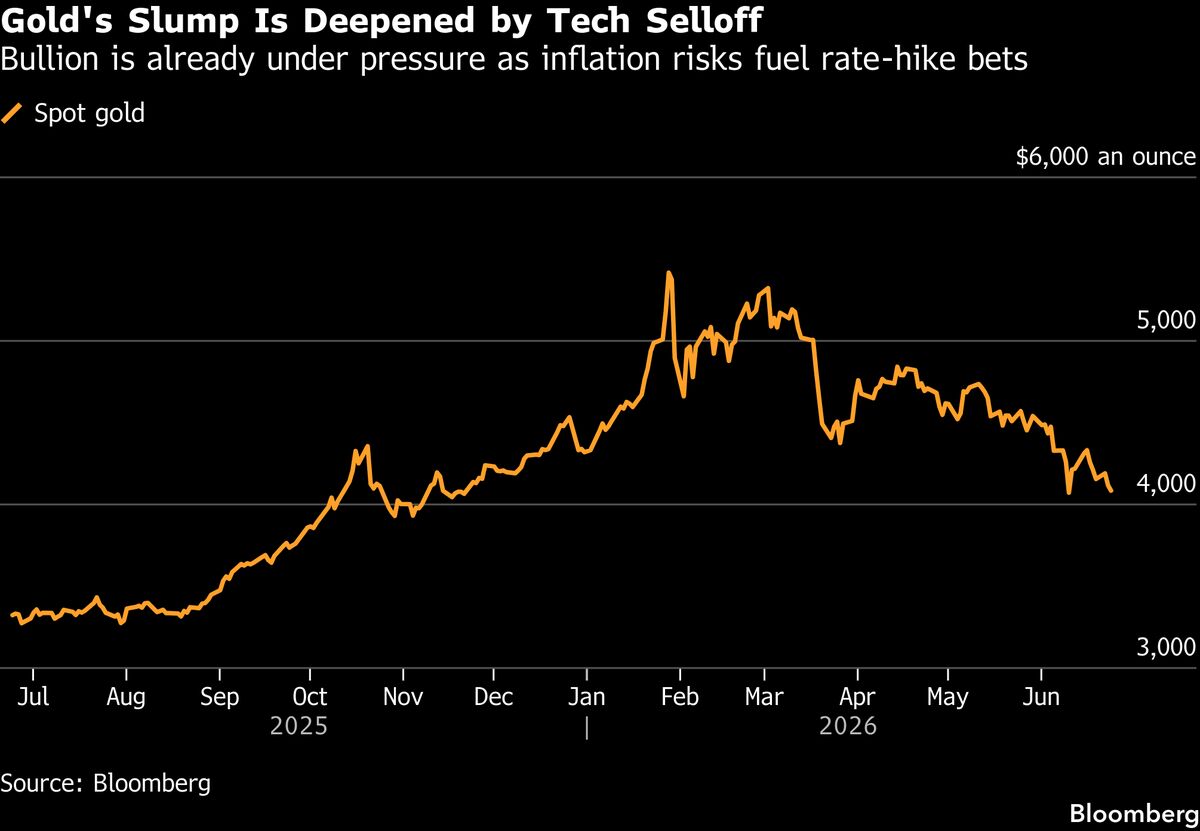
Gold fell below $4,100 on June 23, 2026, as a tech-led Wall Street selloff prompted investors to liquidate bullion holdings to cover losses.
Gold extended its decline and fell below $4,100 on June 23, 2026, as a technology-led selloff on Wall Street prompted investors to liquidate bullion holdings to cover losses elsewhere in their portfolios, according to Bloomberg Markets. The move underscores how precious metals can face selling pressure during broader market stress, even when traditionally viewed as safe-haven assets, as portfolio managers prioritize meeting margin calls and rebalancing positions across asset classes.
Key Takeaways
Gold dropped below $4,100 on June 23, 2026, extending an earlier decline according to Bloomberg Markets.
A technology-led selloff on Wall Street drove the liquidation as investors sold bullion to cover losses in other portfolio positions.
The event illustrates cross-asset contagion, where stress in one market segment can force selling in traditionally uncorrelated assets.
General context: Gold often serves as a portfolio hedge, but liquidity needs during sharp equity declines can override safe-haven demand in the short term.
Table of Contents
What Happened
Why It Matters
What to Watch Next
What Happened
Gold prices fell below the $4,100 level on June 23, 2026, continuing a broader decline in the precious metal, according to Bloomberg Markets. The selloff coincided with a technology-led downturn on Wall Street, creating pressure across multiple asset classes. Investors liquidated gold holdings as part of a broader portfolio adjustment, using proceeds from bullion sales to cover losses sustained in other positions, particularly in the technology sector.
The liquidation pattern reflects a common market dynamic during periods of acute stress: assets that are typically liquid and widely held become funding sources when investors face margin calls or need to rebalance portfolios quickly. Gold, despite its traditional role as a store of value, proved vulnerable to this cross-asset selling pressure as the technology selloff intensified. The move below $4,100 marks a concrete price threshold that traders and portfolio managers monitor for technical and psychological significance in precious metals markets.
Why It Matters
This event highlights the complex relationship between gold and equity markets during periods of financial stress. While gold is often characterized as a safe-haven asset that rises when stocks fall, short-term liquidity needs can override this traditional negative correlation. When investors face losses in concentrated positions—particularly in high-beta sectors such as technology—they may sell liquid assets including gold to meet margin requirements, cover redemptions, or reduce overall portfolio risk. This forced selling can create temporary price dislocations that diverge from longer-term fundamental drivers such as inflation expectations, real interest rates, and currency movements.
The technology sector's role as the catalyst for this gold liquidation is noteworthy because tech stocks have been a significant driver of equity market performance in recent years. A sharp selloff in this sector can have outsized portfolio effects for institutional and retail investors alike, triggering risk management protocols that span asset classes. For gold investors, the episode serves as a reminder that precious metals are not immune to broader market dynamics, especially when leveraged positions and cross-asset correlations come under stress. Understanding these liquidity-driven selling episodes helps investors distinguish between temporary technical pressure and fundamental shifts in gold's supply-demand balance or monetary policy environment.
What to Watch Next
Investors should monitor whether the technology sector stabilizes or continues to decline, as the trajectory of equity markets will influence near-term gold price action. If the tech selloff persists and broadens into other sectors, additional liquidation pressure on gold could emerge as portfolio managers continue to raise cash and reduce risk exposure. Conversely, if equity markets find support and volatility subsides, gold may regain its traditional safe-haven bid as investors reassess portfolio hedges and inflation protection. Tracking equity market volatility indices, margin debt levels, and fund flow data will provide insight into whether forced selling has run its course.
Beyond immediate market technicals, observers should watch for any shifts in the fundamental drivers that typically support gold prices over longer horizons. These include central bank policy signals, inflation data, real interest rate movements, and currency trends—particularly the U.S. dollar, which tends to move inversely to gold. If the technology selloff reflects broader economic concerns such as growth slowdown or monetary policy uncertainty, gold's medium-term outlook could strengthen once short-term liquidation pressure eases. Investors should also pay attention to physical gold demand indicators, including central bank purchases and jewelry consumption in major markets, to assess whether the price decline attracts bargain-seeking buyers or reflects a more sustained shift in sentiment toward the precious metal.
Read original source