tech-ai
Honeywell Aerospace Begins Trading After Spin-Off
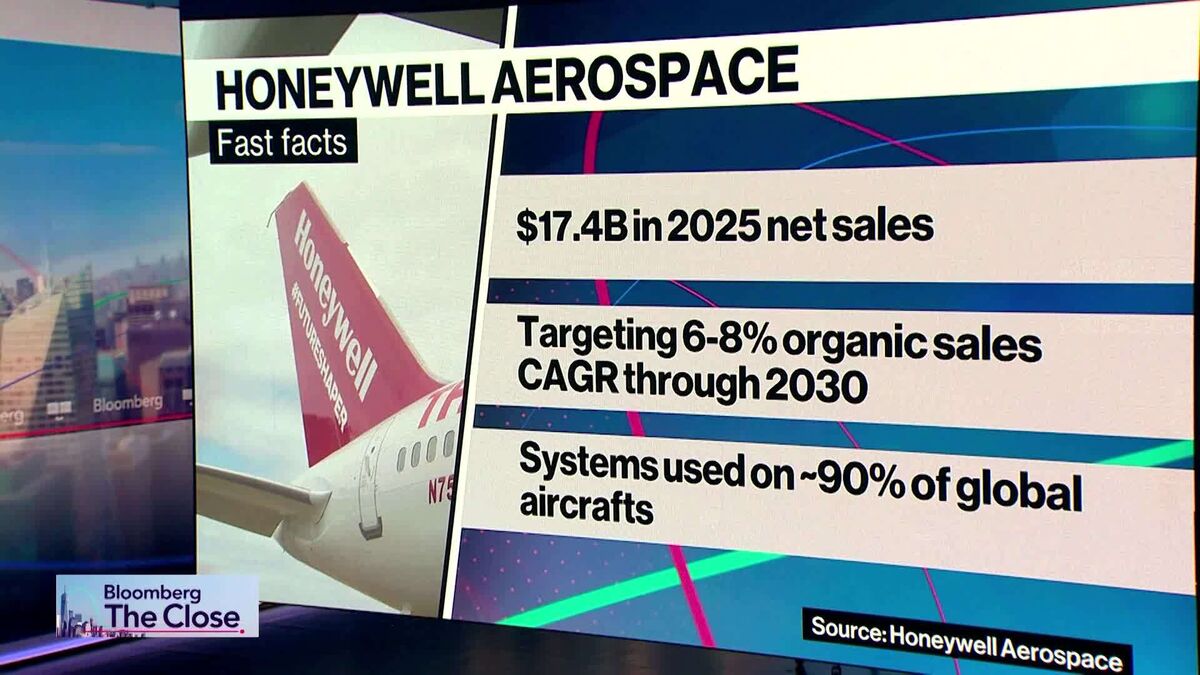
Honeywell Aerospace began trading as a standalone aerospace and defense company following its spin-off from Honeywell International, CEO Jim Currier confirmed.
Honeywell Aerospace began trading as a standalone aerospace and defense company on June 29, 2026, following its separation from Honeywell International, according to Bloomberg Markets. CEO Jim Currier discussed the Honeywell Aerospace spin-off during an interview, emphasizing the company's embedded position within the aerospace and defense ecosystem and its mission-critical products and services across major commercial and defense platforms.
Key takeaways
Honeywell Aerospace began trading as a standalone company on June 29, 2026, after separating from Honeywell International.
CEO Jim Currier highlighted the company's mission-critical role across major commercial and defense platforms.
The separation creates a pure-play aerospace and defense firm focused on embedded products and services.
Investors may watch for future operational disclosures, financial guidance, and defense demand trends as the company establishes its independent market presence.
Table of Contents
Separation creates standalone aerospace and defense company
Mission-critical products across commercial and defense platforms
Why the spin-off matters for investors
What to watch next
Separation creates standalone aerospace and defense company
Honeywell Aerospace completed its separation from Honeywell International on June 29, 2026, and began trading as an independent aerospace and defense company, Bloomberg Markets reported. The spin-off transforms what was previously a business unit within a diversified industrial conglomerate into a focused, publicly traded entity dedicated to aerospace and defense markets. CEO Jim Currier confirmed the new status during a Bloomberg interview, marking the first day of trading for the standalone company.
The separation follows a corporate restructuring strategy that allows Honeywell International to streamline its portfolio while enabling Honeywell Aerospace to operate with dedicated management, capital allocation, and strategic focus. For investors, spin-offs can matter because they often create clearer operational visibility, allow management teams to tailor strategies to specific industries, and enable more transparent financial reporting. The aerospace and defense sector has historically attracted investor attention due to long-term government contracts, commercial aviation demand cycles, and technology-driven product development.
Mission-critical products across commercial and defense platforms
CEO Jim Currier emphasized Honeywell Aerospace's embedded role within the aerospace and defense ecosystem, highlighting the company's mission-critical products and services across major commercial and defense platforms, according to the source context. Mission-critical products typically include components, systems, and services that are essential to aircraft operation, safety, and performance, such as avionics, propulsion systems, flight controls, and maintenance services.
These products are often integrated into aircraft designs during development and remain part of the platform throughout its operational life, creating long-term revenue streams through original equipment sales, aftermarket services, and upgrades. The company's position across both commercial and defense platforms provides diversification across customer types, contract structures, and demand drivers. Commercial aerospace demand is generally influenced by airline profitability, passenger traffic growth, fleet replacement cycles, and aircraft production rates. Defense demand is shaped by government budgets, geopolitical priorities, modernization programs, and long-term procurement contracts.
Why the spin-off matters for investors
The Honeywell Aerospace spin-off matters for investors because it creates a pure-play aerospace and defense company with dedicated management, transparent financial reporting, and focused capital allocation. Spin-offs can allow investors to evaluate and value businesses more precisely, as standalone companies report segment-specific revenue, margins, cash flow, and capital expenditure without the complexity of a diversified parent structure.
For readers following broader market updates , aerospace and defense spin-offs have historically attracted attention from institutional investors seeking exposure to defense spending trends, commercial aviation recovery, and technology-driven product cycles. Investors may evaluate Honeywell Aerospace based on its competitive position within key product categories, its exposure to major aircraft platforms, its aftermarket revenue mix, and its ability to invest in next-generation technologies such as electric propulsion, autonomous systems, and advanced avionics.
The company's embedded role across major platforms suggests established customer relationships and recurring revenue potential, though investors will likely watch for detailed financial guidance, margin profiles, and growth strategies as the company provides its first standalone disclosures. The aerospace and defense sector can experience volatility driven by production rate changes, supply chain disruptions, certification delays, and shifts in government spending priorities.
What to watch next
Investors and market readers should watch for Honeywell Aerospace's first standalone earnings report, which will provide detailed financial metrics including revenue by segment, operating margins, cash flow generation, and capital allocation priorities. The company's management team will likely provide forward guidance on commercial aerospace demand, defense contract pipelines, aftermarket service growth, and investment plans for product development and technology upgrades.
Defense demand trends will be an important factor, as government budgets, geopolitical developments, and modernization programs influence long-term contract awards and revenue visibility. Additional factors to monitor include the company's competitive positioning within key product categories, its exposure to major aircraft platforms such as Boeing and Airbus commercial jets and military aircraft, and its ability to capture aftermarket revenue through maintenance, repair, and overhaul services.
Supply chain stability, certification timelines for new products, and the company's approach to emerging technologies such as electric and hybrid propulsion systems will also shape investor assessments. As the company establishes its independent market presence, disclosures related to customer concentration, contract backlog, and margin trends will help investors evaluate the financial profile and growth potential of the newly separated aerospace and defense firm.
Read original source