education
How Portfolio Analytics Tools Really Help
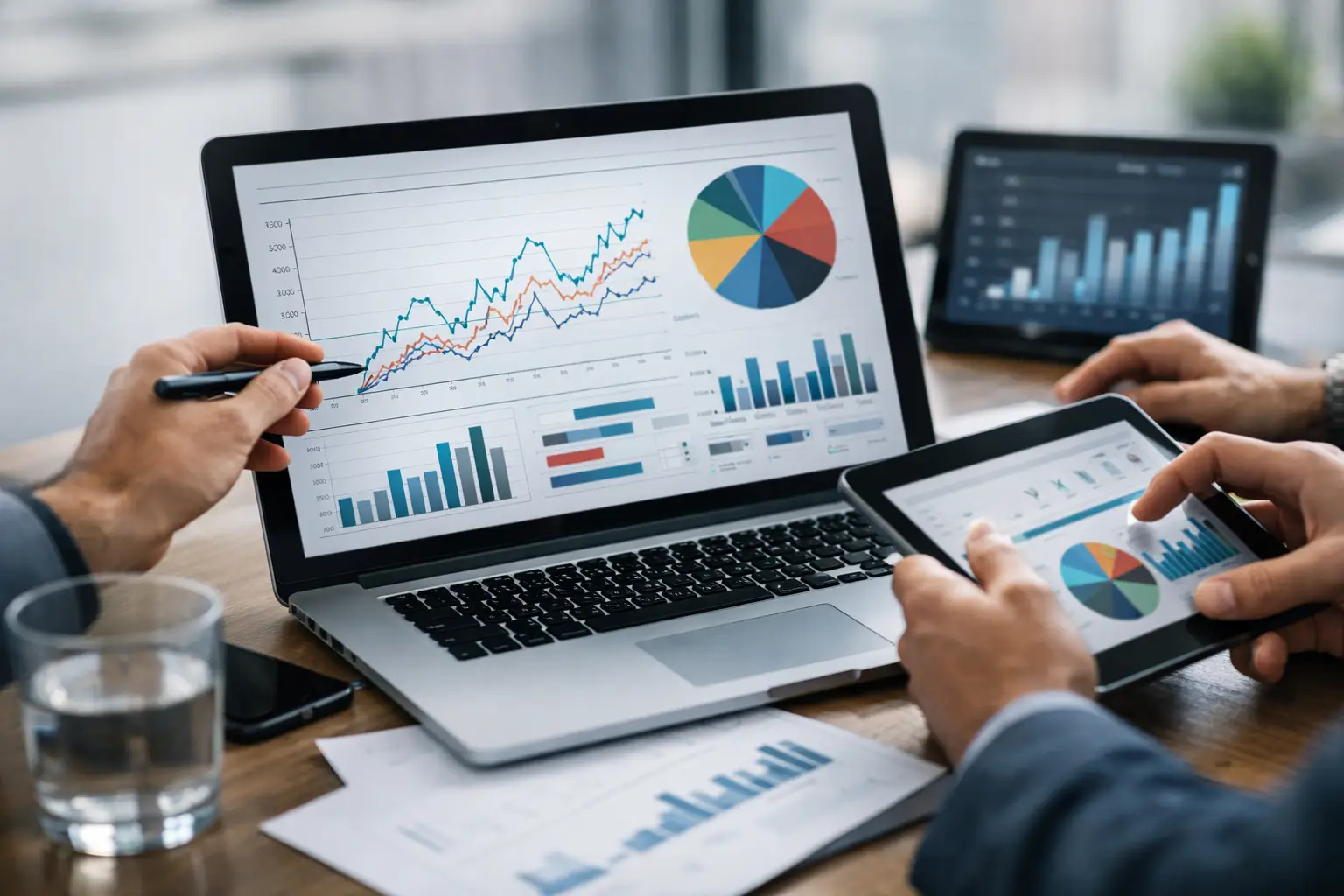
Portfolio analytics tools help traders track risk, performance, and exposure with more clarity, turning scattered data into actionable market insight.
A portfolio that looks profitable on the surface can still be carrying concentrated risk, hidden correlation, or weak position sizing. That is why portfolio analytics tools matter. For active traders and self-directed investors, the real edge is not just seeing what you own. It is understanding how each position changes the behavior of the entire portfolio under real market conditions.
Most people start with a broker dashboard, a spreadsheet, and maybe a watchlist. That setup works until it does not. Once you trade across stocks, crypto, forex, or multiple accounts, the workflow gets fragmented fast. Performance data lives in one place, trade history in another, research somewhere else, and risk is often estimated from memory rather than measured with precision. That gap is where better analytics starts to compound.
What portfolio analytics tools actually do
At their core, portfolio analytics tools turn account activity into decision-grade intelligence. They do more than show balance, P and L, or allocation percentages. The better systems analyze exposure, volatility, correlation, drawdowns, benchmark-relative performance, and the contribution of individual positions to total portfolio risk.
That difference matters because returns alone rarely tell the full story. A portfolio up 12% can be well-constructed or dangerously overexposed. If two positions are highly correlated, they may behave like one oversized trade. If most gains came from a single outlier winner while the rest of the book underperformed, the apparent consistency is misleading. Analytics brings that structure into view.
For traders, this is especially useful when strategy drift starts to creep in. A swing trader can slowly become an overtrader without noticing. A crypto investor can think they are diversified while holding several assets driven by the same liquidity cycle. A forex participant can be long the same macro theme across multiple pairs. Good analytics surfaces those overlaps before the market does.
Why basic tracking is no longer enough
The market has become faster, more connected, and more public. Assets move together in ways that are not always obvious at the position level. News cycles compress. Retail traders now access more instruments, more leverage, and more market commentary than ever before. That creates opportunity, but it also raises the cost of weak portfolio visibility.
Basic tracking tools tend to answer simple questions: What do I own? What is it worth right now? How much did I make today? Those are useful, but they are backward-looking and shallow. Serious decision-making requires deeper context. How much risk is concentrated in one sector, one theme, one factor, or one event? Which trades consistently add value after accounting for volatility? Where is the portfolio vulnerable if conditions change quickly?
This is where modern portfolio analytics tools stand apart. They are not just record-keeping systems. They function as a control layer for capital allocation, trade evaluation, and ongoing risk discipline.
The most valuable features in portfolio analytics tools
Not every tool deserves the same weight. Some are built for passive investors who want a clean snapshot of performance. Others are designed for active market participants who need real-time intelligence. The right feature set depends on how you trade, but a few capabilities consistently matter.
Exposure and concentration analysis
This is one of the fastest ways to improve portfolio quality. Exposure analysis shows where capital is really clustered - by asset, sector, geography, market cap, strategy type, or macro theme. It helps answer whether your book is diversified in practice or only on paper.
For example, a trader may hold AI-related equities, semiconductor names, a tech-heavy ETF, and crypto infrastructure tokens. On a dashboard, that can look broad. In reality, it may be one concentrated bet on the same growth and liquidity narrative.
Risk-adjusted performance
Raw return is easy to celebrate and hard to interpret. Risk-adjusted metrics add needed discipline. Sharpe ratio, Sortino ratio, volatility, max drawdown, and win-loss consistency help distinguish skill from noise. For active traders, this matters more than a single strong month.
A strategy with lower headline returns but tighter risk control may be more durable than one with larger gains and deep drawdowns. Analytics gives you a better basis for scaling, pausing, or refining a strategy.
Correlation and scenario awareness
Correlation data shows how positions move relative to one another. This is critical when markets become stressed. Portfolios that appear balanced in calm conditions can tighten into one-directional risk during volatility spikes.
Some tools go further by helping users model scenarios. What happens if rates jump, crypto sells off, or the dollar strengthens? Scenario awareness does not predict the future, but it does improve preparedness. In trading, that often matters more.
Attribution and behavior analysis
The best portfolio analytics tools do not stop at portfolio-level reporting. They help explain where returns came from. Which assets, setups, sectors, or timeframes contributed the most? Which habits eroded performance? Did cutting winners too early hurt results? Did oversized trades create unstable equity curves?
That behavioral layer is where analytics becomes genuinely strategic. It moves from observation to improvement.
Choosing portfolio analytics tools for your workflow
The right tool is rarely the one with the longest feature list. It is the one that fits your actual trading environment. A long-term investor may prioritize tax lots, benchmark comparisons, and allocation drift. An active trader may care more about execution history, intraday analytics, drawdown tracking, and cross-asset visibility.
The first question is whether the tool can consolidate your real workflow. If you trade across several brokers, exchanges, or wallets, fragmented data will limit the value of any analytics engine. Unified data is not a luxury. It is the foundation.
The second question is transparency. Many platforms show metrics without showing enough methodology. Serious users need to know how returns are calculated, how unrealized and realized P and L are handled, and whether exposure metrics account for leverage, derivatives, or currency effects. If the math is opaque, trust breaks down quickly.
The third question is actionability. Some dashboards are visually polished but strategically thin. They present charts without helping you make a better decision. Strong tools turn analytics into prompts: reduce concentration, rebalance exposures, review losing setups, reassess correlation, or identify underperforming allocations before they become structural problems.
Why connected platforms have an advantage
Standalone analytics tools can be useful, but they often leave one major problem unsolved: disconnected context. Portfolio analysis becomes much more powerful when it sits inside a larger market intelligence environment.
That matters because portfolio decisions are not made in isolation. Traders evaluate positions in the context of sentiment, macro events, order flow, strategy discussions, educational content, and changing market narratives. When analytics, research, community, and execution infrastructure live in separate silos, the user is forced to stitch together their own intelligence layer.
A connected platform approach can reduce that friction significantly. If analytics sits alongside verified market participation, AI-assisted insight, educational resources, and real-time financial discussions, the result is more than convenience. It creates a more trusted decision environment.
This is where a platform like Tyrian Trade fits naturally. The value is not just in showing portfolio metrics. It is in connecting analytics with market intelligence, transparent participation, and a verified trading ecosystem built for modern investors who want more than isolated dashboards.
Common mistakes traders make with analytics
One mistake is overvaluing precision and undervaluing interpretation. Analytics can create a false sense of control if every metric is treated as equally important. Not every trader needs every ratio. The goal is better decisions, not metric overload.
Another mistake is using analytics only after losses. Portfolio analysis should not be a postmortem tool alone. Its real value shows up before capital is misallocated, before correlation spikes, and before one successful theme turns into overexposure.
The third mistake is assuming analytics replaces judgment. It does not. Data can reveal patterns, but it cannot fully account for regime change, liquidity shocks, or the human side of execution. The best use of analytics is as a trust layer between intuition and action.
What matters most going forward
As financial markets become more multi-asset, social, and algorithmically influenced, portfolio analytics tools will matter less as reporting software and more as operating infrastructure. Traders do not just need to know what happened. They need systems that help them understand why it happened, what risk is building beneath the surface, and how to respond faster with more clarity.
That shift favors platforms that combine analytics with transparency, intelligence, and connected market context. For serious participants, the future is not more charts for the sake of charts. It is better visibility into how capital, behavior, and market structure interact.
A smarter portfolio is rarely built by chasing more signals. It is usually built by seeing your existing risk with fewer blind spots.