education
How to Evaluate Trading Signals Well
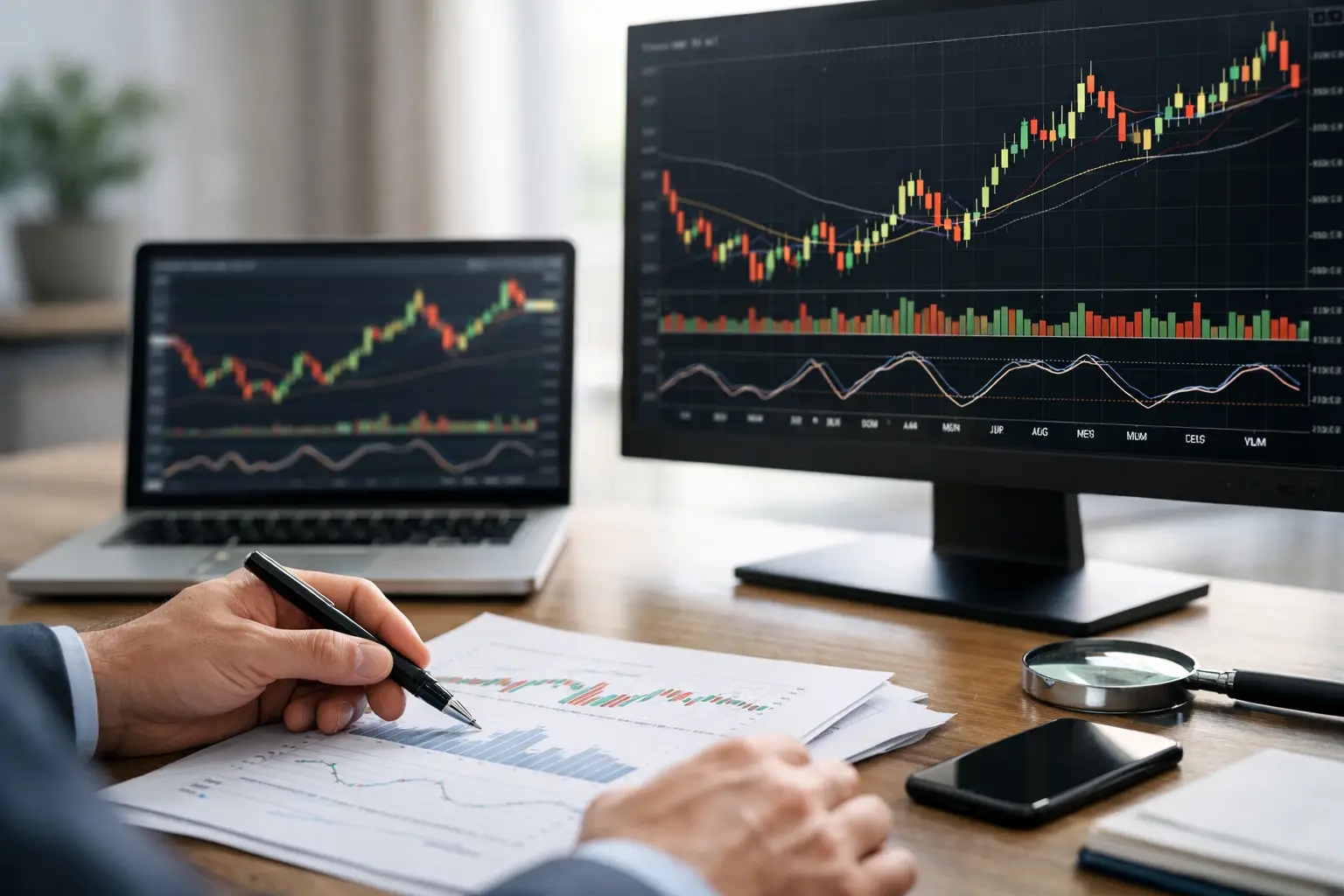
Learn how to evaluate trading signals using data, risk context, and source credibility so you can filter noise and act with more confidence.
A signal that looks sharp on a screenshot can fall apart the moment real capital is involved. That is the core problem with modern trading content. If you want to know how to evaluate trading signals, start by treating every alert, chart call, or AI-generated setup as a hypothesis - not a trade.
The market does not reward confidence. It rewards process. A useful signal is not just one that points in the right direction once. It is one that can be explained, tested, sized properly, and repeated under defined conditions. That standard matters even more now, when social feeds move faster than research and anyone can publish a prediction.
What a trading signal actually is
A trading signal is simply a prompt to take action based on a defined condition. That condition might be technical, fundamental, quantitative, sentiment-driven, or event-based. It could be as simple as a moving average crossover or as complex as a multi-factor model that blends volatility, order flow, and macro releases.
The mistake many traders make is assuming the signal itself carries edge. Usually, it does not. Edge comes from the full decision framework around the signal - market regime, timeframe, execution quality, risk limits, and whether the source has a verifiable record. A buy alert without context is not intelligence. It is noise packaged as urgency.
How to evaluate trading signals without getting misled
The fastest way to improve your filtering is to judge signals across five dimensions: logic, context, performance, execution, and transparency. Miss one of those, and a promising setup can become an expensive habit.
Start with the logic behind the signal
Before looking at wins and losses, ask a simpler question: why should this work at all? If the person or system issuing the signal cannot explain the underlying market behavior, that is a red flag. Good signals are tied to a reason. Maybe they exploit momentum persistence, earnings drift, liquidation cascades in crypto, or mean reversion after extreme moves.
The explanation does not need to be academic. It does need to be coherent. If the logic changes every time the market changes, the signal is probably hindsight dressed up as analysis.
Check market context before signal quality
A breakout signal in a high-volatility trend can behave very differently from the same breakout signal in a range-bound market. Context is not extra detail. It is the environment that determines whether a signal has any chance of working.
That means looking at timeframe, asset class, liquidity, volatility, and current market regime. A signal designed for intraday crypto trading should not be copied into swing trading equities without adjustment. The structure of the market matters. So does the timing. News-heavy sessions, central bank days, and thin overnight liquidity can distort otherwise reliable setups.
Evaluate the track record the right way
Win rate is the most abused number in trading. A signal can win 80 percent of the time and still lose money if the average loser is far larger than the average winner. A lower win rate can be perfectly viable if the payoff profile is stronger.
Look for a complete view of performance: average return per trade, maximum drawdown, profit factor, risk-reward ratio, and sample size. Fifty trades tell you more than five. Two hundred tell you more than fifty. You also want to know whether the results came from one favorable stretch or across different market conditions.
Be careful with cherry-picked history. If you only see the best calls, you are not seeing a system. You are seeing marketing. Verified history, timestamped entries and exits, and visible losing periods matter because they show whether the signal survives reality.
Source credibility matters as much as the setup
The market is full of signals from anonymous accounts, recycled indicators, and creators who monetize attention more effectively than they trade. That does not mean every public signal is bad. It does mean credibility should be part of your analysis.
A trustworthy signal source is transparent about methodology, timeframe, and risk. They do not post vague predictions and later claim success. They do not delete losing calls. They can separate analysis from performance theater.
This is where a verified, reputation-based environment becomes valuable. Serious traders benefit from seeing participation, consistency, and accountability rather than just bold claims. Platforms built around transparent performance and community validation create a much stronger base for signal evaluation than open social feeds where identity and results are easy to manipulate.
Ask whether the signal is actionable
Some signals sound impressive but cannot be traded in practice. If entry is vague, stop placement is undefined, or target logic appears after price moves, the signal is not actionable.
A usable signal should answer a few operational questions clearly. Where is the entry? What invalidates the idea? What is the time horizon? What happens if price gaps through the level? If those details are missing, execution risk rises immediately.
This is especially important in fast markets. A signal with theoretical edge can still fail if slippage, spread, latency, or low liquidity erase the expected return. In other words, evaluation is not just about whether the idea was correct. It is about whether you could have traded it under real conditions.
How to test a signal before trusting it
You do not need institutional infrastructure to test signals well, but you do need discipline. Start small and keep the variables tight. The goal is not to prove a signal is perfect. The goal is to understand its behavior.
Paper trading can help at the start, but only if you treat it seriously. Track entries, exits , time held, market conditions, and whether you followed the original rules. Then compare that data to small live tests, because simulated fills often look better than real ones.
A practical test period should cover enough trades to reveal patterns. You want to know where the signal performs best, where it struggles, and whether losses cluster in certain conditions. Maybe the setup works in trending index futures but weakens in chop. Maybe it performs well on major crypto pairs but breaks down on low-liquidity altcoins. That information is more valuable than a broad claim that the signal "works."
Measure consistency, not just headline outcomes
Traders often overrate dramatic wins and underrate stable repeatability. A signal that occasionally catches a huge move can be useful, but only if the path to those wins is manageable. If it requires surviving long losing streaks or taking oversized risk, most traders will fail to execute it consistently.
That is why consistency matters. Look at how often the signal behaves according to plan, not just how much it made during its best month. Stable signals are easier to integrate into a portfolio, easier to size, and easier to trust under pressure.
Risk management is part of signal evaluation
A signal without a risk framework is incomplete. You are not evaluating a trade idea in isolation. You are evaluating whether it fits your capital, your portfolio, and your tolerance for volatility.
Start with position sizing. Even a high-quality signal can hurt you if you size too aggressively. Then consider correlation. If three different signals all point long risk assets, you may not have three independent opportunities. You may have one concentrated bet.
You also need to judge how much room the setup needs. Tight stops can improve efficiency but may get clipped by normal noise. Wider stops may improve signal survival but reduce position size and change the payoff profile. There is no universal answer here. It depends on the instrument, timeframe, and execution style.
The role of AI and community intelligence
AI can improve signal evaluation, but it should sharpen judgment, not replace it. Pattern recognition, market scanning, anomaly detection, and portfolio analytics can surface opportunities faster than manual workflows. That is useful. It is not the same as automatic truth.
The best use of AI is as a verification layer. It can help compare current conditions with historical analogs, identify regime shifts, and flag when a signal appears outside its normal operating range. Combined with a transparent trading community, that creates a stronger decision environment. You get data, context, and peer validation instead of isolated opinions.
For traders using connected platforms such as Tyrian Trade, that combination can reduce one of the biggest problems in modern markets: fragmented trust. When signal discovery, analytics, reputation, and discussion live in one ecosystem, it becomes easier to separate informed conviction from performative noise.
A simple standard for every signal
Before you act on any signal, ask four questions. Is the logic clear? Does the current market support it? Is the source credible and transparent? Can you execute it with defined risk?
If the answer to any of those is no, the signal is not ready. That does not mean it is wrong. It means you do not have enough evidence to treat it as an opportunity.
The traders who last are not the ones who react fastest to every alert. They are the ones who build a filter strong enough to ignore most of them. That filter is where confidence comes from, and it is where better trading usually begins.