education
How to Find Credible Traders Online
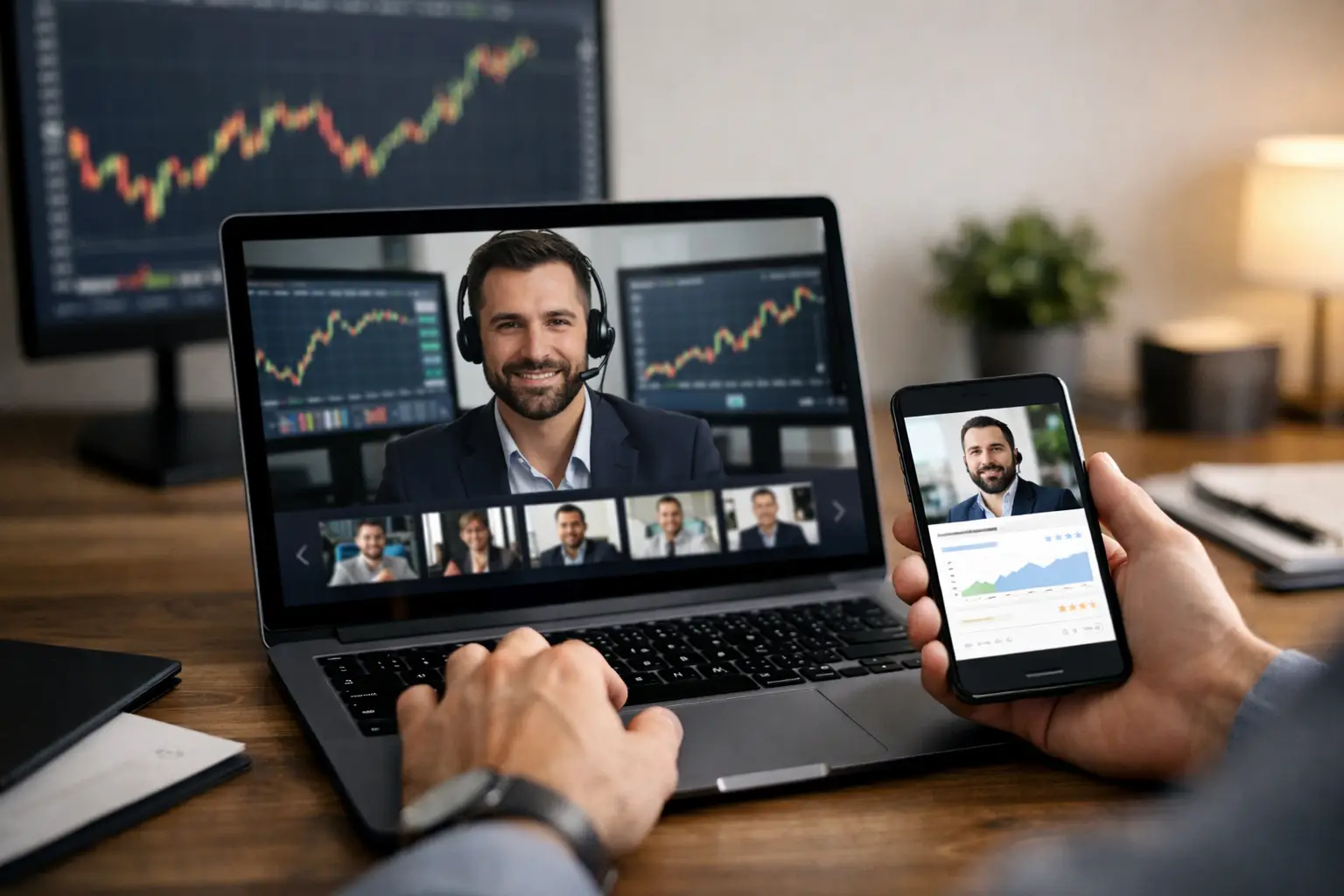
Learn how to find credible traders online by verifying track records, risk discipline, transparency, and community behavior before you follow anyone.
A trader posts a perfect win streak, screenshots a six-figure gain, and suddenly a crowd forms around the account. That is exactly why knowing how to find credible traders matters. In online markets, attention is cheap, but verified performance, disciplined risk, and transparent behavior are not.
The real problem is not a lack of market opinions. It is an oversupply of unverified ones. Serious traders and investors are sorting through fragmented platforms, recycled content, anonymous accounts, and performance claims with no audit trail. If you want signal instead of noise, credibility has to be measured, not assumed.
How to find credible traders starts with evidence
A credible trader is not just someone who sounds confident or publishes frequent market commentary. Credibility comes from observable behavior over time. That includes consistent process, visible risk management, a record that can be examined, and communication that stays grounded when markets turn against them.
A single winning trade proves almost nothing. A month of gains can still be luck, leverage, or selective posting. What matters more is whether performance is tied to a repeatable approach. If a trader shares entries, exits, sizing logic, market context, and post-trade reviews, you can start to evaluate skill. If they only publish wins after the move happened, you are looking at marketing, not trading intelligence.
This is where many people get misled. They judge traders by aesthetics, speed, confidence, or follower count. None of those are reliable trust signals. In financial markets, credibility is closer to infrastructure than influence. It needs records, transparency, and enough history to test whether the trader behaves the same way in favorable and hostile conditions.
What credible traders actually look like
The most credible traders are usually less theatrical than the internet rewards. They are specific, measured, and consistent. They explain not only what they believe, but what would prove them wrong. That alone separates analysis from performance theater.
Track record is the first filter, but it has to be interpreted carefully. A trader with 90 percent winning trades may still be dangerous if losses are catastrophic when they happen. A trader with a lower win rate can be far more credible if their downside is controlled and their risk-reward profile is stable. You are not looking for perfection. You are looking for durability.
Transparency is the second filter. Credible traders do not hide after losses or rewrite the story once price moves. They show their process before and after the trade. They can explain why they entered, how they sized, where they were wrong, and what changed. That kind of consistency is hard to fake over time.
The third filter is alignment. Ask a simple question: how does this person benefit from my attention? Some traders make money by trading. Others make money by selling access, urgency, and certainty. That does not automatically make them untrustworthy, but it changes how you should evaluate them. If the business model depends on hype, the incentives are already distorted.
How to verify a trader without getting trapped by surface metrics
If you are trying to figure out how to find credible traders, verification has to go beyond screenshots. Screenshots are easy to cherry-pick. So are isolated calls, deleted posts, and selective account statements. Verification means looking for continuity across multiple dimensions.
Start with time. Has the trader been active long enough to be evaluated across different market regimes? Anyone can look brilliant in a one-way bull run or during a high-volatility breakout environment that matches their style. The better test is whether they adapt without abandoning discipline. A swing trader may underperform in a range-bound market. That is not necessarily a red flag. Pretending otherwise is.
Then assess process visibility. Can you see a framework behind the trades, or only conclusions? Credible traders tend to share reasoning with enough detail that you can understand the decision path. That does not mean they reveal every proprietary element. It means their actions look coherent. If every post feels like a prediction with no structure, it becomes impossible to separate informed conviction from improvisation.
Next, examine risk behavior. This is often the clearest signal. Credible traders respect drawdowns, position sizing, and invalidation. They do not frame reckless leverage as confidence. They do not encourage followers to copy trades blindly. And they do not treat risk management as optional when volatility rises.
Finally, look at whether the trader can be challenged. In a credible trading environment, questions are not treated as disloyalty. Serious market participants can explain themselves under scrutiny. Evasion, hostility, and constant goalpost shifting usually tell you more than a polished chart thread ever will.
Community behavior is a trust signal
A trader does not operate in a vacuum. The surrounding community often reveals whether credibility is real or manufactured. If every comment section is full of blind praise, referral codes, and pressure tactics, you are likely looking at an attention machine rather than a trusted market participant.
Healthy trading communities tend to reward evidence, debate, and accountability. Members compare theses, discuss risk, and revisit prior market calls. There is room for disagreement without the entire system collapsing into tribal loyalty. That matters because credibility grows stronger when it can survive public examination.
This is also where verified participation becomes valuable. Anonymous market commentary can be useful, but it carries limits. The more a platform can connect identity, trading activity, reputation, analytics, and community interaction, the easier it becomes to identify who is consistently adding value versus who is performing for engagement.
In a modern financial ecosystem, trust should not depend on charisma alone. It should be supported by transparent profiles, measurable behavior, and tools that help users compare signal quality over time. That is one reason platforms built around verified reputation and connected analytics can create a better foundation for trader discovery than traditional social feeds.
Red flags that should stop you immediately
Some warning signs are obvious, but people still ignore them when greed is involved. Guaranteed returns are one. So is anyone claiming they are almost never wrong. Markets do not reward certainty for long, and credible traders know that.
Another major red flag is selective transparency. If wins are posted in real time but losses disappear, the record is compromised. The same applies when a trader constantly references private success without any structured proof. Confidence without evidence is just branding.
Watch for urgency tactics too. If the message is always act now, subscribe now, copy now, do not miss this move, you are probably being pushed into an emotional decision. Credible traders understand timing. They do not need to manufacture panic to prove they have an edge.
A more subtle red flag is identity drift. If a trader changes style, market, timeframe, and claimed expertise every few weeks, that usually signals opportunism. Adaptation is normal. Constant reinvention to match whatever is trending is not.
The best way to evaluate traders is to slow down
Most bad decisions in trader selection come from speed. People want a shortcut. They want a credible signal they can trust immediately. But credibility in financial markets is cumulative. It is built by repeated proof, not a convincing first impression.
Follow traders before you trust them. Observe how they behave over a few weeks or months. Compare what they say with what actually happens. Notice whether they improve your understanding of market structure, risk, and timing, or whether they simply keep you emotionally activated.
It also helps to separate educational value from copy value. Some credible traders are excellent thinkers but may have a style, timeframe, or risk tolerance that does not fit you. That does not reduce their credibility. It just means fit matters alongside trust. A disciplined options trader may be highly credible and still be irrelevant to a long-term equity investor.
If you use a platform designed around transparency, analytics, and community reputation, the evaluation process becomes more efficient. You can see more than content. You can assess participation, consistency, and market behavior in context. For digital-native investors and active traders, that kind of connected infrastructure is becoming essential, and platforms such as Tyrian Trade reflect why the trust layer now matters as much as execution.
The traders worth following usually make you calmer, sharper, and more disciplined - not more impulsive. That is a good test to keep with you the next time someone tries to sell certainty in a market built on probability.