education
How to Use Trading Analytics Well
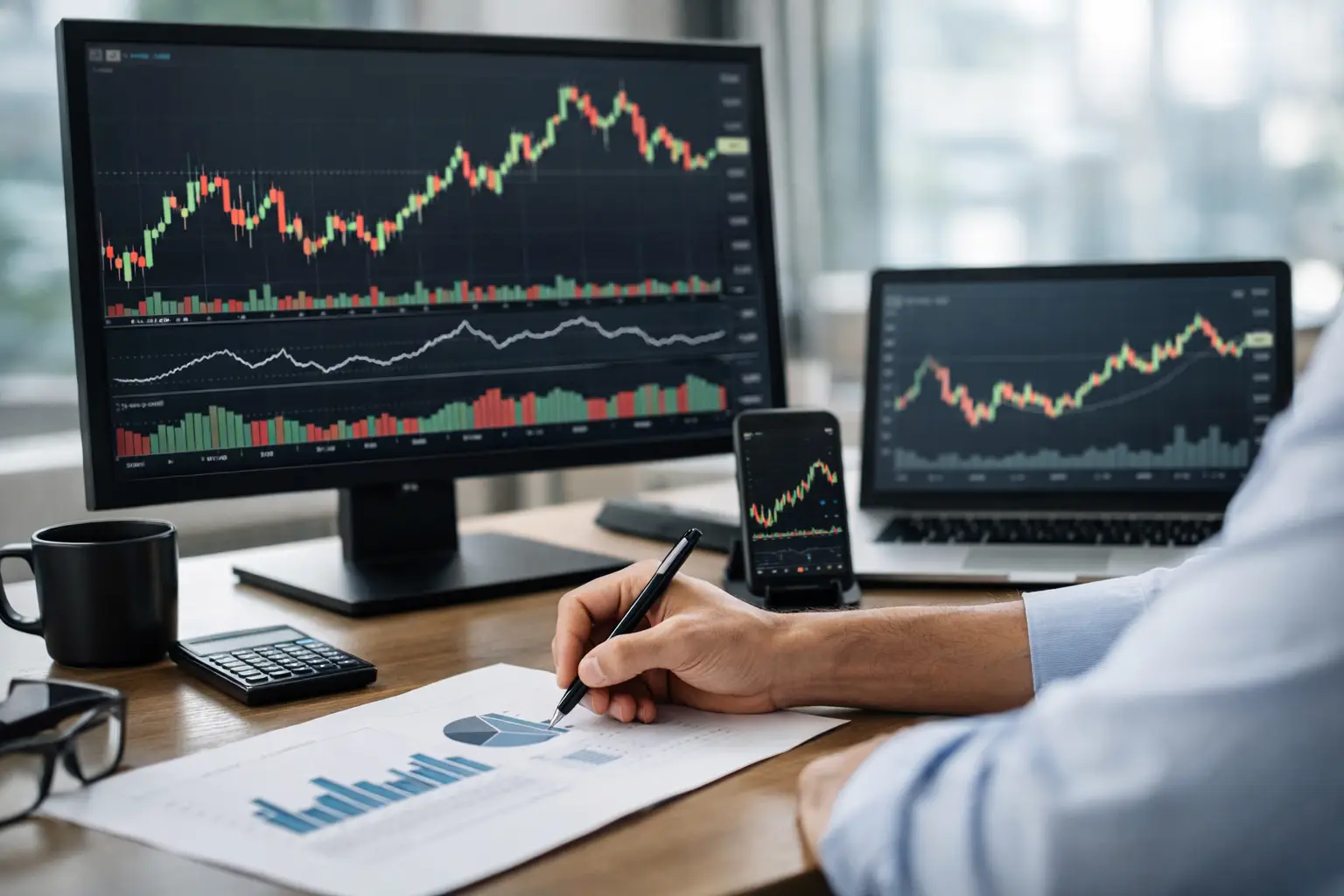
Learn how to use trading analytics to refine entries, measure risk, track performance, and make sharper decisions across stocks, crypto, and forex.
Most traders do not lose because they lack charts. They lose because they cannot tell the difference between a good process and a lucky outcome. That is exactly where learning how to use trading analytics changes your edge. Analytics turns scattered trades, half-formed ideas, and emotional reactions into measurable patterns you can actually improve.
The real value is not more data for its own sake. It is better decision quality. If you trade stocks, crypto, or forex, analytics helps you answer the questions that matter: Which setups are producing real expectancy? Where is risk leaking out of your system? When are you most likely to overtrade, size poorly, or exit too early?
What trading analytics is really for
Trading analytics is often misunderstood as a dashboard full of metrics. In practice, it is a decision framework. It helps you review what happened, why it happened, and whether the result came from skill, market conditions, or noise.
That distinction matters. A profitable week can hide sloppy execution. A losing week can include excellent trades that followed your plan perfectly. Without analytics, both can teach the wrong lesson. With analytics, you can separate performance from outcome and improve the parts of your process that actually drive long-term returns.
For active traders, the strongest analytics stack usually combines three layers: market analytics, trade analytics, and portfolio analytics. Market analytics tracks volatility, volume, trend behavior, and relative strength. Trade analytics focuses on entries, exits, holding time, win rate, average gain versus average loss, and setup performance. Portfolio analytics measures concentration, correlation, sector or asset exposure, and risk-adjusted returns across the full account.
How to use trading analytics without getting buried in numbers
A common mistake is tracking everything. More metrics can create more confusion, not more clarity. The better approach is to start with a small set of indicators tied directly to your strategy.
If you are a momentum trader, you likely care about breakout follow-through, time-of-day performance, slippage, and average return by setup type. If you are a swing trader, you may care more about hold duration, volatility at entry, market regime, and drawdown before target. If you are trading multiple asset classes, you also need to know whether your edge behaves differently in crypto than in equities or forex.
The point is simple: analytics should match your trading style. A scalper and a position trader should not be reading the same performance dashboard the same way. Good analytics is contextual.
Start with the metrics that change behavior
Not every metric deserves equal attention. A few core measurements tend to create the biggest improvement fastest.
Expectancy should be near the top of the list. This tells you the average amount you can expect to make or lose per trade over time. It combines win rate with average win and average loss, which makes it more useful than win rate alone. Many traders feel confident with a high win rate while quietly running a negative expectancy system because losses are too large when they are wrong.
Maximum drawdown is another critical number. It tells you how painful your strategy can get before it recovers. That matters for both capital preservation and psychology. A system that is profitable on paper but impossible for you to stick with in live conditions is not a usable system.
You should also track profit factor, average hold time, performance by setup, and performance by market regime. Regime matters more than many traders admit. A strategy that works well in trending conditions can fall apart in choppy, low-conviction markets. Analytics helps you identify that shift before it becomes expensive.
Use analytics before the trade, not only after it
Many traders think analytics starts with journaling after the close. That is too late. The strongest use of analytics begins before you enter the position.
Pre-trade analytics helps you define whether the setup is statistically aligned with your plan. That includes checking current volatility, historical behavior of the setup, recent performance in similar market conditions, and how the trade fits with your existing portfolio exposure. If you are already long correlated assets, a new trade may add more risk than the chart alone suggests.
This is where connected platforms have an advantage. When market intelligence, portfolio tracking, and trade analysis live in one environment, you can evaluate a trade in context instead of as an isolated idea. That reduces blind spots. It also improves discipline because your decision is grounded in data, not just conviction.
Post-trade review is where edge compounds
After the trade closes, analytics becomes your feedback engine. But the review has to be honest. You are not only asking whether the trade made money. You are asking whether it met your standards.
A useful review process looks at four things. First, did the setup match your rules? Second, was position sizing appropriate for the volatility and risk level? Third, was execution clean, including entry timing and exit discipline? Fourth, did the market environment support the trade, or were you forcing a setup in weak conditions?
Over time, this creates a body of evidence. You may discover that one setup produces consistent returns while another only looks attractive in screenshots. You may find that your afternoon trades underperform your morning trades, or that your crypto entries are strong but your exits are too reactive. These are the kinds of insights that improve performance in a real, repeatable way.
The role of AI in trading analytics
AI can accelerate the process, but it should not replace judgment. Its value is speed, pattern recognition, and signal organization. It can surface anomalies, identify behavioral drift, cluster winning and losing conditions, and highlight changes in market structure faster than most traders can do manually.
That said, AI is only as useful as the data and framework around it. If you feed poor trade records into an AI system, you get polished confusion. If you use AI to confirm every bias you already have, you are not becoming more disciplined. You are becoming more efficient at rationalizing bad trades.
The better use case is decision support. Let AI flag what deserves attention, then apply your own risk framework and market context. On a modern platform like Tyrian Trade , that combination of analytics, verified participation, and real-time market intelligence can help traders move from reactive trading to informed execution.
What beginners usually get wrong
Newer traders often jump straight to advanced indicators and skip basic performance tracking. That is backward. Before you optimize anything, you need clean records and a stable process.
Another mistake is confusing market prediction with trading analytics. Analytics does not guarantee the next move. It improves the quality of your decisions across many trades. That is a different objective. The goal is not perfect forecasting. The goal is positive expectancy with controlled risk.
Beginners also tend to change strategy too quickly. One losing streak and the entire system gets replaced. Analytics helps prevent that. If the data shows your rules were followed and the strategy is still behaving within expected drawdown, the right move may be patience, not reinvention.
What experienced traders should watch more closely
More advanced traders usually have the opposite problem. They often have enough data, but not enough integration. Their charting, execution, journaling, research, and community insight are split across too many tools.
That fragmentation creates lag. It becomes harder to see how portfolio exposure affects individual trade decisions, or how behavioral patterns show up across different markets. An experienced trader does not necessarily need more metrics. They need connected analytics that reflect how they actually operate across a portfolio, a watchlist, and a trading routine.
This is especially relevant in cross-asset trading. A move in rates, crypto liquidity, or equity index volatility can influence setups beyond one chart. Analytics becomes much more valuable when it captures that broader context instead of treating every trade as independent.
Build a simple analytics routine you can keep
The most effective routine is usually the one you will actually maintain. Review your open risk before the session starts. Track execution quality during the session. Then spend time after the close reviewing only the trades that matter most, especially mistakes, rule breaks, and your highest-conviction wins.
Weekly review is where strategic improvement happens. That is the time to look at setup performance, market regime, drawdown, and portfolio concentration. Monthly review should be higher level. Ask whether your edge is improving, degrading, or simply being tested by a different market environment.
If a metric does not lead to a better decision, it may not belong in your process. Good analytics is not about building a prettier dashboard. It is about building a trading operation you can trust.
The traders who last are rarely the ones with the loudest opinions. They are the ones who can measure what works, cut what does not, and keep refining the process while the market keeps changing. That is how trading analytics becomes more than analysis. It becomes discipline with proof.