education
How to Verify Trader Performance
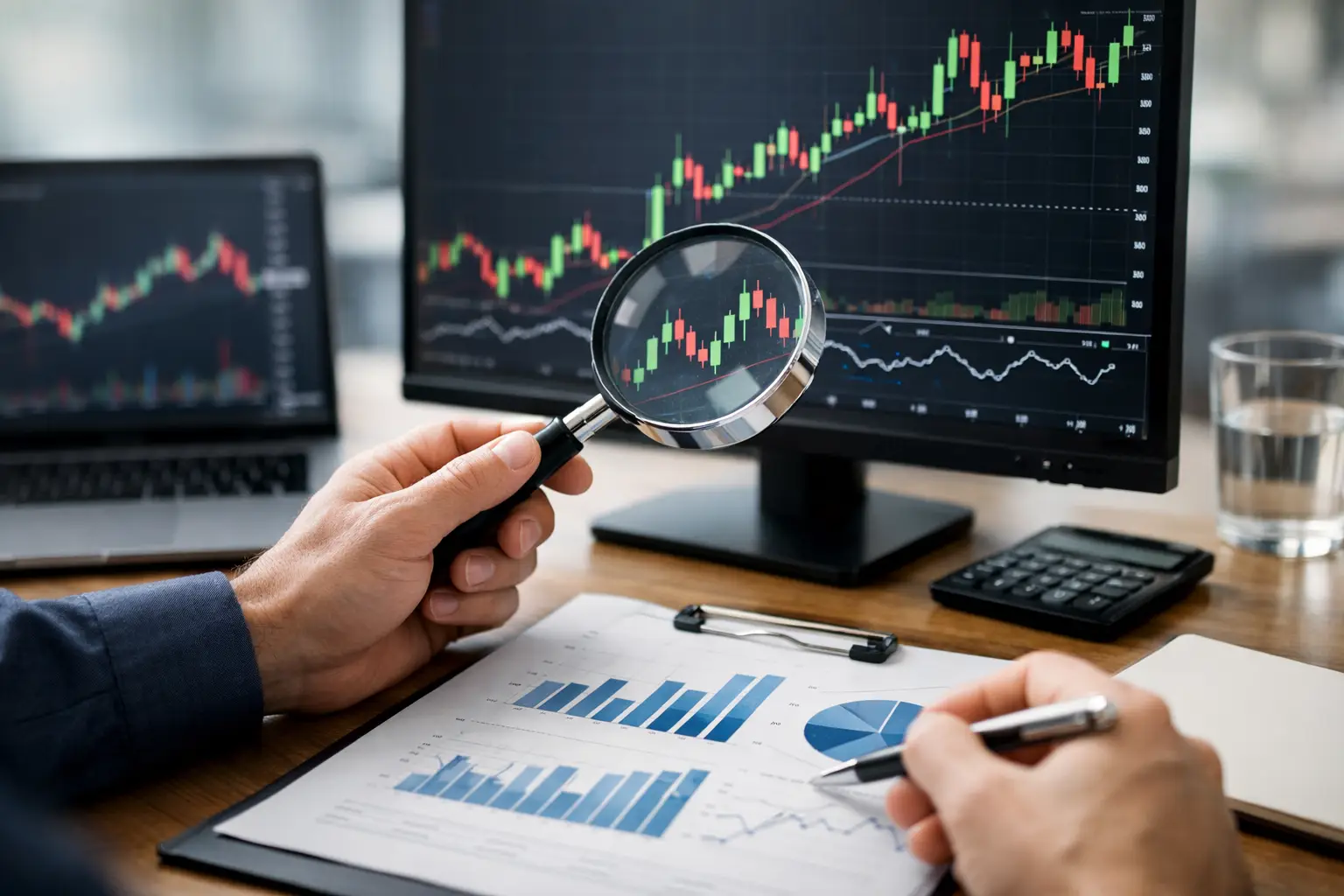
Learn how to verify trader performance using data that matters - track record quality, risk, consistency, and transparency before you trust results.
A trader posts a 300% gain, a sharp equity curve, and a confident thread explaining the setup. That still tells you almost nothing. If you want to know how to verify trader performance, you need to look past screenshots, bold claims, and isolated wins and examine whether the results are real, repeatable, and risk-adjusted.
That distinction matters because trading performance is easy to market and hard to validate. In public trading communities, the biggest failure point is not always bad analysis. It is weak verification. A trader can look impressive for a month, hide losses, oversize one winning position, or selectively publish the trades that fit the story. Serious market participants need a better standard.
How to verify trader performance without falling for surface-level metrics
The first step is separating evidence from presentation. A polished profile, a large following, or a stream of market commentary can create credibility, but none of those prove skill. Verification starts with source data. You want performance tied to actual account activity, broker-connected records, timestamped trades, or a transparent transaction history that cannot be edited after the fact.
Screenshots are weak evidence because they are easy to crop, cherry-pick, or fabricate. A spreadsheet is only slightly better if you cannot audit the entries. Even a strong-looking profit and loss number means very little without context. Was it generated over three days or three years? Was it produced with disciplined sizing or extreme leverage? Was it one outsized bet or hundreds of consistent executions?
A verified record should answer those questions directly. If it does not, you are not evaluating performance. You are evaluating marketing.
Start with the track record, not the headline return
Most people look at total return first because it is the loudest number on the page. It is also one of the easiest to misread. A trader who turns $5,000 into $10,000 has a 100% return, but that result may say less about skill than a trader who compounds steadily at lower percentage gains while controlling downside and preserving capital.
Length matters. A short track record can be interesting, but it should not be treated as proof. Markets change. Volatility regimes rotate. Strategies that work during momentum expansion can fail badly in a choppy range. A trader with six profitable weeks may simply be aligned with one favorable condition. A trader with a year or more of data across different market environments gives you something more durable to assess.
Trade count matters too. Ten trades do not tell you much. Two hundred trades tell you more, assuming the strategy is active enough for that sample size to be meaningful. The right threshold depends on the style. A swing trader may need more time and fewer trades to establish a record than a day trader. It depends on frequency, holding period, and market exposure.
Risk-adjusted performance is where the real signal lives
If you want to understand how to verify trader performance, study the path of returns, not just the endpoint. Two traders can post the same gain with completely different risk profiles. One may compound steadily with controlled drawdowns. The other may survive repeated near-blowups before finishing in profit. Those are not equivalent outcomes.
Drawdown is one of the clearest metrics to inspect. It shows how much the account fell from peak to trough before recovering. A trader claiming elite performance with a 60% drawdown is signaling a very different risk framework than a trader generating similar returns with a 10% to 15% drawdown. High drawdown does not automatically disqualify a strategy, especially in volatile markets, but it changes how the performance should be interpreted.
You should also examine profit factor, win rate, average win versus average loss, and consistency by month or quarter. A high win rate can look attractive until you discover the trader cuts winners quickly and lets losers run. A lower win rate can be perfectly healthy if the reward-to-risk profile is strong. No single metric tells the full story. The point is to see whether the pieces fit together logically.
Sharpe ratio and similar risk-adjusted metrics can help, but they should not be treated as absolute truth. They are useful when paired with actual trade behavior. A clean metric on top of messy execution data is not reassuring. In trading, the raw behavior still matters.
Verify whether the strategy is repeatable
A verified track record is not just a collection of outcomes. It is evidence that those outcomes came from a repeatable process. That means you need some visibility into how the trader operates.
Look for consistency in market selection, time horizon, and risk sizing. If a trader claims to specialize in forex swings but most of the gains came from one leveraged crypto position, you may not be looking at a stable edge. If the account shifts constantly between scalping, macro calls, meme-stock momentum, and long-term investing, the performance record may reflect opportunism rather than process.
This is where transparency becomes critical. A credible trader should be able to explain what they trade, why they trade it, and how risk is managed. That does not mean they need to reveal every detail of an edge. It means the record should align with the stated approach. When narrative and data diverge, trust the data.
Watch for survivorship bias and selective disclosure
One reason unverified trading content spreads so easily is that failure disappears from view. Traders who lose accounts stop posting. Traders who catch one dramatic run become highly visible. Communities then mistake visibility for reliability.
That is survivorship bias, and it distorts almost every public conversation about trading performance. If you only see the winners, you will overestimate how common winning actually is.
Selective disclosure creates a second problem. A trader might post every profitable exit and skip the stopped-out positions. They might highlight percentage gains without mentioning account size. They might show realized profits while ignoring open losses sitting elsewhere in the portfolio. None of this is rare.
To evaluate performance seriously, ask whether the record captures the full picture. Are both wins and losses included? Are open positions accounted for? Is the timeline continuous, or are there suspicious gaps? Missing data does not always mean deception, but it does mean you should lower confidence until the gaps are explained.
Context matters more than raw numbers
A trader posting strong returns in a broad bull run may simply be long risk. That does not make the results fake, but it changes what the record proves. Skill is easier to trust when you can see how performance behaves across changing conditions, including corrections, trend reversals, and low-conviction periods.
This is especially important when evaluating social trading profiles or public leaderboards. Strong performance in one regime can attract attention quickly, but serious due diligence asks harder questions. Did the trader outperform because of timing, leverage, concentration, or genuine execution quality? How did the strategy respond when the environment changed?
The best verification frameworks compare return, risk, and behavior together. That is where modern financial platforms have an edge. When account connectivity, analytics, timestamps, community reputation, and trade history live in one ecosystem, it becomes much harder to manufacture credibility and much easier to assess it.
What credible verification should look like
At a practical level, credible verification usually includes broker-linked or platform-verified performance data, a transparent history of closed and open positions, visible drawdowns, and analytics that show more than total profit. It should also provide enough continuity for others to see whether the trader is building a pattern or just benefiting from a lucky stretch.
For newer traders, this standard can feel demanding. That is not a bad thing. High trust requires high transparency. A smaller but fully visible record is more valuable than a larger claim with no proof behind it.
For experienced traders, verification is not just defensive. It is reputational infrastructure. In a market filled with noise, real data becomes a differentiator. Serious participants increasingly want communities and platforms where performance can be examined with the same rigor applied to any other financial signal. That shift is one reason platforms like Tyrian Trade are built around verified participation and trust-centered market intelligence rather than vanity metrics.
If you are evaluating traders, the useful question is not whether the returns look exciting. It is whether the evidence would still hold up after the excitement fades. Real performance survives scrutiny. Fake performance needs momentum, screenshots, and a forgiving audience.
The more capital, trust, or attention you allocate to a trader, the more verification should matter. Markets are already difficult. You should not make them harder by treating unproven performance as fact.