crypto
How Wealth Is Created in America: Key Sources for the Ultra-Wealthy
Explore how wealth is created in America, focusing on the primary sources for ultra-high-net-worth individuals, including business ownership and equity.
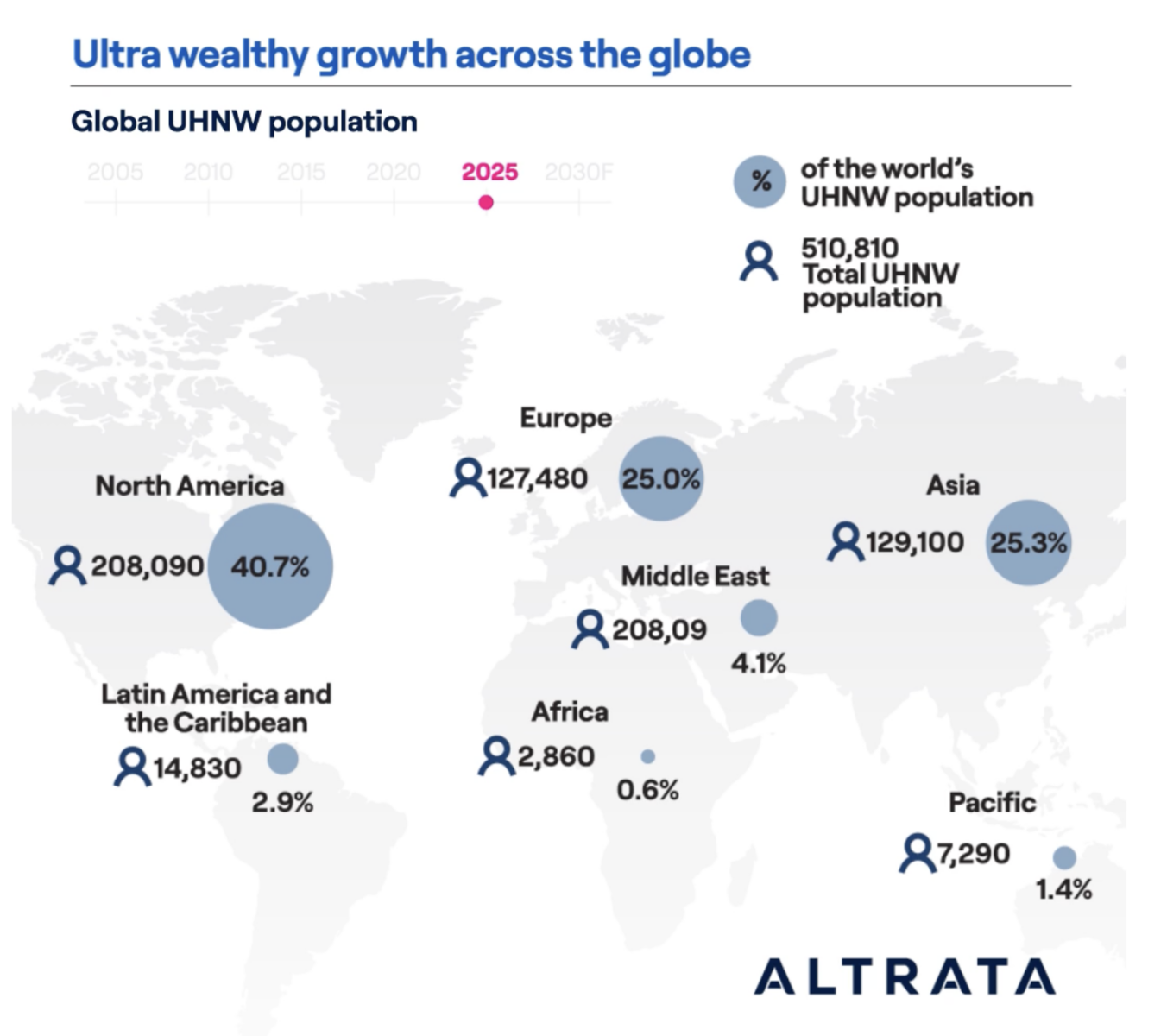
Understanding how wealth is created in America is crucial for grasping economic dynamics, particularly the sources of wealth for ultra-high-net-worth (UHNW) individuals. According to an analysis by Ritholtz, based on data from the Federal Reserve's Survey of Consumer Finances and Z1 Flow of Funds, along with Altrata's World Ultra Wealth Report, claims about a "Closing of the K" are considered wishful thinking, emphasizing the continued importance of specific wealth-generating pathways.
Key takeaways
Business ownership and subsequent sale is the primary source of wealth for the top 0.1% (UHNW) in America, with 70% being self-made.
Equity in other companies, through early employee stakes or C-suite compensation, has been a significant wealth creation mechanism since the mid-1980s.
Inheritance accounts for approximately 25% of UHNW wealth, though its future growth from the "great wealth transfer" is met with skepticism.
Real estate development and ownership, finance, and owning professional enterprises are also key pathways to substantial wealth.
Table of Contents
Understanding Wealth Creation for the Ultra-Wealthy
The Dominance of Business Ownership
Equity and Public Market Positions
The Role of Inheritance and Family Wealth
Real Estate: A Tax-Advantaged Pathway
Finance and Professional Services
Entertainment, Media, Sports, and Franchising
Windfalls and Asymmetric Bets
Frequently Asked Questions
Understanding Wealth Creation for the Ultra-Wealthy
The discussion around how wealth is created in America often involves shorthand terms like "K," "C," or "E" to describe economic trends. However, a deeper understanding requires examining the fundamental sources that contribute to significant wealth accumulation, particularly for the ultra-high-net-worth (UHNW) segment. Ritholtz's analysis highlights that the Federal Reserve's Survey of Consumer Finances and the Fed Z1 Flow of Funds are considered authoritative sources for this data, complemented by reports like Altrata's World Ultra Wealth Report. This comprehensive view helps to clarify the actual mechanisms behind substantial wealth generation.
The Dominance of Business Ownership
For individuals at the $25 million level, representing the top 0.1% of wealth holders, founding and selling a business stands out as the number one source of wealth in America. This isn't limited to Silicon Valley technology startups; rather, it encompasses a wide array of more traditional businesses. Examples include HVAC roll-ups, car dealerships, trash collection companies, beverage distributors, regional construction firms, and medical practices scaled into groups. The key to wealth creation in these cases is often a liquidity event, such as a sale to a larger national competitor, a strategic buyer, or a private equity firm. Data from Altrata indicates that 70% of UHNW individuals are self-made, with business ownership being the dominant factor.
Equity and Public Market Positions
Another significant pathway to wealth involves equity in someone else's company. This includes early employees and executives at companies that undergo an Initial Public Offering (IPO), or C-suite executives at Fortune 500 companies who accumulate Restricted Stock Units (RSUs), options, and performance shares over decades. Since the mid-1980s, this mechanism has become a powerful engine for wealth creation, having barely existed before the 1990s. Additionally, concentrated public-market positions held for decades, such as those who bought or were granted shares in companies like Apple , Microsoft, or Berkshire in the 1980s–1990s and never sold, represent a rare but effective strategy, often overlapping with early equity stakes.
The Role of Inheritance and Family Wealth
Inheritance and family wealth also contribute to the UHNW category, accounting for approximately 25% of this wealth. In some instances, a smaller inherited fortune is significantly grown by the next generation, benefiting from substantial market gains, particularly since 1982. However, there is growing skepticism regarding whether the projected $105 trillion "great wealth transfer" will substantially increase this category's proportion of overall wealth. This suggests that while inheritance plays a role, it may not be as dominant as some might assume in the broader context of wealth creation.
Real Estate: A Tax-Advantaged Pathway
Real estate, encompassing both commercial and residential development and ownership, has consistently been a major creator of wealth. Many multi-generational family real estate operations and developers have built substantial portfolios of commercial and multi-family properties through the strategic and intelligent use of leverage. Commercial and residential real estate offers unique tax advantages, including 1031 exchanges, depreciation, and a step-up in basis at death, making it an attractive avenue for long-term wealth accumulation. For readers following broader market updates , understanding these tax advantages can provide context for investment decisions.
Finance and Professional Services
The finance industry itself is a clear source of wealth. Principals in hedge funds, private equity, and venture capital firms, along with professionals in investment banking, trading, wealth management, and mergers and acquisitions, are significant wealth creators. This sector is noted for having an inherent structural tailwind. Beyond finance, owning professional enterprises, such as medical centers, major accounting firms, law firms, and consulting firms, is also a key pathway. The critical distinction here is owning the enterprise rather than simply earning income through billable hours as an individual doctor or lawyer.
Entertainment, Media, Sports, and Franchising
While a smaller segment, entertainment, media, and sports are culturally visible sources of wealth, often stemming from businesses built around fame. Examples include athletes like Shaquille O'Neal and LeBron James, who are major investors and business owners, and Michael Jordan, who generates substantial revenue from Nike's Air Jordan brand and holds ownership stakes. Similarly, many actors have become moguls by owning production companies and licensing their names and brands. Franchising also offers a systematic and repeatable way to create predictable revenue, with ownership of multiple McDonald's, Taco Bell, or Planet Fitness locations compounding into real wealth over time, despite being perceived as less glamorous.
Windfalls and Asymmetric Bets
Finally, windfalls and asymmetric bets, though small and not easily replicable, have created significant wealth for a fortunate few. This category includes early investments in areas like crypto, lottery-like startup angel checks, litigation settlements, and even mineral rights. While such opportunities can lead to substantial gains, they are characterized by low probability and are not considered a reliable or replicable strategy for wealth creation, often encouraging high-risk behaviors.
Frequently Asked Questions
What is the primary source of wealth for the ultra-wealthy in America?
The primary source of wealth for the top 0.1% (UHNW) in America is founding and selling a business, with 70% of these individuals being self-made.
How important is equity in other companies for wealth creation?
Equity in other companies, through early employee stakes, executive compensation, and long-term public market positions, has been a significant wealth creation mechanism since the mid-1980s.
Does inheritance play a major role in UHNW wealth?
Inheritance accounts for approximately 25% of UHNW wealth, though there is skepticism about whether the projected "great wealth transfer" will significantly increase this proportion.
What tax advantages does real estate offer for wealth creation?
Real estate development and ownership offer unique tax advantages such as 1031 exchanges, depreciation, and a step-up in basis at death, making it an attractive long-term wealth-building strategy.
Can a regular salary and 401(k) lead to ultra-high net worth?
According to the analysis, nobody gets wealthy on salary and a 401(k) alone; significant wealth accumulation typically requires engaging in the other identified pathways, such as business ownership or strategic investments.
Read original source