market
Hungary Bond Rally Narrows Yield Gap with UK Debt
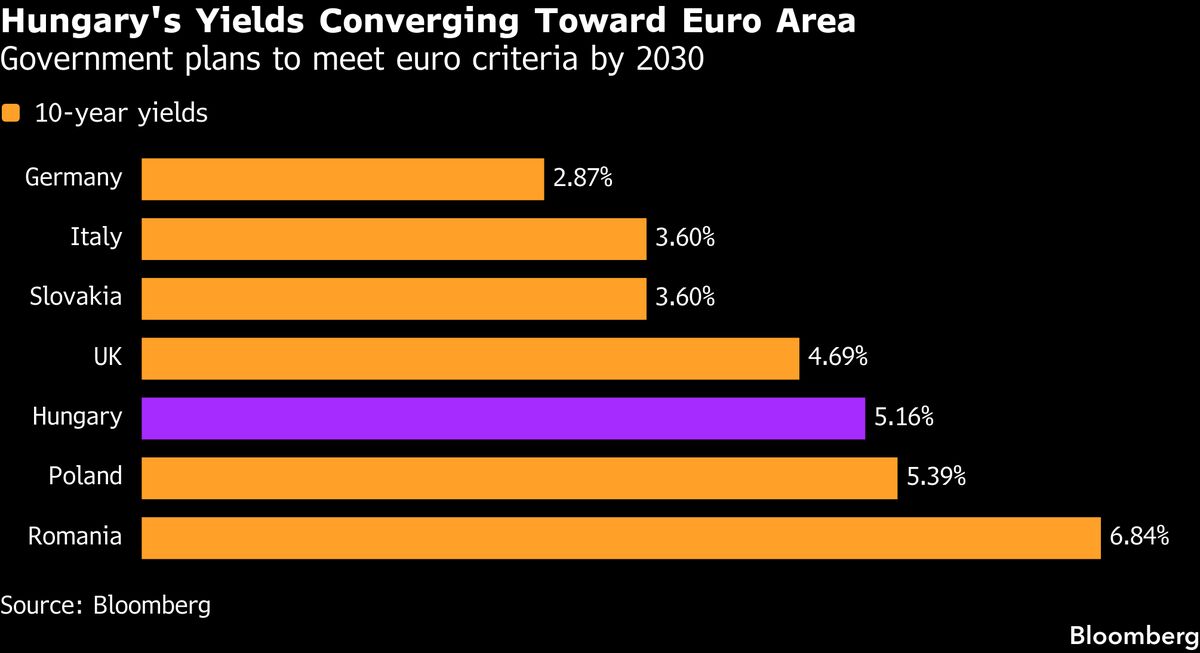
Hungary's bond rally has pushed yields close to UK levels, signaling investor confidence in the government's economic reforms and euro adoption plans.
According to Bloomberg Markets, Hungary's government bonds have experienced a significant rally that has pushed yields close to those of United Kingdom debt, marking a notable convergence between the two sovereign debt markets. The bond market movement reflects investor confidence in the new Hungarian government's economic reform agenda and stated plans to pursue euro region membership. The yield compression represents a substantial shift in how fixed-income markets are pricing Hungarian sovereign risk relative to developed European economies.
Key takeaways
Hungary's government bond yields have rallied to levels approaching UK sovereign debt yields
The bond market movement signals investor backing for the new government's economic reform plans
The rally reflects market confidence in Hungary's stated intention to join the euro region
Sovereign bond yield convergence typically indicates improving credit quality perceptions and reduced risk premiums (general market context)
Table of Contents
What happened
Why it matters
What to watch next
What happened
Hungary's government bonds have experienced a sustained rally that has compressed yields to levels now trading close to those of United Kingdom sovereign debt. Bloomberg Markets reports this yield convergence as the latest indication that fixed-income investors are expressing confidence in the new Hungarian government's policy direction. The bond market movement comes as the government has outlined plans to address economic challenges and pursue membership in the euro currency area.
The yield compression between Hungarian and UK government bonds represents a significant narrowing of the spread that traditionally exists between emerging European economies and established Western European sovereign debt markets. Bond yields move inversely to prices, meaning the rally in Hungarian bonds has driven their yields down while simultaneously pushing bond prices higher. This market behavior demonstrates that investors are demanding lower compensation for holding Hungarian sovereign debt, a signal typically associated with improved credit quality perceptions and reduced country risk assessments.
Why it matters
Sovereign bond yield convergence carries important implications for how global fixed-income markets assess country risk and economic policy credibility. When government bond yields from different countries move closer together, it generally indicates that investors perceive similar levels of credit risk, inflation expectations, and policy stability between those nations. For Hungary, achieving yield levels comparable to the United Kingdom—a developed economy with established institutional frameworks—represents a meaningful shift in market sentiment regarding the country's fiscal trajectory and economic management.
The bond rally also has practical consequences for Hungary's government financing costs and broader economic conditions. Lower yields reduce the interest expense the government must pay when issuing new debt or refinancing existing obligations, potentially freeing up fiscal resources for other priorities. Additionally, sovereign bond yields serve as a benchmark for corporate borrowing costs within a country, meaning the rally could translate into lower financing costs across the Hungarian economy. Euro region membership, which the source indicates is part of the government's stated plans, would require meeting specific fiscal and economic criteria, and favorable bond market conditions can support progress toward those convergence targets.
What to watch next
Monitoring the sustainability of Hungary's bond rally will require tracking several verifiable indicators. Investors should watch for any official government announcements regarding specific economic reform measures, fiscal policy changes, or concrete steps toward euro adoption criteria. Bond market participants will also be observing whether the yield convergence with UK debt persists or whether spreads widen in response to new economic data, policy developments, or shifts in broader European fixed-income markets.
The durability of the rally will depend on whether the new government delivers on the policy agenda that appears to have generated investor confidence. Key metrics to monitor include Hungary's fiscal deficit trajectory, inflation trends, and any formal assessments from European institutions regarding euro convergence progress. Additionally, comparative yield movements across other Central and Eastern European sovereign debt markets will provide context for whether Hungary's bond performance represents a country-specific development or part of a broader regional trend in fixed-income markets.
Read original source