education
Integrated Trading Workspace for Serious Traders
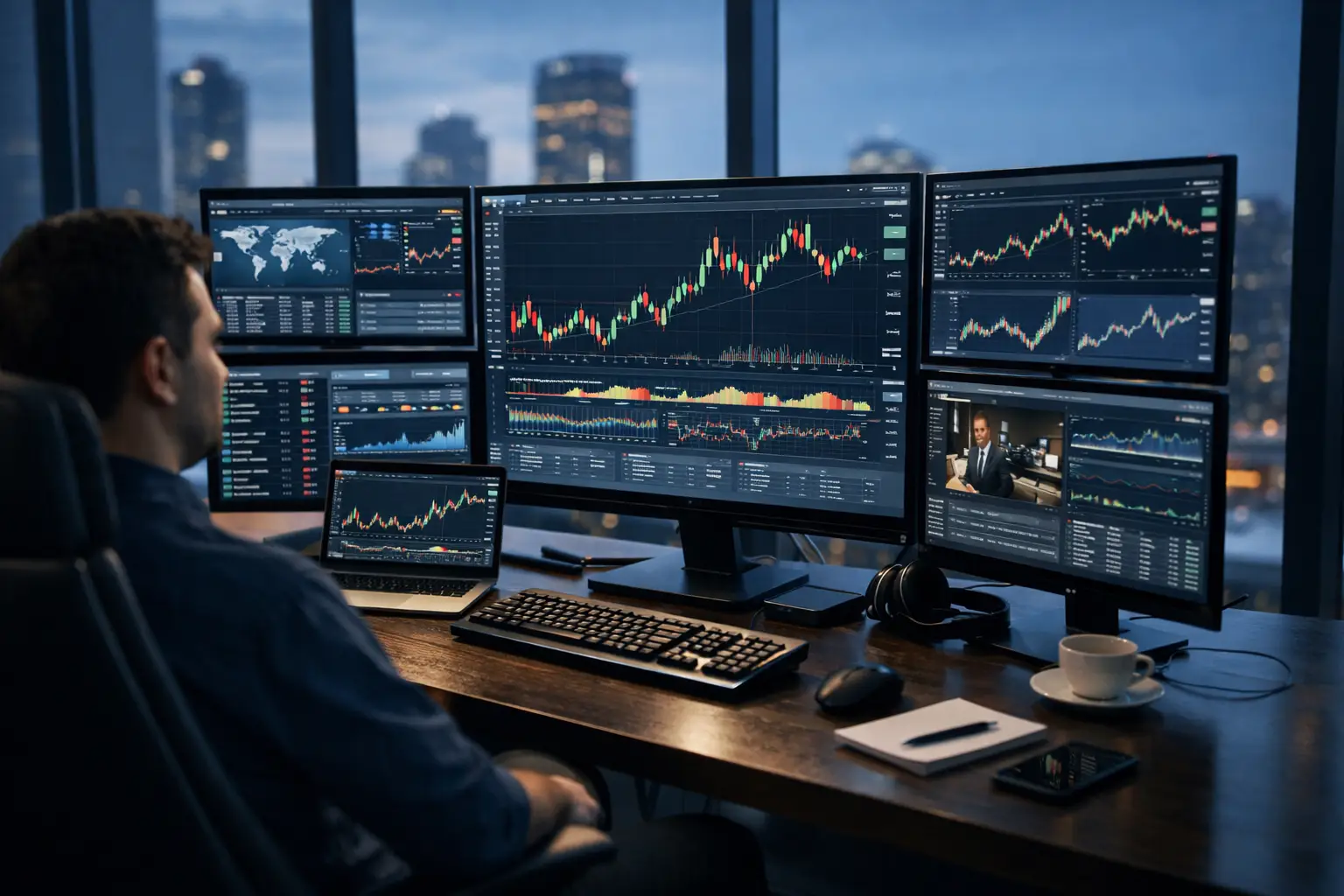
An integrated trading workspace connects market intelligence, portfolio analytics, verified community insight, and tools for faster, clearer decisions.
A missed entry rarely starts with a bad chart read. More often, it starts with a fragmented workflow: news in one tab, portfolio exposure in another, a trade thesis buried in a chat, and no reliable way to judge whether the person sharing it has earned credibility. An integrated trading workspace brings those decisions into one operating environment, so market participants can move from signal to context to action without losing the thread.
For active traders and self-directed investors, this is not a cosmetic change. It is infrastructure for making better-informed decisions under real market conditions.
Why fragmented workflows create avoidable risk
Most traders already have access to information. The constraint is not volume. It is the time and judgment required to connect a price move, a portfolio position, a market narrative, a technical setup, and a source of market commentary.
A fragmented stack creates friction at every stage. A trader may see a compelling crypto thesis on social media, then search separately for price action, review holdings in a different app, and attempt to assess whether the source has a real record or simply a convincing feed. By the time the research is complete, the opportunity may have changed. Worse, the trader may act before the research is complete.
Fragmentation also weakens accountability. Public market commentary can attract attention without demonstrating process, risk management, or consistency. Screenshots of wins are easy to post. Transparent performance, reasoned analysis, and a visible reputation are much harder to manufacture.
An integrated workspace does not eliminate market risk. No platform can do that. It can reduce operational noise and create a more disciplined route from discovery to decision.
What an integrated trading workspace should connect
A useful workspace is more than a dashboard that places several widgets on one screen. The components must inform one another. Market intelligence should connect to the assets a user follows. Portfolio analytics should reveal exposure in the context of current market conditions. Community discussion should be anchored to identifiable participants and relevant instruments, not detached from evidence.
Market intelligence with context
Price charts, watchlists, economic developments, sentiment indicators, technical signals, and research are all useful on their own. Their value rises when they are presented around the questions traders actually ask: What moved? What catalysts are approaching? Is this asset correlated with positions I already hold? Has volatility changed enough to alter my risk plan?
AI-assisted analysis can help organize this information, surface relevant developments, and reduce the time spent scanning routine data. But AI output should support judgment rather than replace it. Strong market intelligence shows its inputs, preserves context, and makes it easier for users to challenge a conclusion when conditions shift.
Portfolio analytics that influence behavior
A portfolio tracker that merely reports profit and loss is backward-looking. An effective analytics layer helps traders understand concentration, drawdown, asset allocation, correlation, and the sources of recent performance.
For example, a trader holding technology stocks, Bitcoin, and growth-focused exchange-traded funds may believe they are diversified because the instruments are different. Portfolio analysis may reveal that all three positions respond similarly during risk-off periods. That distinction can materially change sizing, hedging, or the decision to avoid adding another correlated trade.
The goal is not to force one strategy. A short-term forex trader, a long-term equity investor, and a crypto participant will use different measures. The value lies in putting their actual exposure in front of them before the next decision is made.
Verified community intelligence
Social trading works best when discovery is paired with trust. Traders benefit from seeing how others interpret market events, test ideas, and manage uncertainty. They should not have to sort through anonymous hype, unverifiable claims, or engagement-driven predictions to find useful analysis.
A verified community can create better signal quality by attaching reputation to participation. Users can evaluate a contributor through the consistency of their analysis, their disclosed reasoning, their track record where available, and the quality of their engagement with others. This does not make every idea correct. It makes the source easier to assess.
That distinction matters. A credible community does not promise consensus or copy-trading shortcuts. It creates a setting where claims can be examined, challenged, and improved in real time.
Tools and education in the same decision flow
Research often breaks down at the handoff between learning and execution. A beginner may understand a risk-management concept in an educational video but fail to apply it while building a trade plan. An experienced trader may discover a specialized indicator or scanner but need a practical way to compare it with existing tools.
Bringing educational content, trading software, live streams, analytics, and tool discovery into the same environment shortens that distance. It gives users a place to develop their process rather than constantly rebuild it across disconnected services.
The operational advantage is clarity, not convenience alone
Convenience is often the first benefit people notice. Fewer logins, fewer browser tabs, and less repeated searching make the day easier. The deeper advantage is decision clarity.
When the workspace connects a watchlist to research, portfolio exposure, relevant discussion, and available tools, traders can ask better questions before they commit capital. They can compare a new thesis against positions they already own. They can see whether a market narrative is supported by data or driven by attention. They can revisit the reasoning behind a decision after the trade closes.
This creates a more repeatable operating rhythm. Monitor markets, identify a setup, test the thesis against available intelligence, assess exposure, define risk, and document the decision. The sequence varies by strategy, but the principle remains: decisions improve when the evidence is connected.
For serious participants, this also makes review more productive. Instead of asking only whether a trade won or lost, they can ask whether the thesis was sound, whether position size fit the risk, whether portfolio overlap was overlooked, and whether outside commentary influenced the decision appropriately.
What to evaluate before adopting a workspace
Not every all-in-one platform deserves to become the center of a trading process. A long feature list can conceal shallow integration, unreliable data, or a community built around noise rather than informed participation.
First, examine whether the platform creates real connections between its capabilities. Can portfolio data inform research? Can community ideas be evaluated with context? Can users move from education or a live discussion into practical analysis without starting over elsewhere?
Second, assess the trust model. Look for clear standards around identity, reputation, content quality, disclosures, and the treatment of performance claims. Financial communities need room for debate, but they also need mechanisms that discourage manipulation and reward accountable participation.
Third, consider interoperability and control. Depending on a trader's markets and broker relationships, a workspace may serve as a primary operating hub or an intelligence layer alongside existing execution tools. The right choice depends on strategy, asset class, workflow, and the level of customization required.
Finally, assess whether the platform respects the difference between information and advice. Good infrastructure gives users clearer evidence and better tools. It does not turn uncertain markets into false certainty.
Building a connected market operating system
The strongest trading environments are evolving beyond isolated terminals, social feeds, and portfolio trackers. They are becoming connected market operating systems where insight, participation, reputation, and analysis reinforce one another.
Tyrian Trade is built around this premise: traders and investors should be able to discover market intelligence, analyze portfolios, access tools, learn, and participate in real-time market conversations within a trust-centered ecosystem. That model recognizes that modern market participation is both analytical and social, but neither dimension should compromise transparency.
An integrated trading workspace is not valuable because it puts everything in one place. It is valuable because it helps serious market participants preserve context when it matters most. The best workspace makes each decision easier to examine before capital is committed, and easier to learn from after the market has moved.