market
Japan's $2.3 Trillion Investment Plan Raises JGB Market Concerns
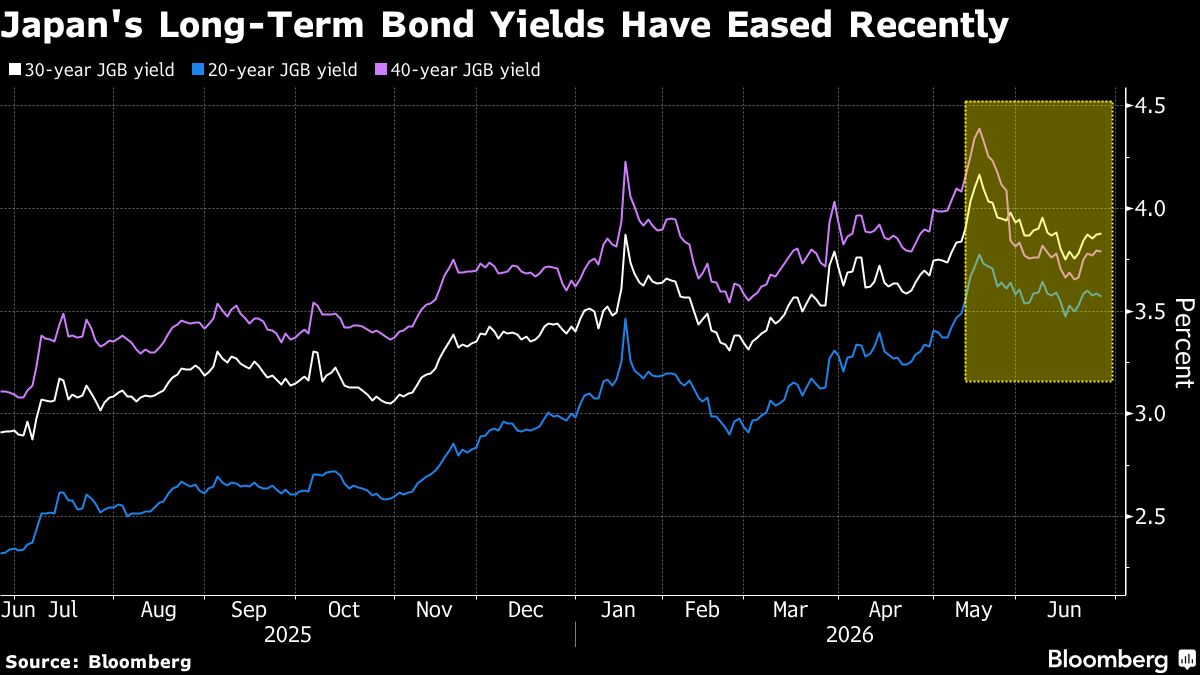
Prime Minister Sanae Takaichi's $2.3 trillion investment plan sparks bond strategist warnings about pressure on Japan's government debt market and financing uncertainty.
According to Bloomberg Markets, bond strategists are warning that Prime Minister Sanae Takaichi's $2.3 trillion investment plan may put fresh pressure on Japan's government debt market, sparking uncertainty about financing and prospects for generating the promised growth. The announcement on June 25, 2026, has raised questions about how the massive spending initiative will be funded and whether it can deliver the economic expansion the government anticipates without destabilizing the Japanese Government Bond market.
Key takeaways
Prime Minister Sanae Takaichi announced a $2.3 trillion investment plan that bond strategists warn may pressure Japan's government debt market
The plan has sparked uncertainty about financing methods and the prospects for generating promised economic growth
Japanese Government Bonds (JGBs) are the primary debt instruments issued by Japan's government to finance public spending and refinance existing debt
Large-scale government spending plans typically require increased bond issuance, which can affect yields, investor demand, and overall market stability
Table of Contents
What happened
Why it matters
What to watch next
What happened
Prime Minister Sanae Takaichi unveiled a $2.3 trillion investment plan that has immediately drawn scrutiny from bond market strategists. According to Bloomberg Markets, these strategists are expressing concern that the massive spending initiative may create fresh pressure on Japan's government debt market. The scale of the proposed investment has raised immediate questions about how the government intends to finance such a substantial commitment.
The announcement has generated uncertainty on two key fronts: the mechanics of financing the plan and whether the investment will actually deliver the economic growth that the government has promised. Bond strategists, who closely monitor government debt issuance and market conditions, are flagging potential risks to the Japanese Government Bond market as the government moves forward with implementation plans.
Why it matters
Japanese Government Bonds represent one of the world's largest sovereign debt markets, with Japan carrying one of the highest debt-to-GDP ratios among developed economies. When governments announce large-scale spending plans, they typically must increase bond issuance to raise the necessary funds, which can affect market dynamics in several ways. Higher supply of government bonds can push yields upward if investor demand does not keep pace, potentially raising borrowing costs for the government and creating ripple effects across financial markets.
The concerns raised by bond strategists reflect broader questions about fiscal sustainability and market capacity to absorb additional government debt. Japan's central bank, the Bank of Japan, has historically played a significant role in the JGB market through its monetary policy operations, including large-scale bond purchases. Any major shift in government financing needs could test the balance between fiscal policy ambitions and monetary policy constraints. For investors in Japanese government bonds, currency markets, and regional equity markets, the financing structure and implementation timeline of the investment plan will be critical factors to monitor, as they may influence interest rate expectations, currency valuations, and overall market sentiment toward Japanese assets.
What to watch next
Market participants will be closely monitoring how the Japanese government plans to structure the financing for the $2.3 trillion investment plan. Key details to watch include the proposed timeline for bond issuance, whether the government will rely primarily on domestic or international investors, and any potential coordination with the Bank of Japan's monetary policy framework. The government's specific allocation of the investment funds across sectors and projects will also provide insight into the economic growth strategy underlying the plan.
Bond market indicators will serve as important barometers for investor sentiment. Traders and analysts will track JGB yields across different maturities, auction results for new government bond issuances, and any changes in foreign investor participation in the Japanese debt market. Additionally, statements from the Bank of Japan regarding its monetary policy stance and any potential adjustments to its bond purchase programs will be significant. The government's ability to articulate a credible path to the promised economic growth, along with concrete implementation milestones, will likely influence whether bond market concerns intensify or subside in the coming months.
Read original source