tech-ai
Japan Convertible Bond Sales Hit 20-Year High in H1 2026
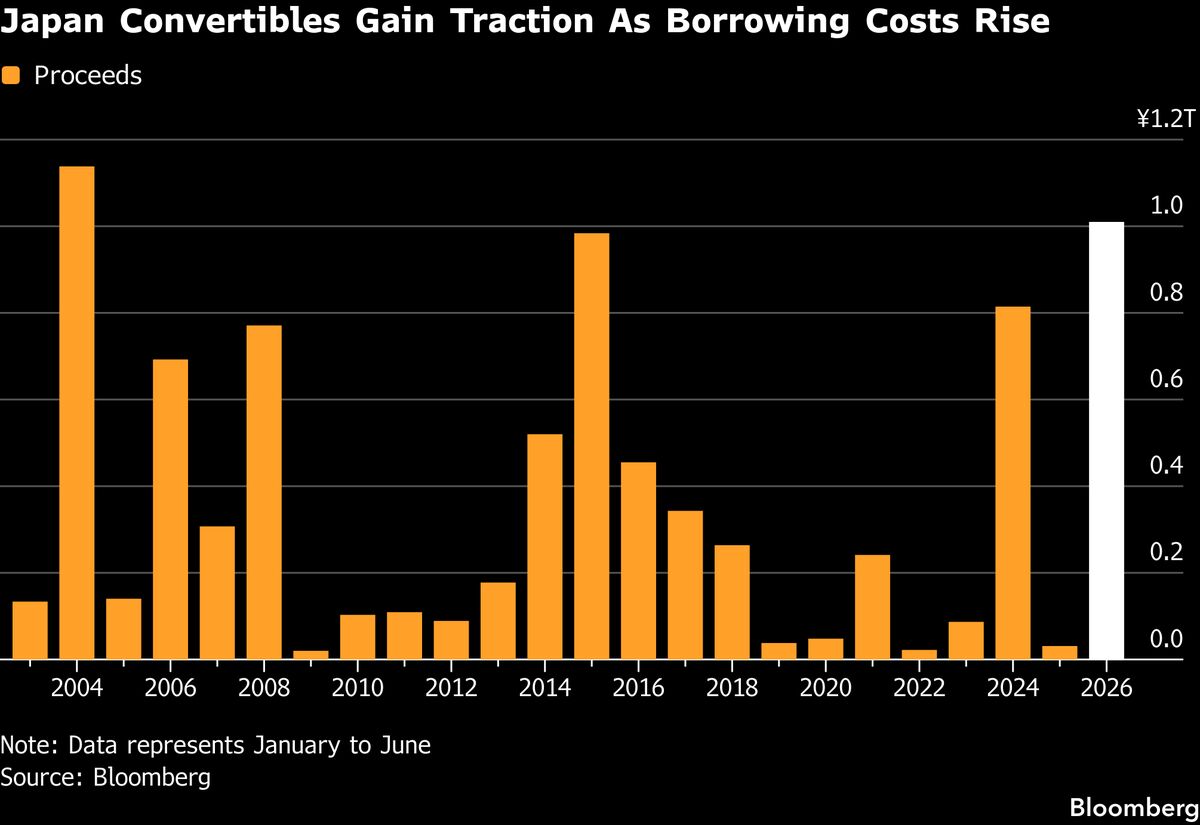
Japan convertible bond issuance reached a two-decade high in H1 2026 as companies seek cheaper financing amid rising interest rates, Bloomberg Markets reports.
Japanese companies issued the highest volume of convertible bonds in more than two decades during the first half of 2026, turning to this financing alternative as interest rates continue to climb, according to Bloomberg Markets. The shift reflects corporate efforts to secure cheaper capital in a rising-rate environment that has made traditional debt more expensive.
Key takeaways
Japan convertible bond issuance in the first half of 2026 reached the highest level in over 20 years, according to Bloomberg Markets
Japanese companies are using convertible bonds as a cheaper financing alternative as interest rates continue to rise
The trend reflects how rising rates influence corporate capital structure decisions and debt market activity
Investors may watch future issuance data, rate policy updates, and corporate financing disclosures for additional context
Table of Contents
Market Move
Why Convertible Bonds Matter in a Rising-Rate Environment
What to Watch Next
Market Move
Bloomberg Markets reported that Japanese companies sold the highest amount of convertible bonds in more than two decades during the first half of 2026. The source context attributes the increase to rising interest rates, which have made traditional debt financing more expensive. Convertible bonds allow companies to raise capital at lower initial interest costs by offering investors the option to convert the debt into equity at a later date.
Why Convertible Bonds Matter in a Rising-Rate Environment
Convertible bonds are hybrid securities that combine features of debt and equity. They typically carry lower coupon rates than traditional corporate bonds because investors receive the option to convert the bond into a predetermined number of shares if the company's stock price rises. For issuers, this structure can reduce immediate interest expenses, which becomes more attractive when benchmark rates are climbing and traditional debt costs are increasing.
For investors, convertible bonds offer downside protection through fixed-income characteristics while providing upside participation if the issuer's equity performs well. In a rising-rate environment, this balance can appeal to investors seeking yield without full equity risk. For readers following broader market updates , convertible bond issuance trends can serve as a useful indicator of how companies are managing capital costs, balance sheet flexibility, and equity dilution risk as monetary policy shifts.
What to Watch Next
Market readers may watch for additional issuance data from Japan's debt capital markets, including total volumes, issuer details, and sector concentration. Future disclosures from Japanese companies regarding their financing strategies, debt maturity profiles, and conversion terms could provide further insight into how rising rates are influencing corporate capital allocation decisions.
Investors may also monitor updates from the Bank of Japan regarding interest rate policy, yield curve control adjustments, and any commentary on corporate financing conditions. Changes in benchmark rates, credit spreads, and equity market volatility could influence the relative attractiveness of convertible bonds compared to traditional debt or equity issuance. Without additional details on specific issuers or conversion terms, the reported trend should be treated as a confirmed market development with broader implications for Japanese corporate finance and debt market activity.
Read original source