market
JPMorgan Names Co-Presidents After Lake Retirement
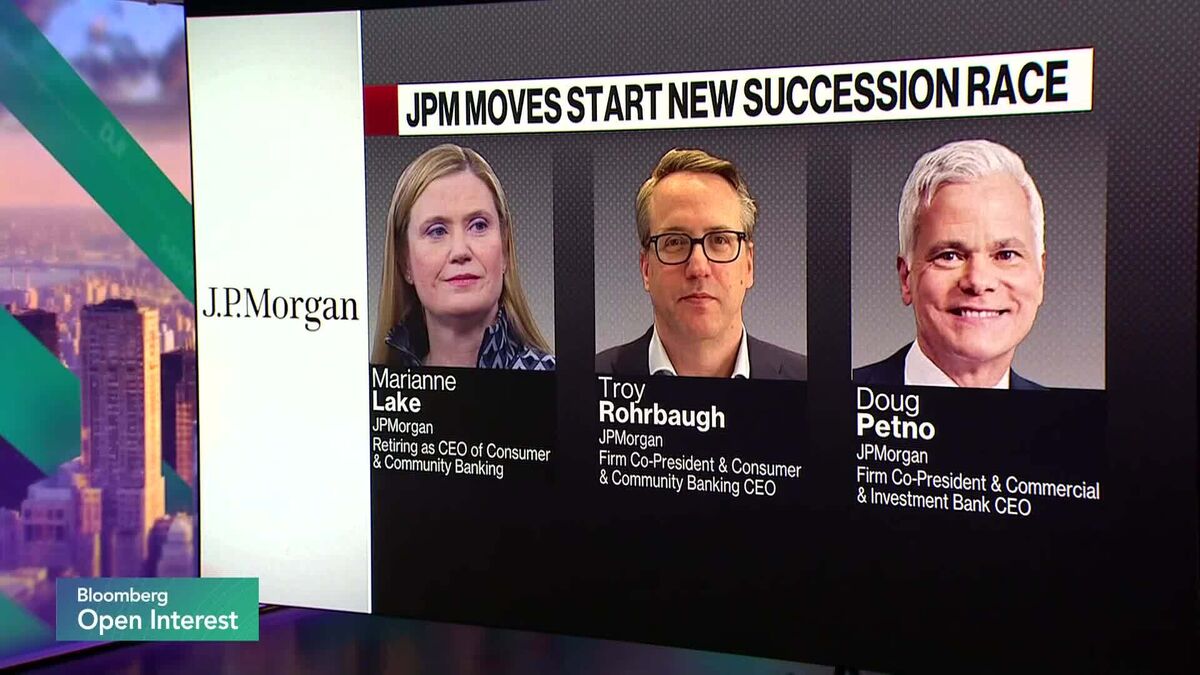
JPMorgan Chase named Troy Rohrbaugh and Doug Petno co-presidents following Marianne Lake's retirement, resetting the race to succeed CEO Jamie Dimon.
JPMorgan Chase & Co. named Troy Rohrbaugh and Doug Petno as co-presidents following the retirement of consumer banking chief Marianne Lake, according to Bloomberg Markets. The leadership change resets the race to succeed CEO Jamie Dimon, as Lake had been widely viewed as a potential successor. The announcement marks a significant shift in JPMorgan succession planning and executive structure at the largest U.S. bank by assets.
Key takeaways
JPMorgan Chase named Troy Rohrbaugh and Doug Petno as co-presidents after Marianne Lake's retirement from her consumer banking chief role.
Lake had been considered a leading candidate to succeed CEO Jamie Dimon, making her departure a notable shift in the bank's succession landscape.
The co-president structure introduces a new dynamic in JPMorgan's executive leadership and succession planning framework.
Investors and market observers will watch for further disclosures about the bank's long-term leadership strategy and operational priorities.
Table of Contents
Leadership transition at JPMorgan Chase
Why succession planning matters for investors
What to watch next
Leadership transition at JPMorgan Chase
Bloomberg Markets reported that JPMorgan Chase & Co. appointed Troy Rohrbaugh and Doug Petno to serve as co-presidents following Marianne Lake's retirement. Lake had led the consumer banking division, one of the bank's largest business units by revenue and customer reach. Her departure removes a prominent figure from the internal succession conversation surrounding CEO Jamie Dimon, who has led the bank since 2005 and remains one of the most closely watched executives in global finance.
The co-president structure represents a shift in how JPMorgan organizes its senior leadership. Rohrbaugh and Petno will share responsibilities at the executive level, though the source context does not specify their individual portfolios, reporting lines, or how decision-making authority will be divided. The bank has not disclosed the timeline for Lake's retirement or the reasons behind her decision to step down. Investors often scrutinize executive transitions at large financial institutions because leadership continuity can influence strategic execution, risk management, and capital allocation priorities.
Why succession planning matters for investors
For investors, executive succession planning at a major bank like JPMorgan Chase carries weight because leadership transitions can affect operational stability, strategic direction, and market confidence. CEO succession is particularly sensitive at institutions where a long-tenured leader has shaped corporate culture, risk appetite, and competitive positioning. Jamie Dimon's tenure has spanned multiple economic cycles, regulatory regimes, and market crises, making the question of his eventual successor a recurring topic among analysts and shareholders.
Marianne Lake's exit narrows the field of internal candidates and introduces uncertainty about the bank's long-term leadership pipeline. The co-president model may serve as a testing ground for future leadership, or it may reflect a deliberate choice to distribute executive responsibilities across multiple leaders rather than concentrating authority in a single heir apparent. For readers following broader market updates , this development can help frame the wider context of how large financial institutions manage leadership transitions and communicate succession plans to stakeholders.
What to watch next
Market readers should monitor future disclosures from JPMorgan Chase regarding the roles and responsibilities of the newly appointed co-presidents, as well as any additional commentary from the bank's board or CEO Jamie Dimon about succession planning. Investors may also watch for updates on the bank's strategic priorities, including technology investment, regulatory compliance, and business unit performance, to assess whether the leadership transition influences operational focus or capital allocation decisions.
The source context does not specify whether Lake's retirement is immediate or phased, nor does it provide details about her future plans or any transition period. Additional disclosures from the bank, regulatory filings, or investor presentations may clarify the timeline and rationale behind the leadership changes. Succession planning at large financial institutions often unfolds over multiple quarters, and further announcements about executive appointments, board decisions, or organizational restructuring could provide additional insight into JPMorgan's long-term leadership strategy.
Read original source