market
Korea AI Selloff Revives Scrutiny of $290B Leveraged ETF Boom
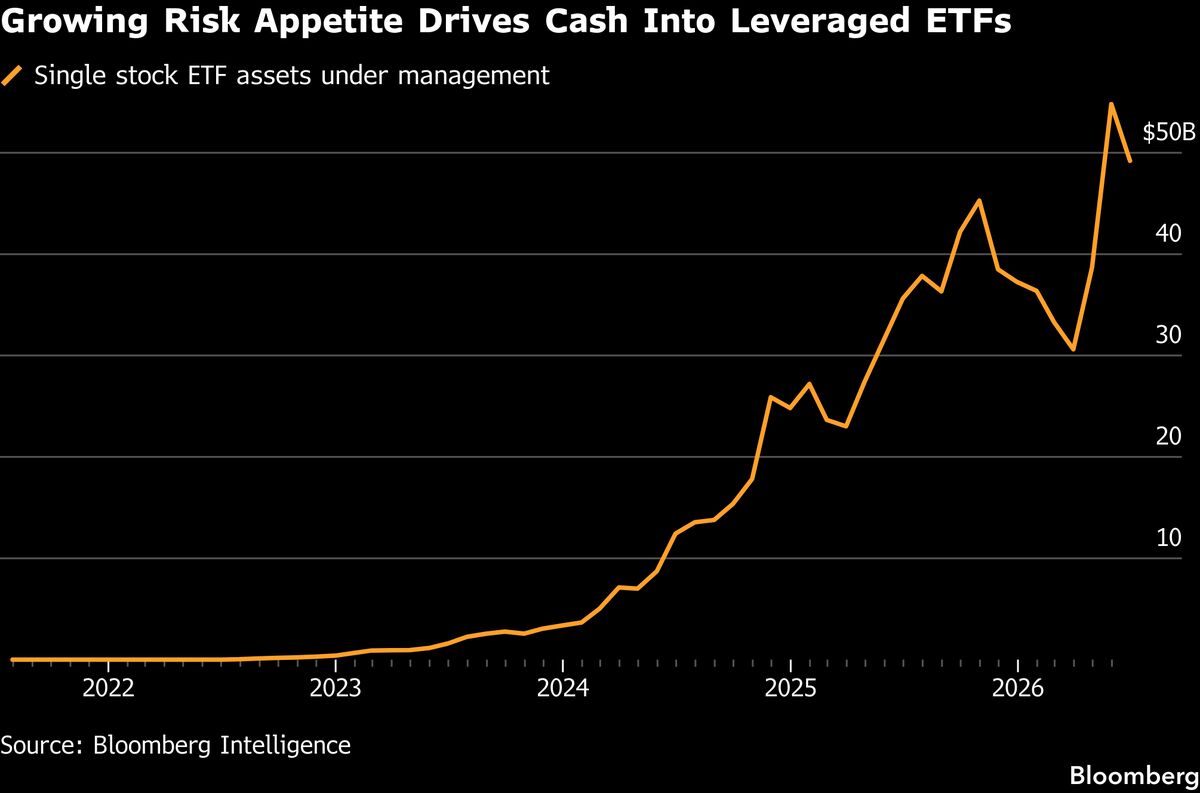
South Korea's AI-fueled selloff has renewed focus on the $290 billion leveraged ETF market, one of retail investing's fastest-growing segments.
According to Bloomberg Markets, South Korea's artificial intelligence-fueled selloff has renewed scrutiny of the leveraged exchange-traded fund market, a segment valued at approximately $290 billion and among the fastest-growing corners of retail investing. The market turbulence in Korean AI-related assets has drawn attention to the risks and mechanics of leveraged ETFs, financial instruments that use derivatives and debt to amplify the returns of an underlying index or sector.
Key Takeaways
South Korea experienced an AI-fueled selloff that has refocused attention on leveraged ETFs
The leveraged ETF market has grown to approximately $290 billion, representing one of the fastest-growing retail investment segments
Leveraged ETFs use derivatives and borrowed capital to magnify both gains and losses, making them particularly sensitive to volatile market conditions
Regulatory scrutiny of leveraged products typically intensifies following periods of sharp market declines
Table of Contents
What Happened
Why It Matters
What to Watch Next
What Happened
Bloomberg Markets reported that South Korea's AI-fueled selloff has placed a spotlight back on leveraged exchange-traded funds, a market segment valued at approximately $290 billion. The selloff in Korean AI-related assets has drawn renewed attention to this rapidly expanding corner of retail investing. Leveraged ETFs have become one of the fastest-growing investment vehicles available to retail investors, attracting significant capital inflows as investors seek amplified exposure to various market sectors and themes.
The Korean market turbulence centered on artificial intelligence-related assets, though the source context does not specify the magnitude of the selloff, the specific AI companies or sectors affected, or the duration of the market decline. The event has nonetheless triggered fresh examination of leveraged ETF products, which have proliferated across global markets as retail participation in financial markets has expanded. The $290 billion market size underscores the substantial capital now deployed in these amplified investment vehicles.
Why It Matters
Leveraged ETFs are structured to deliver multiples of the daily performance of their underlying index or sector—typically two or three times the return, either positive or negative. These products achieve amplification through the use of financial derivatives such as futures contracts and swaps, combined with borrowed capital. While this structure can magnify gains during favorable market conditions, it equally amplifies losses during downturns, making leveraged ETFs particularly sensitive to volatility. The compounding effect of daily rebalancing means that leveraged ETF performance can diverge significantly from the simple multiple of the underlying index over periods longer than one day, especially in volatile markets.
The rapid growth of the leveraged ETF market to $290 billion reflects broader trends in retail investing, including increased access to sophisticated financial instruments, the democratization of trading through low-cost platforms, and investor appetite for concentrated exposure to high-growth themes such as artificial intelligence. However, sharp market selloffs—such as the AI-fueled decline in South Korea—tend to expose the risks inherent in leveraged products. Regulators and market observers typically intensify scrutiny of these instruments following periods of heightened volatility, examining whether retail investors fully understand the compounding risks, the impact of daily rebalancing, and the potential for outsized losses. The Korean AI selloff serves as a reminder that leveraged products can accelerate portfolio declines when market sentiment shifts rapidly.
What to Watch Next
Market participants should monitor whether regulatory authorities in South Korea or other jurisdictions issue new guidance or restrictions on leveraged ETF products following the AI-related selloff. Historically, periods of sharp market declines have prompted regulators to review investor protection measures, disclosure requirements, and suitability standards for complex financial products. Any regulatory changes could affect the availability, structure, or marketing of leveraged ETFs, particularly to retail investors. Additionally, observers will track whether the Korean AI selloff spreads to other markets or sectors, potentially triggering broader volatility that could test leveraged ETF liquidity and pricing mechanisms.
Investors should also watch for changes in leveraged ETF trading volumes, redemption patterns, and pricing efficiency during periods of market stress. The performance of these products during volatile conditions provides insight into their structural resilience and the effectiveness of their daily rebalancing mechanisms. Market commentary from asset managers, exchanges, and industry groups may offer further perspective on the sustainability of the leveraged ETF boom and whether the $290 billion market size represents a stable equilibrium or a potential source of systemic risk. The Korean AI selloff may serve as a catalyst for renewed investor education efforts around the risks and appropriate use cases for leveraged investment products.
Read original source