policy
Lagarde Says European Banking System More Resilient to Shocks
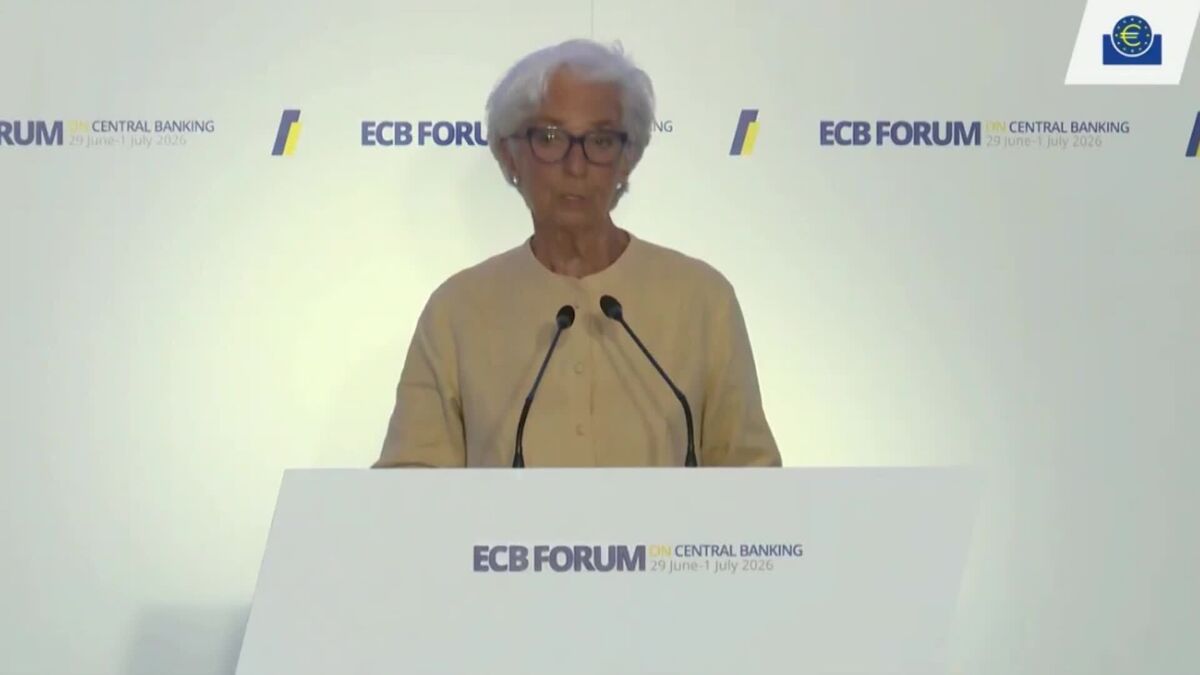
European Central Bank President Christine Lagarde says Europe is becoming less vulnerable to outside shocks thanks to a better financial framework and green transition progress.
European Central Bank President Christine Lagarde said the European banking system is becoming less vulnerable to outside shocks thanks to a better financial framework and progress on the green transition, according to Bloomberg Markets. Lagarde made the remarks during the ECB's annual retreat in Sintra, Portugal, on June 29, 2026. The comments highlight the central bank's assessment of financial stability improvements across the eurozone following years of regulatory reform and institutional strengthening.
Key takeaways
ECB President Christine Lagarde said Europe is becoming less vulnerable to outside shocks, according to Bloomberg Markets
Lagarde cited a better financial framework and progress on the green transition as key resilience factors
The remarks were delivered during the ECB's annual retreat in Sintra, Portugal, on June 29, 2026
For investors, central bank assessments of financial stability can influence expectations for regulatory policy, credit conditions, and systemic risk
Table of Contents
What happened
Why financial resilience matters
What to watch next
What happened
European Central Bank President Christine Lagarde stated that Europe is becoming less vulnerable to outside shocks, attributing the improvement to a better financial framework and progress on the green transition. Bloomberg Markets reported the remarks, which were delivered during the ECB's annual retreat in Sintra, Portugal. The annual retreat serves as a key forum for central bank officials, policymakers, and economists to discuss monetary policy, financial stability, and economic challenges facing the eurozone.
The source context did not provide additional details about specific financial framework improvements, green transition metrics, or the types of shocks Lagarde referenced. The remarks reflect the ECB's ongoing assessment of financial stability across the eurozone, a region that has faced multiple stress events over the past decade, including sovereign debt crises, banking sector fragility, and pandemic-related economic disruption. For readers following broader market updates , central bank commentary on financial resilience can help frame expectations for future policy decisions and regulatory priorities.
Why financial resilience matters
For investors, central bank assessments of financial stability matter because they can influence expectations for regulatory policy, credit conditions, and systemic risk. A more resilient banking system may support more stable credit availability, reduce the likelihood of emergency interventions, and allow central banks greater flexibility in setting monetary policy. Conversely, vulnerabilities in the financial system can constrain policy options, increase the risk of disorderly market moves, and elevate the cost of capital for businesses and households.
In general market context, financial framework improvements often include stronger capital requirements, enhanced supervision, resolution mechanisms for failing banks, and macroprudential tools designed to prevent the buildup of systemic risk. Progress on the green transition can also influence financial resilience by shaping how banks, insurers, and asset managers assess climate-related risks, transition risks, and the long-term sustainability of investment portfolios. Without additional details from the source context, readers should treat Lagarde's remarks as a high-level assessment rather than a detailed policy roadmap.
What to watch next
Market readers may watch for future ECB communications, including financial stability reports, monetary policy statements, and speeches by ECB officials, to understand how the central bank's resilience assessment influences policy decisions. Additional details about the financial framework improvements and green transition progress referenced by Lagarde would help investors evaluate the durability of the resilience gains and the potential for future stress events. Regulatory developments, including changes to capital requirements, stress testing frameworks, and climate risk disclosure rules, may also provide useful context for assessing the eurozone banking system's ability to withstand shocks.
Investors may also monitor broader economic indicators, including credit growth, bank lending conditions, sovereign bond spreads, and corporate default rates, to assess whether the ECB's resilience assessment aligns with observable market conditions. For readers tracking eurozone financial markets, central bank commentary on financial stability can serve as a useful input for evaluating systemic risk, regulatory policy direction, and the potential for future policy interventions. The source context did not provide details about specific shocks, stress scenarios, or quantitative resilience metrics, so readers should watch for future disclosures that may clarify the scope and basis of Lagarde's assessment.
Read original source