market
Philippine Bond Rally Faces Skepticism Amid Inflation Risks
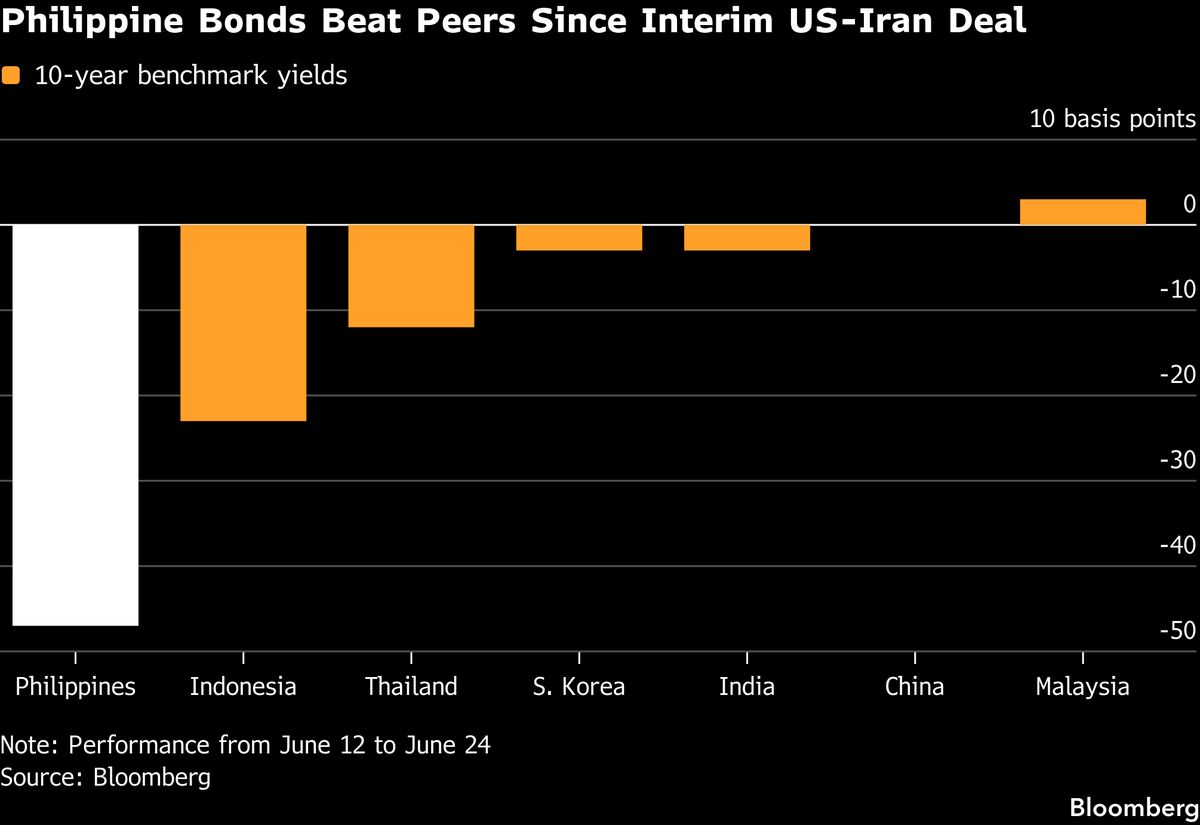
Philippine bonds lead emerging Asia's rebound after US-Iran deal, but Bloomberg Markets reports inflation risks and hawkish central bank may limit gains.
According to Bloomberg Markets, Philippine bonds are staging emerging Asia's biggest rebound following an interim US-Iran deal, but market watchers warn that inflation risks and a hawkish central bank may cap the bounce. The Philippine bond rally reflects broader risk-on sentiment in emerging markets after geopolitical tensions eased, yet institutional investors remain cautious about the sustainability of gains in the Southeast Asian nation's fixed-income market.
Key takeaways
Philippine bonds are delivering emerging Asia's largest rebound after an interim US-Iran deal reduced geopolitical risk
Market watchers caution that inflation risks may limit the rally's upside potential
A hawkish central bank stance is cited as another factor that could cap the bond market bounce
General context: Bond rallies in emerging markets often face headwinds from domestic monetary policy and inflation dynamics
Table of Contents
What happened
Why it matters
What to watch next
What happened
Bloomberg Markets reports that Philippine bonds are experiencing emerging Asia's strongest rebound in the wake of an interim US-Iran deal. The agreement appears to have triggered a relief rally across risk assets, with Philippine fixed-income securities leading gains among regional peers. The bond market response reflects investor appetite for higher-yielding emerging market debt when geopolitical uncertainty subsides and risk sentiment improves across global markets.
Despite the rally's strength, market watchers cited by Bloomberg Markets express skepticism about its durability. Two specific factors are identified as potential constraints: inflation risks within the Philippine economy and a hawkish stance from the country's central bank. These domestic considerations are tempering institutional enthusiasm even as the broader emerging Asia fixed-income complex benefits from reduced geopolitical tensions and improved risk appetite among international investors.
Why it matters
The Philippine bond rally illustrates how emerging market fixed-income securities respond to shifts in global risk sentiment, particularly when geopolitical flashpoints ease. Bond markets in developing economies typically exhibit heightened sensitivity to international developments because foreign capital flows can move quickly in response to changing risk perceptions. When major geopolitical risks diminish, investors often rotate into higher-yielding assets in emerging markets, seeking returns that compensate for currency and credit risks. The Philippines, as a frontier within emerging Asia's bond universe, can see outsized moves during such rotations.
However, the institutional skepticism highlighted by Bloomberg Markets underscores a critical dynamic in emerging market investing: domestic fundamentals ultimately determine whether relief rallies can be sustained. Inflation pressures erode the real returns on fixed-income securities, making bonds less attractive to both domestic and foreign investors. Meanwhile, a hawkish central bank typically signals rising policy rates ahead, which push bond yields higher and prices lower. These countervailing forces create a challenging environment for bond investors, even when external risk sentiment improves. The tension between favorable global conditions and unfavorable domestic fundamentals often defines the trajectory of emerging market bond performance.
What to watch next
Investors monitoring the Philippine bond market should track inflation data releases and central bank communications closely. Any acceleration in consumer price growth would reinforce the inflation risks cited by market watchers and could prompt further monetary tightening. Central bank policy statements, meeting minutes, and speeches by monetary officials will provide insight into whether the hawkish stance persists or begins to soften. The direction of policy rates and forward guidance will directly influence bond yields and the sustainability of the current rally.
Beyond domestic factors, the durability of the US-Iran interim deal and broader geopolitical stability will shape risk appetite for emerging market assets. Any deterioration in international relations or renewed tensions could quickly reverse the relief rally, particularly in markets like the Philippines where foreign participation in local bond markets can be significant. Currency movements, foreign exchange reserves, and capital flow data will offer additional signals about whether international investors are committing capital to Philippine bonds or treating the rally as a tactical, short-term opportunity. The interplay between these global and domestic variables will determine whether the Philippine bond rebound extends or meets the institutional skepticism that Bloomberg Markets reports.
Read original source