education
Portfolio Tracker App Review: What Counts
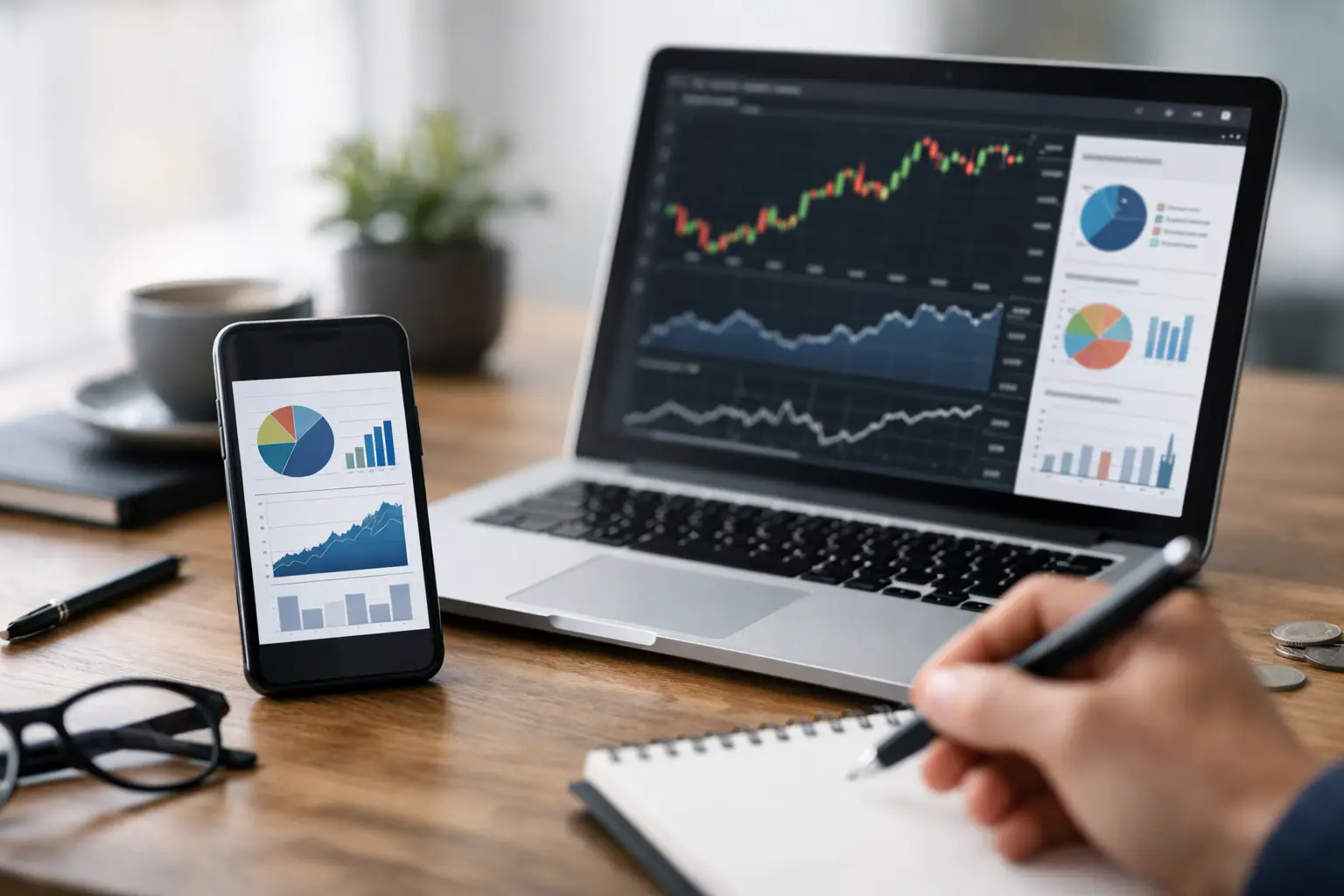
Our portfolio tracker app review explains the data, analytics, security, and verified context active investors need to make clearer decisions every day.
A portfolio tracker can show a green number while hiding the reason it moved. For active investors, that is not intelligence - it is a delayed snapshot. A serious portfolio tracker app review should look beyond dashboard design and headline returns to assess whether an app creates a reliable decision environment across accounts, assets, market research, and trading activity.
The right app is not necessarily the one with the most charts. It is the one that turns fragmented positions into accurate, timely context without asking users to sacrifice privacy, control, or judgment. That standard matters whether you trade stocks and options, hold crypto across multiple wallets, manage forex exposure, or invest steadily through retirement and brokerage accounts.
A Portfolio Tracker Is a Data System First
Portfolio tracking begins with data quality. If holdings are incomplete, pricing is delayed, cost basis is wrong, or transactions fail to sync, every performance chart built on that foundation becomes less useful. A polished interface cannot compensate for unreliable inputs.
Start by examining how the app captures portfolio data. Direct brokerage connections can reduce manual work, but their value depends on connection stability, account coverage, refresh frequency, and the level of detail imported. An app that imports only balances may be sufficient for a casual investor. An active trader generally needs orders, fills, realized and unrealized profit and loss, dividends, fees, transfers, and position-level history.
Manual entry remains relevant, especially for private investments, hardware wallets, less common exchanges, or accounts users do not want connected through an aggregator. The trade-off is obvious: manual records give users more control but demand consistent maintenance. The strongest platforms make both workflows practical rather than treating one as an afterthought.
Multi-currency support also deserves attention. A global investor can appear profitable in a local account currency while losing purchasing power after foreign-exchange effects are considered. Clear base-currency reporting, transparent conversion rates, and visibility into currency exposure are meaningful capabilities, not cosmetic extras.
What a Portfolio Tracker App Review Should Measure
A useful review evaluates what users can learn from the portfolio, not just what the interface can display. Total return is a starting point. It is rarely the full story.
Performance That Separates Skill From Market Direction
An app should distinguish realized gains from open gains, account for deposits and withdrawals, and make time periods easy to compare. Otherwise, an investor who adds capital after a strong rally may misread the portfolio's actual performance.
Look for money-weighted and time-weighted return views when the use case warrants them. Money-weighted return reflects the impact of when cash entered or left an account. Time-weighted return helps compare performance without allowing cash flows to dominate the result. Neither metric is universally superior. The relevant choice depends on whether you are evaluating the account owner's lived outcome or the consistency of an investment process.
Benchmarking is equally important. Comparing a diversified portfolio only with the S&P 500 can produce a misleading story if it holds international equities, income assets, crypto, or tactical positions. Better tools allow appropriate benchmarks and explain the comparison period clearly.
Allocation That Reveals Concentration Risk
Allocation charts should go beyond broad asset categories. Serious investors need to see exposure by sector, geography, market capitalization, currency, account, and individual security. A portfolio with ten technology stocks is not necessarily diversified simply because it contains ten ticker symbols.
The same principle applies to crypto. Holdings across several tokens may still be tightly linked to the same market cycle, liquidity conditions, or ecosystem risk. A tracker should help users identify correlated exposure before volatility forces the issue.
Useful alerts can add operational value here. A notification when a single position exceeds a chosen portfolio weight, when cash falls below a target, or when an asset moves sharply can support discipline. Alerts become noise when they are generic, excessive, or disconnected from a user's own risk framework.
Analytics That Connect Activity to Outcomes
For traders, portfolio tracking should not stop at holdings. It should connect execution behavior to results. That can include win rate, average gain and loss, holding period, trade frequency, drawdown, and performance by strategy or asset class.
These metrics require context. A high win rate can coexist with poor risk management if occasional losses are much larger than typical gains. Strong monthly returns may be driven by one concentrated position. An app earns trust when it presents the underlying activity clearly enough for users to challenge their own assumptions.
AI-assisted analysis can be valuable when it identifies patterns, summarizes material changes, or flags unusual risk exposures. It should be treated as decision support, not an automated verdict. Market intelligence is strongest when users can understand the inputs, inspect the evidence, and retain control over the final action.
Security and Privacy Are Core Product Features
A portfolio tracker often sits close to a user's most sensitive financial data. That makes security architecture part of the product evaluation, not a checkbox buried in the settings menu.
Assess whether the app uses read-only connections where appropriate, supports multi-factor authentication, gives users control over linked accounts, and explains how data is stored and shared. Clear permissions matter. Users should know whether a connection can view balances only, import transaction history, or initiate any account action.
Privacy questions are especially relevant in social and community-driven financial products. There is a meaningful difference between sharing a market thesis, publishing verified performance, and exposing account-level balances or positions. Investors should be able to choose what is public, what is private, and what can be verified without unnecessarily revealing personal financial details.
Transparency is the standard. Vague promises about bank-grade protection are less useful than clear explanations of safeguards, data permissions, and account-disconnection procedures.
The Missing Layer: Trusted Market Context
Many tracking apps solve the accounting problem while leaving the research and collaboration problem untouched. Users can see that a position moved, but not easily connect that move to earnings, macro developments, market sentiment, or a well-reasoned community discussion.
That gap creates fragmented workflows. Investors jump between brokerage apps, charting tools, news feeds, spreadsheets, messaging groups, and social platforms that may reward attention over accuracy. The result is more information but often less conviction.
A more complete model connects portfolio analytics to market intelligence and credible participation. Verified trader activity , transparent disclosures, and reputation signals can help users evaluate ideas based on evidence rather than follower counts. This is particularly relevant in fast-moving crypto and forex communities, where unverified claims can spread faster than risk warnings.
Tyrian Trade reflects this connected approach by bringing portfolio analytics , AI-assisted market intelligence, trading tools, and real-time community participation into a trust-centered financial ecosystem. The value is not just convenience. It is the ability to move from portfolio observation to research and informed discussion without losing the thread of the decision.
Choose the App Around Your Actual Workflow
The best portfolio tracker for a long-term investor may be too shallow for a frequent trader. Likewise, a feature-dense professional interface may add unnecessary complexity for someone focused on automatic contributions and broad diversification.
Before selecting an app, define the questions you need answered each week. You may need a clean net-worth view across retirement accounts, taxable accounts, and crypto wallets. You may need intraday position monitoring, tax-lot awareness, and trade journaling. Or you may need a trusted space to test a market thesis against data and informed peers.
Then evaluate the app during a normal market week, not only during setup. Check whether transaction imports remain accurate, whether the mobile experience preserves the information that matters, and whether the reporting helps you make a decision you would not have made otherwise. If an app demands constant correction or turns every market move into an alert, it is adding friction rather than intelligence.
Pricing also deserves a practical view. A paid tracker can justify its cost if it reduces manual reconciliation, exposes expensive portfolio mistakes, or replaces several disconnected tools. But advanced features are not automatically valuable. Pay for the data depth, analytics, and connected workflows you will actually use.
A portfolio tracker should make your financial reality easier to inspect, not easier to ignore. Choose the platform that gives you clean data, visible risk, and enough trusted context to act with greater discipline when the market gets noisy.