policy
RBI Short Dollar Book Hit Record $106.7B in May 2026
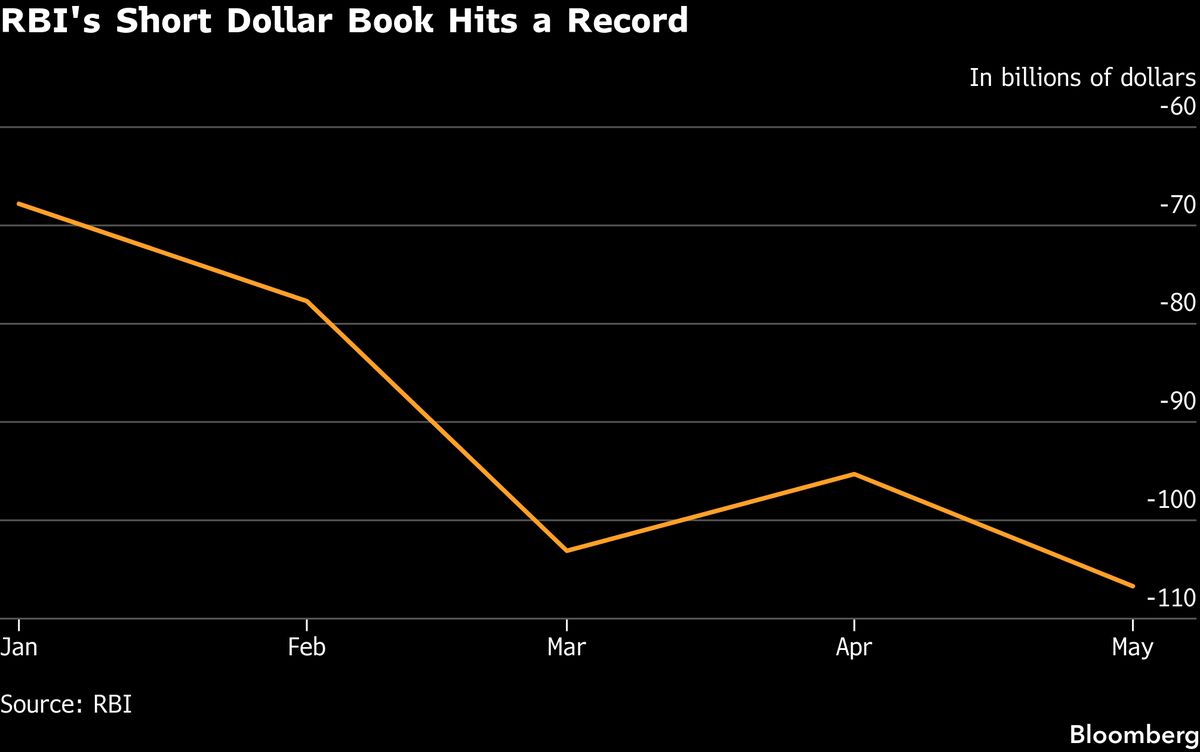
The Reserve Bank of India's short dollar book rose to a record $106.7 billion in May 2026 as the central bank used derivatives to defend the rupee.
The Reserve Bank of India's short dollar book rose to a record $106.7 billion in May 2026 as the central bank used derivatives to defend the currency, according to Bloomberg Markets. The development highlights the scale of intervention tools deployed by the RBI to manage rupee volatility and maintain currency stability in the face of external pressures.
Key takeaways
The RBI's short dollar book reached a record $106.7 billion in May 2026, according to Bloomberg Markets
The central bank used derivatives as a tool to defend the rupee
The record level occurred before policy measures were implemented
Central bank derivative positions can signal the intensity of currency defense operations
Table of Contents
Market move
Why central bank derivative positions matter
What to watch next
Market move
A short dollar book refers to a central bank's net short position in U.S. dollar derivatives, typically used to manage currency volatility and support the domestic currency. The size of the position can reflect the scale of intervention activity and the pressure on the currency during a given period. The RBI's use of derivatives is a common tool among central banks seeking to influence exchange rates without directly depleting foreign exchange reserves.
Why central bank derivative positions matter
For readers following broader market updates , central bank derivative positions can offer insight into currency market stress and policy priorities. A rising short dollar book may indicate that the central bank is actively working to stabilize the domestic currency, often in response to capital outflows, external shocks, or shifts in investor sentiment. The scale of the position can also signal the intensity of intervention and the resources committed to currency defense.
In general market context, derivative-based intervention allows central banks to manage exchange rate volatility while preserving foreign exchange reserves for other uses. However, large derivative positions can carry risks, including potential losses if currency movements are unfavorable and the need to roll over or settle positions over time. Market participants often monitor central bank derivative activity as a gauge of policy stance, currency risk, and the likelihood of further intervention or policy adjustments.
What to watch next
Market readers may watch for future disclosures from the Reserve Bank of India regarding the evolution of its short dollar book, the implementation of policy measures referenced in the source context, and any updates on rupee volatility or foreign exchange reserve levels. Additional details on the timing, scope, and impact of policy measures would help clarify the central bank's strategy and the effectiveness of its intervention tools.
Investors and analysts may also monitor broader emerging market currency trends, U.S. dollar strength, and capital flow dynamics that could influence the RBI's policy decisions. Central bank communication, including policy statements, monetary policy reports, and foreign exchange market updates, will remain important sources of information for understanding the context and outlook for rupee stability and intervention activity.
Read original source