market
Sunrun Stock Surges 31% on Tesla AI Power Partnership Deal
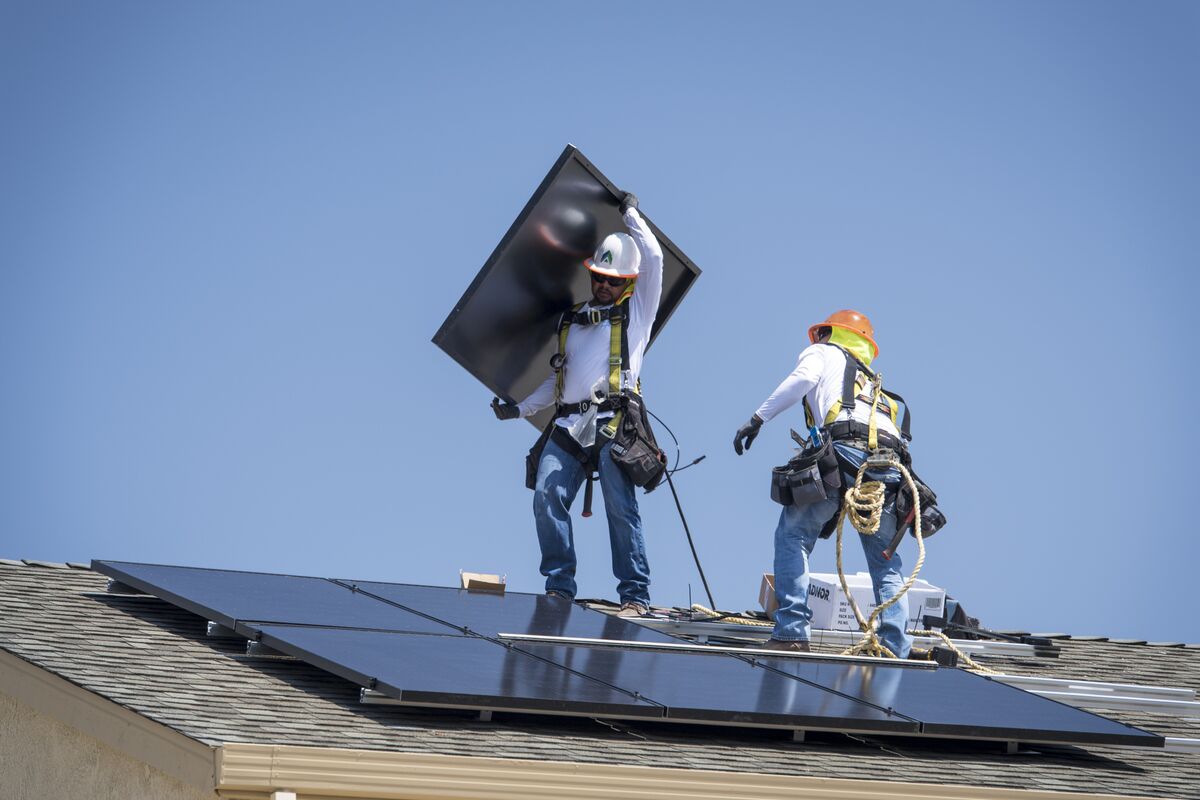
Sunrun Inc. stock jumped 31% after announcing a partnership with Tesla Inc. and Renew Home to supply power for data centers and utilities.
According to Bloomberg Markets, Sunrun Inc. stock jumped as much as 31% on June 24, 2026, following the home solar provider's announcement of a partnership with Tesla Inc. and Renew Home to provide power for data centers and utilities across the United States. The Sunrun Tesla partnership marks a significant development in the intersection of residential solar infrastructure and the growing energy demands of artificial intelligence computing facilities.
Key takeaways
Sunrun Inc. stock surged as much as 31% on June 24, 2026, following the partnership announcement
The company will partner with Tesla Inc. and Renew Home to supply power for data centers and utilities across the US
The partnership addresses the growing energy demands of AI infrastructure, a sector experiencing rapid expansion (general context)
Distributed solar resources are increasingly viewed as potential solutions for grid stability and peak demand management (general context)
Table of Contents
What happened
Why it matters
What to watch next
What happened
Sunrun Inc., a home solar provider, announced a partnership with Tesla Inc. and Renew Home to provide power for data centers and utilities across the United States. The announcement triggered a sharp market response, with Sunrun's stock price jumping as much as 31% during trading on June 24, 2026. Bloomberg Markets reported the stock movement and partnership details, highlighting the focus on supplying power specifically for artificial intelligence infrastructure needs.
The partnership brings together three companies with complementary capabilities in the distributed energy sector. Sunrun operates as a residential solar provider, Tesla brings its energy storage and technology expertise, and Renew Home contributes its platform for managing distributed energy resources. The collaboration aims to aggregate residential solar and battery systems to serve the substantial power requirements of data centers and utility networks supporting AI computing workloads.
Why it matters
The sharp stock price movement reflects investor recognition of a potentially significant revenue opportunity at the intersection of two major infrastructure trends. Data centers supporting artificial intelligence workloads have emerged as one of the fastest-growing sources of electricity demand in the United States, with some facilities requiring power equivalent to small cities. Traditional grid infrastructure faces challenges meeting this concentrated demand, particularly during peak hours, creating opportunities for alternative power supply arrangements that can provide capacity, reliability, and grid services.
Distributed energy resources, including residential solar installations paired with battery storage, represent a different approach to meeting data center power needs compared to traditional utility-scale generation. By aggregating thousands of home solar systems, companies can create virtual power plants capable of dispatching electricity when and where it is needed most. This model offers potential benefits including reduced transmission constraints, improved grid resilience, faster deployment timelines compared to large power plants, and the ability to provide ancillary grid services. The partnership structure suggests a business model where homeowners with solar and battery systems could receive compensation for making their excess capacity available to support critical infrastructure loads, though the specific commercial terms were not disclosed in the available source material.
What to watch next
Investors and industry observers will likely monitor several key implementation details that were not specified in the initial announcement. These include the scale of the power supply commitment, the geographic markets where the partnership will operate, the technical architecture for aggregating and dispatching residential solar resources, and the financial terms governing revenue sharing among the three partners and participating homeowners. The regulatory framework for such arrangements varies significantly across US utility markets, and approvals from state public utility commissions may be required in some jurisdictions.
The partnership's success will depend on execution factors including customer enrollment rates, system performance reliability, grid interconnection approvals, and the ability to meet data center uptime requirements that typically exceed 99.9%. Observers should watch for announcements regarding the first operational deployments, the number of residential systems enrolled, and any disclosed capacity or revenue targets. Additionally, competitive responses from other solar providers, battery manufacturers, and traditional utility companies will shape the broader market for distributed energy resources serving AI infrastructure. The stock price reaction suggests market participants view this as a material development, but sustained performance will require demonstrating that the business model can scale profitably while meeting the stringent reliability standards of data center operators.
Read original source