market
Swiss Voters Set to Reject Stricter Neutrality, Early Poll Shows
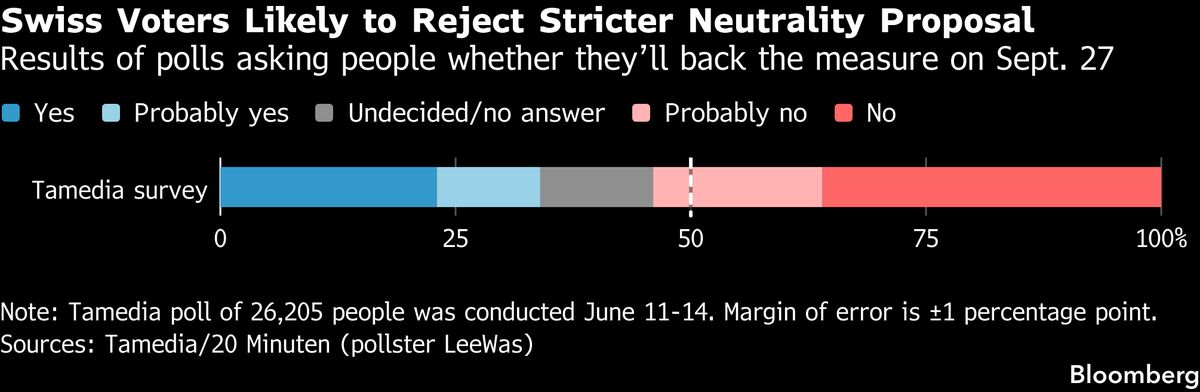
Swiss voters appear poised to reject a neutrality initiative, potentially preserving sanctions against Russia and maintaining current foreign policy.
<p>Switzerland's electorate appears ready to turn down a proposal that would have imposed stricter neutrality requirements on the Alpine nation, according to early polling data reported by Bloomberg Markets. The outcome carries significant implications for the country's foreign policy stance, particularly regarding its participation in international sanctions against Russia following the invasion of Ukraine.</p><h2>Table of Contents</h2><ul><li>Referendum Overview and Early Polling</li><li>Implications for Russia Sanctions</li><li>Switzerland's Neutrality Debate</li><li>Market and Policy Considerations</li></ul><h2>Referendum Overview and Early Polling</h2><p>Early polling indicates that Swiss voters are on track to reject the neutrality initiative in a national referendum. The proposal sought to strengthen and codify stricter interpretations of Switzerland's longstanding neutral status, which has been a cornerstone of the nation's identity and foreign policy for centuries. The vote represents a critical juncture for Switzerland as it navigates the complex geopolitical landscape shaped by the ongoing conflict in Ukraine and broader tensions between Western nations and Russia.</p><p>The referendum process, a hallmark of Swiss direct democracy, allows citizens to directly influence major policy decisions. This particular vote has drawn considerable attention both domestically and internationally, given Switzerland's unique position as a neutral nation that also maintains close economic ties with both Western economies and other global powers.</p><h2>Implications for Russia Sanctions</h2><p>The anticipated rejection of the stricter neutrality measure carries substantial consequences for Switzerland's current sanctions regime against Russia. A vote against the initiative would effectively support the continuation of measures that Swiss authorities have implemented in coordination with European Union sanctions packages. These restrictions have marked a notable departure from Switzerland's traditional interpretation of neutrality, which historically emphasized non-participation in international punitive measures.</p><p>By maintaining the status quo, Switzerland would preserve its ability to align with Western partners on economic sanctions while still claiming neutral status. This position has been controversial within Switzerland, with proponents of stricter neutrality arguing that participation in sanctions undermines the country's credibility as a neutral arbiter and potential mediator in international conflicts. Opponents of the initiative, however, contend that modern neutrality must adapt to contemporary geopolitical realities and that failing to respond to violations of international law would represent complicity rather than neutrality.</p><h2>Switzerland's Neutrality Debate</h2><p>The neutrality debate in Switzerland has intensified significantly since Russia's invasion of Ukraine in 2022. The Swiss government's decision to adopt EU sanctions against Russia represented a watershed moment, prompting soul-searching about the meaning and application of neutrality in the 21st century. Traditional interpretations of Swiss neutrality emphasized military non-alignment and abstention from economic warfare, but the current government has argued that neutrality does not require indifference to international law violations.</p><p>The initiative to strengthen neutrality emerged from groups seeking to return to a more rigid interpretation of the principle, one that would potentially prohibit Swiss participation in international sanctions regimes. Supporters of this stricter approach argue that Switzerland's value as a neutral nation depends on maintaining absolute impartiality, which they believe has been compromised by the adoption of Russia sanctions. The expected rejection of this initiative suggests that a majority of Swiss voters may be willing to accept a more flexible interpretation of neutrality that allows for responses to what are widely viewed as egregious violations of international norms.</p><h2>Market and Policy Considerations</h2><p>The referendum outcome has implications beyond foreign policy, touching on Switzerland's position as a global financial center and its relationships with major trading partners. The country's financial sector has faced pressure to implement sanctions compliance measures, and a vote to strengthen neutrality could have complicated these efforts. The expected rejection of the initiative provides clarity for financial institutions and businesses operating in Switzerland, allowing them to continue implementing sanctions-related compliance frameworks without constitutional constraints.</p><p>For international investors and market participants, the vote signals continuity in Swiss policy alignment with Western partners on major geopolitical issues. This alignment, while representing a shift from historical practice, may be viewed as reducing certain political risks associated with Switzerland being perceived as a sanctions haven. At the same time, the ongoing debate reflects the tensions inherent in Switzerland's position as a neutral nation deeply integrated into global economic and financial systems.</p><h2>Conclusion</h2><p>The anticipated rejection of Switzerland's stricter neutrality initiative represents a significant moment in the evolution of the country's foreign policy and its interpretation of a principle that has defined its international identity for generations. By appearing to vote against the measure, Swiss citizens would be endorsing a more flexible approach to neutrality that permits participation in international sanctions while maintaining the country's non-aligned military status. This outcome would support the continuation of current sanctions against Russia and provide policy clarity for Switzerland's government, financial sector, and international partners. The vote underscores the challenges neutral nations face in adapting traditional principles to contemporary geopolitical realities while preserving core aspects of their identity and international role.</p> <p><a href="https://www.bloomberg.com/news/articles/2026-06-21/swiss-voters-set-to-reject-stricter-neutrality-early-poll-shows" rel="nofollow noopener noreferrer" target="_blank">Read original source</a></p>