general
The Modern Trading Assistant in 2026: AI, Social Intelligence, and Your Competitive Edge
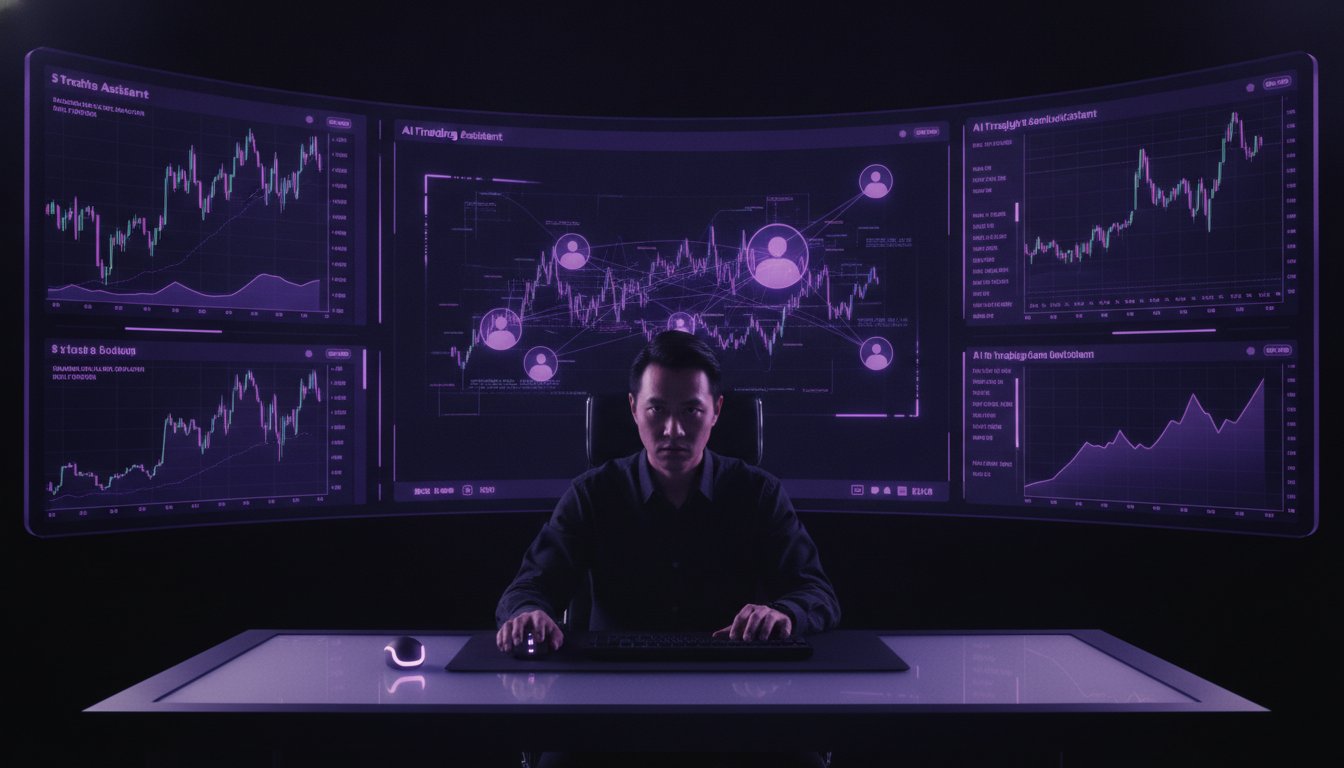
Discover the modern trading assistant of 2026. Learn how AI and social intelligence combine to filter market noise and give you a hedge fund-level edge.
What if your most reliable mentor wasn't a single person, but a synthetic intelligence that filters the global noise of millions of traders in real time? In 2026, the modern trading assistant has moved far beyond simple price alerts; it's now a high-velocity engine that solves the information overload you face every single morning. You've likely felt the exhaustion of chasing signals through a sea of digital noise, wondering if the advice you're following has any real skin in the game. It's a common struggle to keep your emotions in check when the market data feels like a tidal wave.
This article explores how the shift toward integrated AI-social ecosystems is finally delivering institutional-grade alpha to your desktop. We'll show you how to gain a competitive edge by combining rapid market synthesis with verified reputation data. You'll learn how modern tools like Terminal 4.0 turn social sentiment into actionable intelligence, allowing you to enter and exit trades with a level of confidence that was once the exclusive domain of hedge funds.
Key Takeaways
Understand the shift from simple chatbots to autonomous digital ecosystems that synthesize multi-asset intelligence across stocks, crypto, and forex.
Learn how a modern trading assistant filters social noise into clear sentiment metrics, helping you distinguish actionable signals from market hype.
Discover why combining AI speed with social validation is the only way to eliminate data gaps and ensure trade ideas are backed by verified track records.
Master the workflow of integrating custom AI agents into professional terminals to achieve faster market synthesis and higher entry confidence.
Explore how the Tyrian Marketplace provides access to modular, institutional-grade financial tools designed for the modern collaborative trader.
Table of Contents
What is a Trading Assistant in the Age of AI?
Core Capabilities of a Professional AI Trading Assistant
AI Assistant vs. Social Intelligence: Why You Need Both
How to Integrate a Trading Assistant into Your Workflow
Tyrian Trade: The Next Generation of Collaborative Intelligence
What is a Trading Assistant in the Age of AI?
Forget the dusty image of a human clerk in a wood-paneled office. In 2026, a trading assistant is a high-performance digital ecosystem designed to synthesize millions of data points into a single, actionable insight. It acts as a semi-autonomous AI companion that lives within your terminal, bridging the gap between raw market noise and profitable execution. Unlike the static tools of the past, today's assistants are dynamic, learning-capable agents. They don't just follow rules; they adapt to shifting volatility in real time. This shift marks the end of "set and forget" bots and the beginning of a true collaborative partnership between human intuition and machine speed.
The modern assistant stands on three specific pillars that redefine how you interact with the tape. First is Data Synthesis , where the agent aggregates technical indicators and price action across multiple timeframes. Second is Sentiment Analysis , which involves parsing social feeds and news to gauge the "fear and greed" of the crowd. Finally, Execution Support provides real-time risk calculations and confidence scores before you click buy. This isn't just about automation; it's about having a synthetic mentor that watches your back.
The Evolution from Human Support to Synthetic Intelligence
Historically, a "trading assistant" was an entry-level administrative role at a bank or hedge fund. Those days are over. This function has been digitized and democratized, evolving into sophisticated features that any retail trader can access. We've seen a massive transition toward AI and trading in 2026 , where the focus has shifted from opaque "black-box" bots to transparent, logic-based assistants. While Algorithmic trading provided the foundation for automation, the new era is about collaborative intelligence. You aren't just letting a machine run wild; you're working with a partner that explains its reasoning and highlights opportunities you might have missed.
Key Categories of Modern Trading Assistance
Not all assistants are built the same. Depending on your strategy, you'll likely utilize different specialized agents to fill your gaps. Technical Assistants excel at chart pattern recognition, identifying confluence across dozens of indicators to alert you when a setup matches your criteria. Fundamental Assistants handle real-time news synthesis, correlating macro data with current price action to explain the "why" behind a move. Finally, Social Assistants represent the cutting edge of 2026. These tools monitor community sentiment and verified creator activity, ensuring you're never trading against the pulse of the market or falling for unverified hype.
Core Capabilities of a Professional AI Trading Assistant
A professional trading assistant in 2026 acts as a multi-asset powerhouse, processing data across stocks, crypto, and forex markets simultaneously. It doesn't just watch price; it understands context. By utilizing predictive modeling, these agents analyze historical patterns to forecast potential volatility before it hits the tape. This allows you to shift from a reactive stance to a proactive strategy. Instead of wondering why a move happened, your trading assistant provides a data-backed hypothesis on what might happen next, giving you a significant head start on the competition.
Advanced charting has also undergone a massive transformation. We've moved beyond basic indicators like RSI or MACD. Today, a sophisticated stock AI chart reader can identify complex liquidity zones and harmonic patterns with surgical precision. These systems also integrate risk management overlays that calculate position sizing and drawdown limits automatically. This level of technical oversight matches the trends highlighted in the FINRA report on AI applications , which notes how digital tools are increasingly used to enhance the investment process and manage complex market dynamics.
Sentiment Analysis and Social Discovery
The real magic happens when you turn social noise into a "fear and greed" metric. Modern assistants scan social trading networks to find high-conviction moves while filtering out the bot-driven hype. They focus on "verified participation," ensuring that the trends you follow are backed by traders with actual skin in the game. Using ai market analysis tools helps you identify these emerging trends before they become mainstream, allowing you to ride the wave rather than chasing it.
Portfolio Analytics and Health Monitoring
Your assistant is also your portfolio's best friend. It provides automated tracking of your PnL, Sharpe ratios, and sector exposure in real time. If your portfolio becomes "unbalanced" or you're holding over-leveraged positions, the system triggers immediate alerts. Integrating ai powered trading tools into your daily routine ensures long-term health monitoring that goes beyond simple profit tracking. It's about maintaining a sustainable edge through disciplined, data-driven management. If you're looking to streamline your workflow, checking out the latest agents on the Tyrian Trade marketplace is a smart move for any serious participant.
AI Assistant vs. Social Intelligence: Why You Need Both
Relying solely on a machine is a rookie mistake in 2026. While a trading assistant can process petabytes of data in milliseconds, it often lacks the "skin in the game" context that only a human participant provides. Pure AI models are prone to hallucinations, seeing patterns where none exist or missing the nuanced impact of a sudden geopolitical shift. You need a second layer of defense. By combining machine speed with the real-time validation found on a modern social trading platform , you create a fail-safe system that bridges the gap between cold logic and market reality.
This hybrid approach is what we call Synthetic Mentorship. Imagine your trading assistant flags a high-probability trade on a crypto pair. Instead of taking the leap blindly, you cross-reference that signal with the activity of top-ranked creators in the community. When the math and the mentors align, your confidence in the entry skyrockets. It's about building trust through transparency, where AI logic meets verified human performance. This synergy ensures you aren't just following a bot; you're participating in a high-conviction market move.
The Trust Layer: Verified Participation
An assistant's output is only as good as the data it consumes. If the social signals it parses come from unverified "gurus" or bot farms, the results will be disastrous. This is why building a trading track record is no longer optional; it's the foundation of market respect. Tyrian Trade solves this by integrating a reputation infrastructure directly into the ecosystem. Every recommendation your assistant serves up is weighted by the verified success of the participants involved, ensuring you're only listening to voices that have earned their place at the table.
Community-Driven Market Discovery
The era of "blind copy trading" is dead. We've moved into the age of collaborative intelligence. Instead of just mirroring someone else's PnL, you're using AI to filter the absolute best insights from financial creators and live streamers. The machine handles the heavy lifting of scanning thousands of hours of content, while you apply the final human intuition. This partnership allows for rapid market discovery without sacrificing your individual judgment. It's machine-speed calculation met with human-scale wisdom.
How to Integrate a Trading Assistant into Your Workflow
Transitioning from manual charting to an AI-driven workflow isn't just about adding a new tool; it's about upgrading your entire operational speed. In 2026, manual data entry is a relic of the past. To build a truly competitive edge, you need a trading assistant that lives where the action happens. Follow these five steps to bridge the gap between analysis and execution.
- Step 1: Connect your assistant to a professional terminal online . This ensures your agent has a direct, low-latency pipe to global market data.
- Step 2: Define your risk parameters. Hard-code your maximum drawdown limits and preferred asset classes, whether you're focused on stocks, crypto, or forex.
- Step 3: Set up automated "Discovery Streams." These are specialized filters that scan the tape for high-probability setups that match your specific strategy.
- Step 4: Implement a "Human-in-the-Loop" verification process. Let the AI flag the opportunity, but you provide the final narrative check before execution.
- Step 5: Review and iterate. Use automated portfolio analytics to identify which AI-generated signals yielded the best Sharpe ratios and adjust your filters accordingly.
Optimizing Your Desktop Trading Workspace
Your workspace should feel like a high-tech cockpit rather than a messy spreadsheet. Modern terminals allow you to integrate AI widgets directly into your chart layout, providing real-time technical confluence without switching tabs. This is especially vital if you're utilizing algorithmic trading software , as the assistant acts as the bridge between your custom code and live market sentiment. Balance your "Live Stream" feeds from creators with your technical alerts to maintain a holistic view of the market pulse.
Filtering Signal from Noise
The primary goal of a trading assistant is to reduce your screen time, not increase it. By setting "Confidence Thresholds," you ensure that the system only pings you when a setup meets a specific probability score. Don't just take the AI's word for it; cross-reference these signals with the Tyrian Trade reputation index. This allows you to let the machine handle the exhaustive "scan phase" of the day, leaving you fresh and focused for the "decision phase." To start building your custom high-velocity workspace, explore the modular tools available at Tyrian Trade today.
Tyrian Trade: The Next Generation of Collaborative Intelligence
Terminal 4.0 isn't just another piece of software; it's the professional hub where machine precision meets social context. By integrating every tool we've discussed, from risk overlays to sentiment metrics, it becomes the definitive environment for a modern trading assistant . You're no longer siloed in a lonely spreadsheet. Instead, you're plugged into a live, data-heavy environment that prioritizes transparency and verified action. This makes Tyrian Trade the go-to ai stock trading platform for 2026, offering a level of collaborative intelligence that standalone bots simply can't match.
The platform is designed to act as the trust layer for modern markets. It solves the biggest pain point of the digital age: the lack of a verified track record for external advice. Every signal, every creator, and every automated agent is backed by an immutable reputation infrastructure. This ensures that when your assistant flags a high-conviction move, it's based on data from participants who have consistently performed in real-world conditions.
The Marketplace for Financial Software
The Tyrian Marketplace is where the modularity of 2026 truly shines. Here, you can access custom-built assistants from world-class creators who specialize in specific niches, whether it's high-frequency scalping or macro-driven swing trading. It's about finding the right tool for your specific edge. By utilizing an advanced trading terminal comparison , you can see how these specialized tools stack up against traditional, static setups. Creators don't just share ideas; they monetize their logic, providing you with plug-and-play intelligence that has already been stress-tested by the community.
Building Your Legacy in the New Market
The path from being a user to a creator is seamless. As you use your trading assistant to refine your own strategy, the Tyrian infrastructure allows you to build a verified reputation. You aren't just another anonymous handle; you're building a professional brand backed by real, transparent data. This reputation layer is what separates high-conviction signals from the background noise of the internet. It's time to stop guessing and start participating in a network where intelligence is collective, verified, and actionable. Join the ecosystem that's redefining market alpha through transparency and collaborative power.
Own Your Edge in the New Era of Collaborative Intelligence
The markets don't wait for anyone to catch up. We've explored how the modern trading assistant has transformed from a basic alert bot into a sophisticated, social-aware ecosystem that solves information overload. By bridging the gap between machine speed and human validation, you're no longer just reacting to the tape; you're anticipating it. This shift toward collaborative intelligence is your most potent competitive edge in a high-velocity environment. It's about working smarter, not harder, by letting synthetic mentors handle the heavy lifting of data synthesis.
Tyrian Trade provides the trust layer and the technology needed to master this new landscape. Through our Verified Reputation Infrastructure , AI-Powered Portfolio Analytics , and a Global Financial Tools Marketplace , we empower you to trade with the confidence of an institution. It's time to move beyond the noise and start building a legacy backed by transparent, verified data. The evolution of retail participation is here, and you have the tools to lead the charge.
Experience the future of market intelligence with Tyrian Trade’s Terminal 4.0 . Step into the network where your success is powered by collective wisdom and cutting-edge AI.
Frequently Asked Questions
Can a trading assistant execute trades for me automatically?
No, the assistant is designed for intelligence and synthesis, not direct execution. While it can connect to your terminal to suggest entries, the final decision stays with you. This human-in-the-loop model ensures you maintain total control over your capital at all times. It's about providing data-driven insights rather than acting as a brokerage. You use the findings to place trades through your own preferred execution service.
What is the difference between a trading bot and an AI trading assistant?
A traditional bot follows rigid, if-this-then-that rules without understanding market context. In contrast, a trading assistant uses machine learning to adapt to changing volatility and social sentiment. It doesn't just execute a script; it synthesizes news, technicals, and community activity to explain the logic behind a move. This collaborative intelligence offers a transparent reasoning that old-school black-box bots simply can't provide to modern participants.
Do I need professional trading experience to use a trading assistant?
You don't need a decade on a professional desk, but a foundational understanding of market mechanics is essential. These tools are designed to amplify your strategy by handling the heavy lifting of data analysis. While the assistant simplifies complex data, it doesn't replace the need for personal risk management. It acts as a mentor that helps you learn market dynamics faster while you build your own verified track record.
How does sentiment analysis improve the accuracy of a trading assistant?
Sentiment analysis adds a layer of human reality to pure technical data. By scanning social networks and news feeds, the assistant gauges whether a price move is backed by high-conviction traders or just bot-driven hype. This helps you avoid bull traps or liquidity grabs that charts alone might miss. It effectively turns the noise of millions of market participants into a clear, actionable metric of fear and greed.
Are AI trading assistants reliable in highly volatile markets?
They are most valuable during volatility because they process data faster than any human can. While a human might freeze or feel emotional during a flash crash, the assistant continues to calculate risk parameters and find liquidity zones. However, reliability depends on the data it consumes. Using an agent that cross-references technicals with verified social sentiment helps ensure the signals remain grounded even when the tape is moving rapidly.
How much does a professional-grade trading assistant cost in 2026?
Pricing varies widely depending on the complexity and the specific marketplace you choose. Most professional platforms offer tiered subscriptions, ranging from basic market scanners to high-end agents with predictive modeling. You'll often find modular options where you pay for specific features like sentiment analysis or advanced portfolio analytics. It's best to check the latest marketplace listings to find a tool that fits your specific strategy and budget requirements.
Can I use a trading assistant for both crypto and traditional stocks?
Yes, modern assistants are built for multi-asset intelligence. A professional trading assistant in 2026 can simultaneously monitor equities, digital assets, and forex pairs. This allows you to see how macro trends in traditional markets might be impacting crypto liquidity in real time. Having a single interface to synthesize data across different asset classes helps you maintain a diversified and well-balanced portfolio without switching between multiple specialized platforms.