general
The Ultimate Guide to Trading Terminal Plugins: Enhancing Alpha in 2026
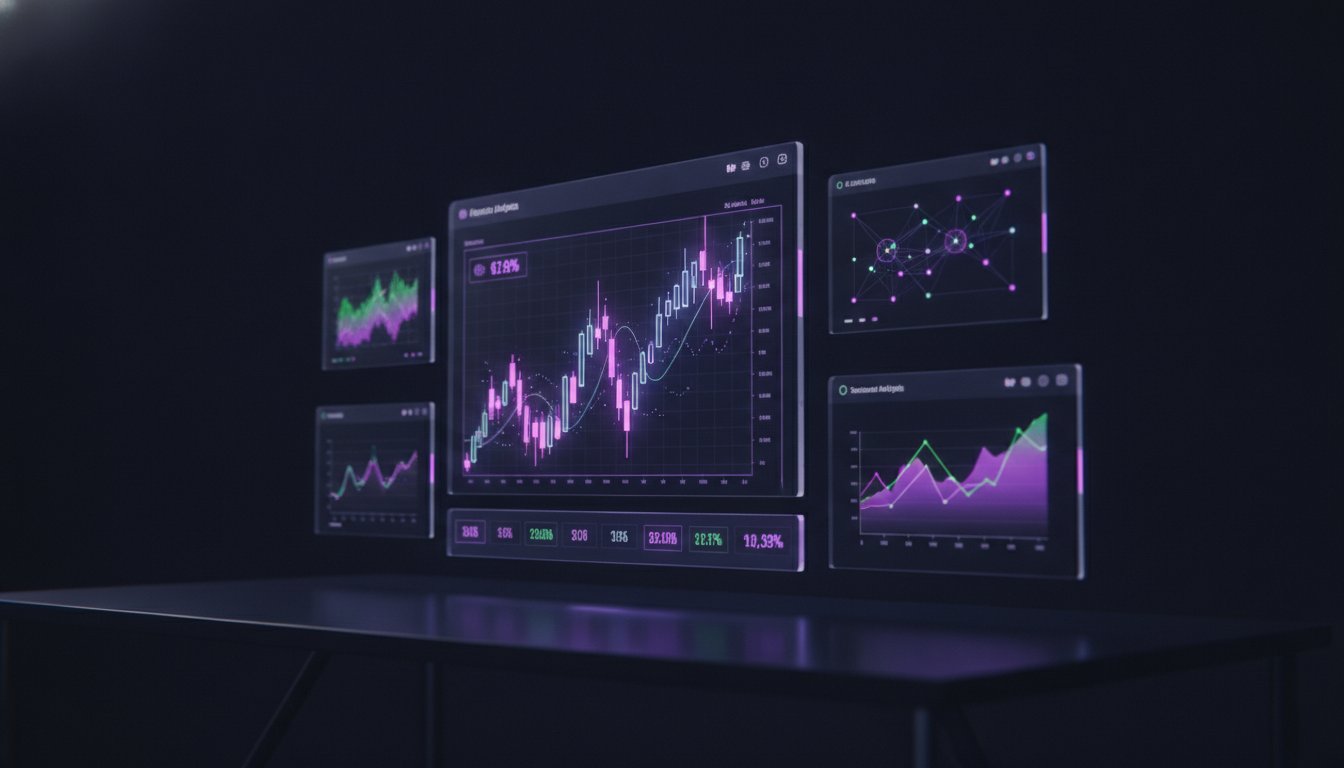
Discover the best trading terminal plugins for 2026. Learn how AI, modular design, and verified tools can enhance your alpha and create a personalized worksp...
Why are you still fighting against a static dashboard that feels like a relic from 2010 while the rest of the market moves toward autonomous intelligence? Most traders today feel trapped by rigid, outdated setups that prioritize information overload over actual clarity. It's exhausting to gamble on a third-party indicator that lacks a verified track record or to manage a dozen disconnected tools that don't talk to each other. You know the feeling of a cluttered screen that provides plenty of noise but very little signal.
This guide changes that. You're about to discover how modular trading terminal plugins and AI-driven utilities are transforming the modern workspace into a personalized intelligence hub. We'll show you how to build a high-speed, modular environment that replaces guesswork with verified, community-driven tools. We're moving past the black box era and into a world of seamless AI integration for sentiment and data analysis. We'll explore how Terminal 4.0 environments use social reputation and real-time data to help you reclaim your edge and finally make your workspace work for you.
Key Takeaways
Modern trading terminal plugins have evolved from basic indicators into sophisticated AI nodes that process real-time news and sentiment data.
Discover how to integrate NLP-driven utilities that scan thousands of global news sources to visualize market mood directly on your price charts.
Eliminate the risk of "black box" software by leveraging a reputation infrastructure that verifies the performance of every tool before you deploy it.
Master the art of modular workspace design by selecting a base environment that matches your trading style, from high-frequency scalping to long-term macro analysis.
Explore how to monetize your unique market insights by offering custom tools through a professional marketplace designed for the next generation of financial creators.
Table of Contents
What are Trading Terminal Plugins in 2026?
The Anatomy of Modern Plugins: AI, Sentiment, and APIs
Evaluating Plugin Performance: Why Verified Reputation is the New Standard
Building Your Custom Trading Workspace: Integration and Optimization
Tyrian Trade: The Marketplace for High-Alpha Trading Plugins
What are Trading Terminal Plugins in 2026?
Think of your terminal as a high-performance engine. In its stock form, it's powerful, but it's built to satisfy the average user. In 2026, trading terminal plugins are the modular components that turn that base engine into a specialized racing machine. These aren't just simple scripts or cosmetic changes. They are sophisticated software nodes that snap into your environment to extend its core functionality, allowing you to process data and execute trades with surgical precision.
The evolution has been massive. We've moved past the era of simple RSI or MACD scripts that only look at historical price. Today's plugins are AI-driven data processors. They don't just react to what happened; they analyze what's happening across thousands of data points in real time. This "App Store" model has revolutionized how we trade. Instead of waiting for a platform developer to release a new feature, you can browse a marketplace, find a verified tool, and plug it directly into your workflow. It's about personalizing your workspace to match your specific quantitative or social strategy perfectly.
The Shift from Indicators to Modular Intelligence
Static indicators are no longer enough. In high-frequency, AI-driven markets, a lagging moving average is often a liability rather than an asset. Modern tools rely on external APIs to pull in real-time order flow, liquidity maps, and global news. This infrastructure is the backbone of modern algorithmic trading , allowing retail participants to access the same high-speed data pipes as institutional desks. While built-in features handle the basics, third-party trading terminal plugins provide the specialized "surgical" tools that platforms can't include by default. They bridge the gap between a standard dashboard and a personalized intelligence hub.
Key Categories of Modern Trading Plugins
- Analytical Plugins: These go beyond simple lines on a chart. They include full backtesting engines that simulate millions of scenarios in seconds and risk management calculators that adjust your position size based on real-time volatility.
- Execution Plugins: Speed is the only currency that matters during high volatility. Specialized order entry skins allow for one-click complex orders, while algorithmic execution bridges ensure your trades hit the market with minimal slippage.
- Intelligence Plugins: This is the 2026 frontier. These tools use AI sentiment readers to scan social feeds and news wires, aggregating the "mood" of the market into actionable metrics.
Choosing the right mix of tools depends entirely on your base environment. You can see how different platforms handle these modular upgrades in our advanced trading terminal comparison . Your goal is to build a workspace that eliminates noise and amplifies your specific edge.
The Anatomy of Modern Plugins: AI, Sentiment, and APIs
Modern trading terminal plugins are no longer just visual overlays. They're high-performance engines built on low-latency languages like C++ or Rust. While older scripts often struggle with data lag, these modern components handle massive throughput without breaking a sweat. This technical shift is vital because the underlying architecture determines whether you're catching a breakout or chasing a ghost. Performance is the foundation of every high-alpha strategy in 2026.
Artificial Intelligence has moved from the cloud directly into your terminal's local environment. Natural Language Processing (NLP) plugins now scan thousands of global news sources, regulatory filings, and social threads simultaneously. Instead of reading headlines, you're seeing a synthesized "mood" score. This sentiment analysis visualizes market psychology directly on your price charts, turning abstract chatter into concrete data points. By bridging your dashboard with specialized algorithmic trading software , you create a closed-loop system where intelligence leads to instant execution.
Operating these advanced tools requires effective supervision and control practices to ensure your automated components remain within risk parameters. Reliability is just as important as speed. You can browse the latest verified nodes in the Tyrian Trade marketplace to see how professional creators are building these high-performance tools today.
Integrating AI Assistant Plugins
Think of ai powered trading tools as a digital co-pilot that never sleeps. These assistants automate the heavy lifting of data synthesis, moving from raw numbers to actionable market alpha in milliseconds. Beyond just processing text, a stock ai chart reader can identify complex geometric patterns and liquidity zones that the human eye might miss during high-volatility sessions. It's about augmenting your intuition with tireless, machine-level precision.
Data Bridges and External API Plugins
The most powerful trading terminal plugins act as bridges to the outside world. They allow you to pull in alternative data, such as satellite imagery of retail parking lots or real-time shipping logs, directly into your workspace. Security is paramount here; modular environments require robust API key management to keep your connections safe. These bridges also ensure real-time synchronization between your heavy-duty desktop setup and your terminal online environment, giving you a consistent edge whether you're at your desk or on the move.
Evaluating Plugin Performance: Why Verified Reputation is the New Standard
A flashy backtest is the oldest trick in the book. It's easy to curve-fit historical data to make a strategy look like a money printer, but the live market is far more brutal. When you're browsing for trading terminal plugins , you're often looking at a "black box". You see the inputs and the outputs, but you have no idea what's happening under the hood. Using unverified scripts is like flying a plane with a dashboard you bought from a stranger; it might work for a while, but you don't want to be in the air when it fails.
In 2026, the industry has moved toward a verified reputation model. It's no longer enough to claim a tool works. You need to see a track record that's been audited by a third-party trust layer. This shift is partly driven by FINRA rules on algorithmic trading , which emphasize that participants must have robust supervision over their automated tools. Beyond just "backtest results", you need to analyze maximum drawdown, recovery factors, and slippage. If a plugin is poorly coded, the latency it introduces will eat your alpha before the trade even hits the exchange.
The Trust Layer for Financial Software
Transparency is the only way to kill the "snake oil" industry. We've seen the evolution of the social trading platform move from blind copying to sophisticated, AI-driven intelligence marketplaces. For developers, knowing how to build trading track record transparency is now a requirement for professional respect. Community feedback loops act as a decentralized vetting system, ensuring that only institutional-grade tools survive the public gaze. This social layer helps you identify which trading terminal plugins actually perform when the heat is on.
Comparison Framework: Professional vs. Amateur Plugins
The difference between a pro tool and an amateur script is often invisible until your terminal starts lagging. Professional plugins are optimized for minimal CPU and RAM usage, ensuring they don't slow down your execution during peak volatility. Look for deep integration; a high-quality component should "talk" to your other tools, sharing data seamlessly rather than existing in a silo. Developer support is the final piece of the puzzle. If a plugin hasn't been updated in months, it's already obsolete in a market that moves this fast.
Building Your Custom Trading Workspace: Integration and Optimization
Building a workspace isn't about adding every tool you find. It's about creating a streamlined environment that matches your specific mental model of the market. Most traders fail because they clutter their screens with redundant data, leading to analysis paralysis during critical moments. You need a setup that amplifies your signal while muting the noise.
Start by identifying your core trading style. A scalper needs millisecond execution and real-time order flow, while a macro trader requires long-term sentiment trends and economic data. Once you've defined your needs, select a base environment like the ones featured in our advanced trading terminal comparison . From there, you can layer specialized trading terminal plugins to fill the gaps in your strategy. Always stress-test your plugin stack in a paper trading environment before risking capital. Balancing feature richness with terminal speed is the secret to maintaining execution clarity. Ready to build your edge? Explore the Tyrian Trade terminal to start customizing your workspace today.
The Modular Workspace Philosophy
Designing for focus is a discipline. Use smart UI management to hide tools when they aren't needed, keeping your primary charts clean. In 2026, professional environments like Terminal 4.0 allow for "hot-swappable" plugins. This means you can change your entire dashboard layout between the London and New York sessions with a single click. Cloud-syncing ensures your configurations follow you across devices, so your personalized intelligence hub is always ready when the market moves.
Security and Risk Management for Plugins
Security is often an afterthought until a connection fails. Sandbox your trading terminal plugins to prevent unauthorized data access and ensure one faulty component doesn't crash your entire system. It's vital to set up automated kill-switches for any algorithmic tools to prevent runaway trades during unexpected high-volatility events. Perform regular audits of your plugin permissions and API connections to keep your modular environment running safely and efficiently.
Tyrian Trade: The Marketplace for High-Alpha Trading Plugins
Tyrian Trade isn't just a platform; it's the ecosystem where the future of retail finance is being built. By centralizing the discovery of trading terminal plugins , we've eliminated the fragmented, high-risk search for an edge. It's a high-energy hub where institutional-grade engineering meets social connectivity. This is the marketplace where the promise of ai and trading becomes a practical reality, moving beyond black-box bots toward a model of collaborative intelligence. We've built an environment where technology and community converge to amplify individual performance.
Verified participation is the core of our infrastructure. Every creator and tool in the Tyrian ecosystem is backed by a transparent reputation layer that tracks real-world impact. This ensures that active traders operate in the most trusted environment possible, where performance is documented rather than just claimed. By fostering this level of transparency, the Tyrian terminal has become the primary destination for those who demand precision and accountability in their software stack.
For Traders: Discovering Your Edge
Finding your edge shouldn't feel like a chore. The marketplace allows you to browse specialized ai stock trading utilities that adapt to shifting market regimes. Our AI Financial Assistant acts as your personal scout, recommending specific trading terminal plugins based on your unique portfolio and risk profile. You don't have to guess which tool fits your strategy. You can even jump into live streaming hubs to see these tools in action before you deploy them. It's about belonging to a community that values data over hype and collaborative learning over isolated guesswork.
For Creators: Monetizing Intelligence
The era of fighting against a rigid, one-size-fits-all dashboard is officially behind us. You've seen how modular trading terminal plugins and AI-driven nodes transform your screen into a personalized intelligence hub that adapts to your unique style. By prioritizing verified reputation and seamless API connectivity, you're no longer just reacting to the market. You're anticipating it with institutional-grade precision and clarity.
This shift isn't just about software updates; it's about joining a community that values transparency and collective growth. With our Professional Terminal 4.0 Infrastructure and an integrated AI-powered market intelligence suite, you have the foundation to build something truly unique. Every creator on our platform is backed by a Verified Reputation Layer, ensuring your tools are as sharp as your strategy. It's a high-energy environment designed for those who refuse to settle for the status quo.
It's time to stop settling for outdated tools and start building the workspace you deserve. Explore the Tyrian Trade Marketplace and Supercharge Your Terminal Today . Your edge is waiting. Let's get to work.
Frequently Asked Questions
What are the best trading terminal plugins for crypto in 2026?
The most effective crypto plugins focus on real-time liquidity heatmaps and AI-driven sentiment analysis. In a market that never sleeps, modular tools that integrate directly with decentralized exchanges or provide cross-chain order flow visualization are essential. Look for trading terminal plugins that offer automated risk management specifically tuned for high-volatility assets. These tools help you spot institutional movements and liquidity traps before they impact your position.
Can I use Python-based plugins on a professional trading terminal?
Yes, many professional environments now support Python through API-first infrastructure or dedicated wrappers. While high-frequency execution often relies on C++ or Rust for speed, Python is the gold standard for building custom analytical tools and backtesting engines. Modern terminals allow you to run your local scripts as modular components. This flexibility means you can leverage advanced data science libraries without leaving your primary execution environment.
How do I know if a trading plugin is safe to use with my API keys?
Safety starts with a verified reputation infrastructure. You should only deploy plugins that have been audited or come from creators with a transparent, documented track record. Always check if the plugin supports granular API permissions, which allow it to read data or place trades without having withdrawal access. Using a sandboxed environment for initial testing is another critical step to ensure your sensitive connection data remains protected.
Do trading terminal plugins work on mobile versions of the platform?
Most advanced trading terminal plugins are designed for desktop performance, but cloud-synced workspaces are bridging the gap. While you might not run a heavy backtesting engine on a phone, many platforms offer "lite" versions of their plugins for mobile use. These mobile components typically focus on real-time alerts and sentiment updates. This ensures you stay connected to your intelligence hub regardless of your physical location or device.
What is the difference between an indicator and a terminal plugin?
Indicators are usually visual overlays that calculate historical price data, like a moving average. In contrast, a terminal plugin is a modular software component that extends the actual functionality of your workspace. A plugin might add an entirely new execution bridge, an AI assistant, or a news aggregator. While an indicator shows you what happened on a chart, a plugin changes how your terminal interacts with the market and processes data.
How much do professional-grade trading plugins typically cost?
Costs vary widely depending on the complexity of the tool and the data it processes. You might find lifetime licenses for specialized charting tools for around $890, while high-end institutional add-ons can reach $500 per month. Some advanced algorithmic tools even use per-contract charges or transaction caps. It is important to balance the cost against the potential alpha the tool provides to ensure it fits your overall trading budget.
Can AI plugins really predict market sentiment accurately?
AI plugins don't predict the future with absolute certainty, but they excel at synthesizing massive amounts of data. By using Natural Language Processing to scan thousands of news sources and social threads, these tools create a real-time "mood" score for specific assets. This synthesis turns abstract chatter into a concrete data point you can use for decision-making. It is about augmenting your intuition with machine-level speed and comprehensive data coverage.
How do I build my own plugin for the Tyrian Trade marketplace?
You can start by using our developer SDK to integrate your custom logic into the Tyrian Trade infrastructure. Once your tool is built, you can list it on our Financial Tools Marketplace to reach a global audience of active traders. We provide the reputation infrastructure and creator monetization tools you need to build a business around your insights. Demonstrating your tool's performance through our live streaming features is the best way to build trust.