education
Trading Journal vs Portfolio Tracker
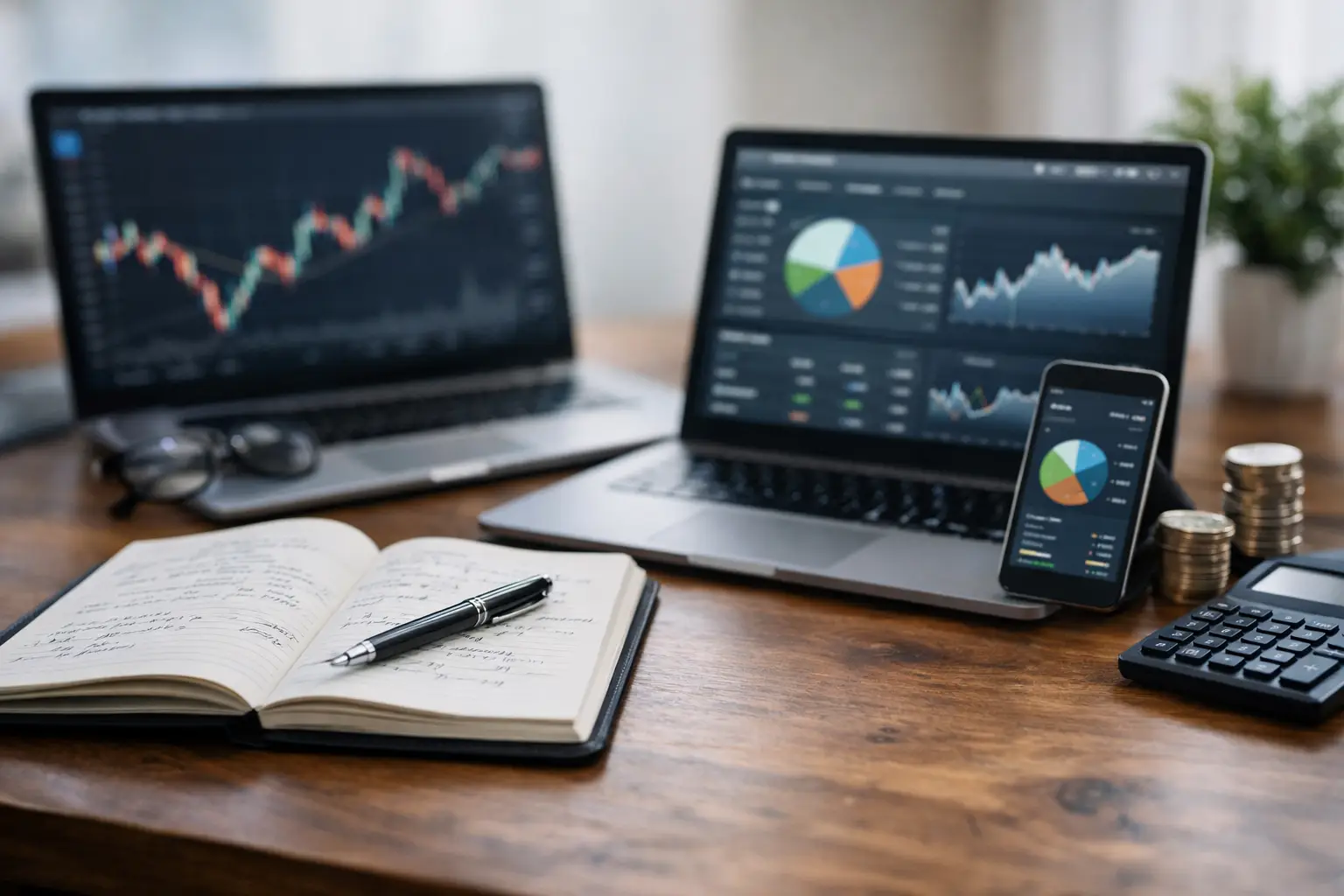
Trading journal vs portfolio tracker: learn what each tool measures, where each falls short, and how active traders use both for smarter decisions.
A trader can be up 12% on the month and still have no idea why. That is usually the moment the trading journal vs portfolio tracker question stops being theoretical. One tool tells you what happened to your capital. The other tells you what happened inside your decision-making. If you trade actively, that distinction matters more than most people realize.
A lot of market participants treat these tools as interchangeable because both sit somewhere near performance analysis. They are not the same system with different labels. They answer different questions, solve different problems, and create value at different points in the trading workflow.
Trading journal vs portfolio tracker: the real difference
A portfolio tracker is built to monitor holdings, balances, allocations, and performance over time. It answers practical questions like how much your account is worth, which assets are driving returns, how concentrated you are, and how your portfolio has changed across stocks, crypto, forex positions, or cash. It is capital-focused.
A trading journal is built to document trades at the decision level. It records entry, exit, thesis, timing, setup, risk, emotional state, execution quality, and post-trade review. It answers a more uncomfortable set of questions: Did you follow your plan? Was the trade valid? Did you size correctly? Are your losses tied to bad strategy or bad discipline? It is behavior-focused.
That difference sounds simple, but it changes everything. A portfolio tracker can show that your P&L improved. A journal can show whether the improvement came from repeatable edge or random upside in favorable conditions. One measures outcomes. The other helps audit process.
What a portfolio tracker does well
For investors and swing traders managing multiple positions, a portfolio tracker is the operational layer. It gives you visibility into total exposure, realized and unrealized gains, sector or asset concentration, and performance across accounts. If you hold tech stocks, Bitcoin, cash, and a few longer-term options positions, the tracker gives you a portfolio-level view that is difficult to maintain manually.
This matters because fragmented portfolios create blind spots. A trader might think they are diversified because positions sit on different exchanges or brokerages, while a tracker reveals heavy overlap in risk. You may own different tickers that still behave like the same trade. You may think your crypto allocation is modest until the numbers are aggregated in one place. Without that visibility, you are not managing risk so much as reacting to it.
Portfolio trackers are also useful for benchmarking. They help answer whether your returns justify your risk and whether your capital is being deployed efficiently. For investors with lower turnover, that can be enough. If you make relatively few decisions and focus on allocation, a tracker may carry most of the analytical load.
But here is the limitation: a portfolio tracker usually cannot explain decision quality with enough precision. It can show the result of a trade, but not the logic behind it. If a short was profitable, was that because your read was right, your timing was strong, or the market simply reversed harder than expected? Trackers rarely capture the context needed to improve future execution.
What a trading journal does well
A trading journal turns trading from memory into data. That sounds basic, but it is one of the biggest upgrades a serious market participant can make. Most traders remember standout winners, painful losses, and a few dramatic mistakes. They do not remember patterns accurately. Journaling fixes that.
A good journal records more than price and timestamp. It captures your setup category, market conditions, conviction, position size relative to risk, invalidation level, time horizon, and whether you followed your rules. It can also capture qualitative signals like hesitation, revenge trading, overconfidence after a winning streak, or poor execution during high-volatility sessions.
That information creates an edge because trading failure is often pattern-based. Maybe your breakout trades work well in the first ninety minutes of the session but break down late in the day. Maybe your crypto trades perform best when aligned with higher-time-frame trend but collapse when you force mean-reversion entries. Maybe your losses expand not because your strategy is broken, but because you double size after two winners. A portfolio tracker will not surface that with enough granularity. A journal can.
For active traders, this is where real performance improvement happens. Not in vague motivation, but in isolating what actually drives returns and what quietly destroys them.
Why traders confuse the two
The confusion comes from overlap at the reporting level. Both tools may show win rate, P&L, performance by asset, or timeline-based results. But similar charts do not mean similar purpose.
A portfolio tracker is usually looking outward at the account. A journal is looking inward at the trade decision. When traders rely only on tracking, they can become overly outcome-driven. Green trade equals good trade. Red trade equals bad trade. That is not how durable skill is built.
A well-executed trade can lose money. A poorly executed trade can make money. If your system only records the money result, you train yourself to misread your own performance. Over time, that leads to strategy drift, inconsistent sizing, and false confidence.
Trading journal vs portfolio tracker for different trader types
If you are a long-term investor with low turnover, broad diversification, and limited tactical activity, a portfolio tracker is probably the more essential tool. Your primary questions are allocation, performance, and risk exposure. You still benefit from recording major decisions, but you may not need a detailed journal for every transaction.
If you are a day trader, scalper, swing trader, options trader, or high-frequency crypto participant, a journal becomes much harder to ignore. The more often you make decisions, the more process data you need. Active trading generates enough volume that small execution flaws compound quickly. Without journaling, you can spend months repeating the same mistakes with no clear diagnosis.
For hybrid users, which is a large part of today’s market, the right answer is usually both. Many self-directed traders hold an investment portfolio while actively trading around core positions. They need portfolio visibility for capital management and journal-level analysis for tactical decisions. This is especially true when activity spans multiple asset classes and platforms.
Where each tool falls short on its own
A portfolio tracker without a journal can leave you informed but not improved. You know your current exposure and your returns, but not whether your decisions are getting better. You can monitor the machine without understanding the operator.
A journal without a portfolio tracker has the opposite weakness. You may understand your trade patterns in detail but still miss bigger portfolio risks. Correlation, concentration, account-level drawdown, and capital deployment become harder to manage if your view stays too trade-specific.
This is one reason modern traders are moving away from disconnected workflows. Separate notes apps, spreadsheets, exchange dashboards, and broker reports create friction. Friction leads to incomplete data. Incomplete data leads to false conclusions.
What serious traders should look for
The best setup is not just about recording more information. It is about connecting the right information. A useful system should show portfolio-level analytics while also allowing trade-level review. It should help you see both exposure and execution, both outcome and cause.
That is especially valuable in a market shaped by speed, social influence, and cross-asset volatility. If you discover an idea through a trading community, execute it on one platform, hold related positions somewhere else, and analyze results in a spreadsheet, you are working with fragmented intelligence. Modern market participation needs a more connected structure.
That is why platforms like Tyrian Trade are aligned with where the market is heading: integrated trading intelligence, verified community insight, analytics, and transparency in one environment. For traders who want more than account snapshots, the value is not just seeing performance. It is understanding behavior, validating process, and improving decisions with better data.
So which one should you use?
If you have to choose only one, choose based on your actual behavior, not the label you prefer. Investors need clear portfolio oversight. Traders need process accountability. Many people call themselves investors while trading constantly, or call themselves traders while mostly holding positions. Your toolset should match what you really do.
The better question is not trading journal vs portfolio tracker as if one replaces the other. The better question is which blind spot is currently costing you more. If you do not understand your exposure, tracking comes first. If you do not understand your decision patterns, journaling comes first.
Markets do not reward effort evenly. They reward clarity, discipline, and the ability to separate luck from skill. The traders who improve fastest are usually not the ones consuming the most content. They are the ones building a cleaner feedback loop around every decision they make.